"We want their labour, but we don't want to acknowledge their needs": NUS academician Kenneth Paul Tan on S'pore's ambivalence towards migrant workers
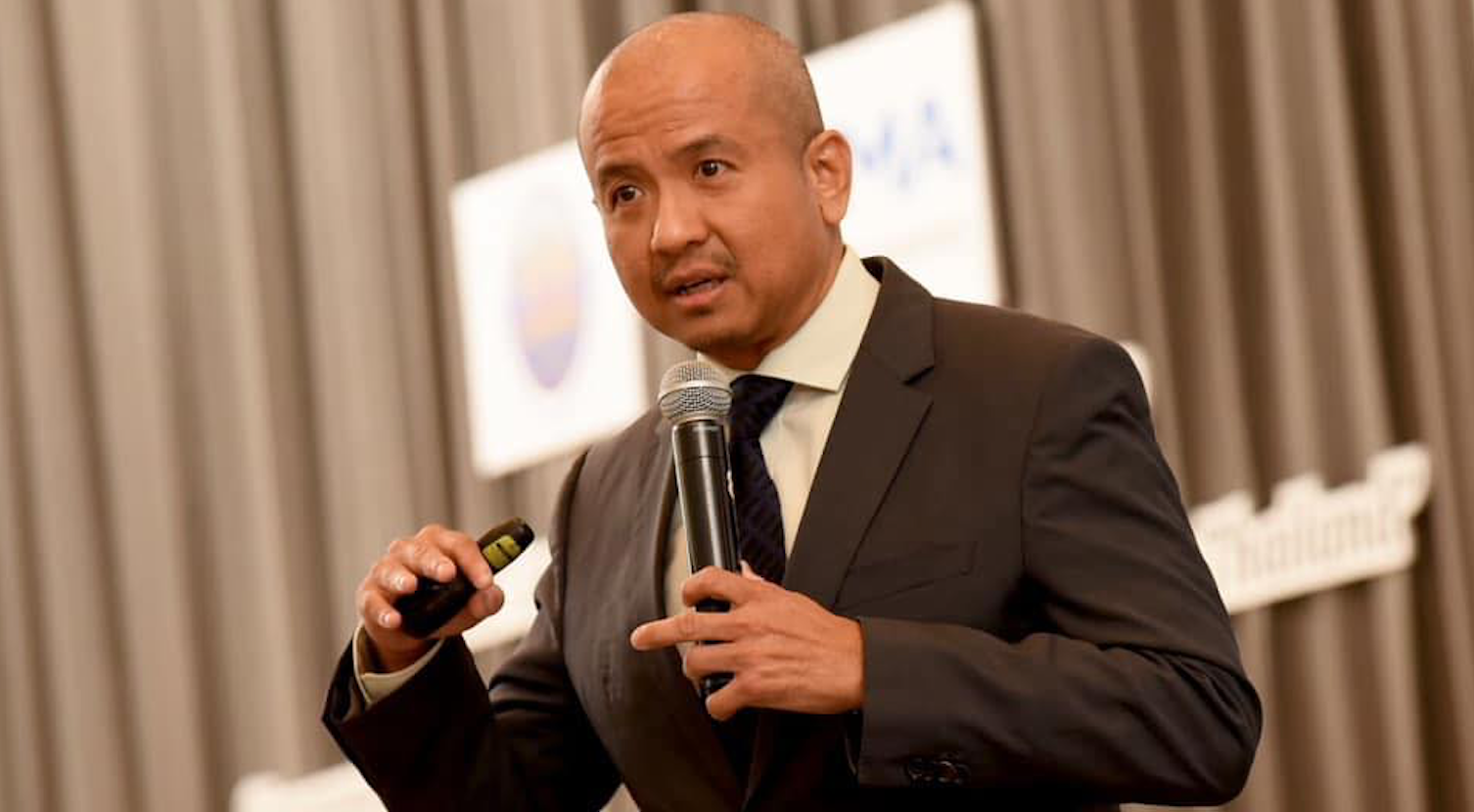

The COVID-19 outbreak has further shed light on Singapore's ambivalent feelings toward migrant workers, said academician Kenneth Paul Tan from the Lee Kuan Yew School of Public Policy at the National University of Singapore (NUS). Singapore society, he said, appears to be caught in a double-bind of not wanting the country to be overrun by foreigners but at the same time seeing migrant labour as indispensable to daily life. In an episode of the COVID-19 Community Chronicles podcast series run by Kwan Jin Yao -- a PhD (Social Welfare) Candidate at the UCLA and a NUS alumnus -- earlier this month on Labour Day, Professor Tan observed that Singapore society begrudgingly accepts the influx of migrant labour due to the way it benefits the nation's economy. "I think there was every expectation that once we grew enough, our people would be well-educated and well-trained, and we would do the jobs that we needed to do ourselves, and that component would kind of disappear. "We want their labour, but we don't want to acknowledge their needs," said Professor Tan, who authored Governing Global-City Singapore: Legacies and Futures After Lee Kuan Yew. The discomfort is further amplified by the awareness that migrant workers, who often come in large numbers, are felt by many Singaporeans to increasingly encroach upon Singapore's already limited spaces. "We live in this very strange situation where we need them. We want them, but we don't want them, because they take up space, and they are making us lose a sense of who we are ... So we find ways to hide them," said Professor Tan. Such contradictory feelings of need and repulsion are even more difficult to reconcile during times of crisis such as the COVID-19 pandemic, he added. The situation gives rise to a kind of "moral panic", which Professor Tan said is a "well-known concept in sociology" characterised by growing "populist anger against an elite accused of being responsible for bringing in 'impurities' into an already threatened society". The collective anxiety experienced by Singaporeans, he said, is "enough for them to start being hostile to an identifiable group within society" that is eventually scapegoated as "the cause of these problems". "As erased as they usually are in Singapore, in these moments they suddenly acquire a high level of visibility," Professor Tan added. Migrant workers are painted as "dangerous", "criminals" or whose "strange practices" don't align with the "Singaporean way of life" as a result of this "moral panic", he said. This stereotype, in part, has led to racism and xenophobic sentiments in Singapore -- and such sentiments may have even physically manifested themselves in the situation at the mega-dormitories. "We built this giant thing and we put them away from visibility as far away as possible ... And there they are, erased from our consciousness, whilst we bask in the glow of a 'First World' iconic preeminent global city," said Professor Tan. There is "a certain kind of consensus" among different factions of society, from opposition political leaders to even the incumbent government who make use of such populist sentiments, and even the media that "narrativises all of this", he observed. On the other end, migrant workers have also been painted -- particularly during this COVID-19 crisis -- as having shared humanity through certain stories, even their own through lenses via poetry and other mediums of expression. Even then, migrant workers have been chastised by those who have attempted to elevate their voices for expressing themselves in a manner that is deemed too confident or questioning, as narrated by Bangladeshi migrant worker Zakir Hossain Khokan, a graduate of the National University of Bangladesh, in a poem he wrote early last month:
Sometimes literary folks and intellectuals visit them too. They inspire them to read, speak up, write, draw, take photographs, make films but emphasise that their art should be calm and not explosive.Award-winning Singaporean poet Cyril Wong, who helped migrant worker and poet Mukul Hossine translate his poems into English, told CNA in a documentary last year: “The moment the fame got to him, he became very much imprisoned in this bubble of delusion about what it meant to be an author or a poet. “He had this innocence, but also a kind of childish delusion that as long as he was famous, somehow everything else – economically and practically speaking – would fall into place for him: He would be rich; he would be able to take care of his parents; he would be able to build a bigger home in Bangladesh," he added. Singapore-born journalist Surekha Yadav in a column for Malay Mail posited in August last year -- in reference to the CNA documentary -- that in Singapore, migrant workers "cannot dream". "When a worker tried to write poetry, when he claimed to be a human, a creator and an equal in his own right, this group of people seem to have moved to viciously tear him down. To put him back in his “place” — because it is unacceptable a person has dreams beyond their station," she wrote, referring to the sensibilities of supposedly ‘“liberal”, educated, caring Singaporeans who say they are helping workers".
Technocratic governance, while effective, may inadvertently exclude "the vast majority of people who lead very different lives" who may not benefit from certain policies: Professor Kenneth Paul Tan
Responding to a question on whether this is where technocratic governance plays a role, Professor Tan opined that "nobody dislikes" the prospect of things done effectively by leaders who are experts in their particular fields. However, the academician raised concerns regarding how certain decisions may be done "in an ivory tower by elite, highly qualified people" who may come from a particular socio-economic class "to the exclusion of the vast majority of people who lead very different lives". "Why do people accept that even when the results don't seem to benefit them directly? It has a lot to do with the ideological framing," said Professor Tan. "Instead of paternalism, instead of 'We exclude you because your voices are worthless, or destructive, or mischievous, or short-sighted' ... Instead of saying it that way, you say, 'Well, you contract out that task to us, and we, who are skilled to do this, will do it and deliver the results that you want' ... "It works as long as it works. But when the results stop coming in as people expect it to, then the compact starts to fray a little bit. "And I think that is when authoritarianism starts to be threatened, that's when you might see the old authoritarianism come back in," he said, adding that such paternalistic ways of governing may result in the "infantilisation" of society. Political authoritarianism, he added, is essentially a partnership between the political elite and capital. "If you read it this way, you will start to understand why labour unions are the way they are in Singapore," said Professor Tan. "If you involve a lot of people, and yet not take their views seriously, while technocrats are making decisions behind the scenes and then launching them in an almost tone-deaf manner, that tells you something about our capacity to actually have serious and difficult conversations -- conversations where we trust one another," said the academician. He added that in Singapore, it is "very easy to not be critical". Constrained by neoliberal globalisation, many "are led to believe -- and tell others to believe -- that there is no other way", said Professor Tan. "And so, if you continue to believe that there is no other way, then all that can happen to change things is if our economy collapses. "You can go very far not being critical in Singapore. But I think if you can -- for this place --and if you have enough self-regard and dignity, I think you cannot avoid being critical," he said. The term neoliberal globalism itself, said Professor Tan, is ubiquitously used but has multiple meanings -- often the pejorative kind."In all the variety of meanings it has", said Professor Tan, at the crux of the phrase lies "the sense of which economic logic and monetary value prevail", which manifests in the way problems are framed and solutions -- and even the way success is measured.
The pervasiveness of the market logic, he said, is the most troubling thing about neoliberal globalism in Singapore.
"It penetrates all the different spheres -- the social, the cultural, the ethical, the aesthetic, the political -- so that everything gets reduced to a single logic ... And to many of us, it just appears as a reduction to monetary value, the dollar," said Professor Tan.
Such views, he added, are often disguised with notions such as pragmatism and rigid, "almost dogmatic" adherence to market values, which may result in dehumanising not only the marginalised but also everybody else in society.This cold logic highlights "the banality of evil", in that "we stop thinking, we stop feeling, we stop considering", said Professor Tan.
"People are reduced to indicators, people are reduced to things that can easily be calculated," he added.