PM Lawrence Wong warns of global trade war after US tariffs, urges Singaporeans to brace for uncertainty
Prime Minister Lawrence Wong warned on 5 April that the US’s new tariffs could escalate into a global trade war. China has retaliated, and Singaporeans have expressed concerns online over potential economic shocks, rising costs, and what many see as inadequate responses from government leaders.
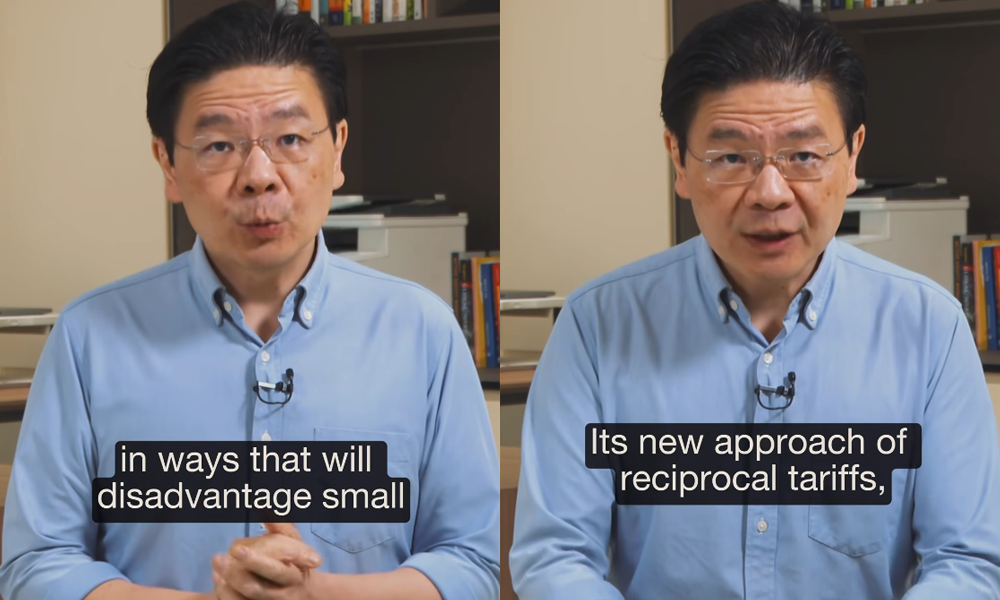

Singapore may face renewed economic turbulence following a new wave of trade tariffs imposed by the United States, warned Prime Minister Lawrence Wong on 5 April.
The tariffs, announced by former US President Donald Trump on 2 April, include a 10 per cent duty on most imports from Singapore, with even higher rates on other countries, including a 34 per cent tariff on Chinese goods.
China responded on 4 April with a symmetrical set of retaliatory tariffs.
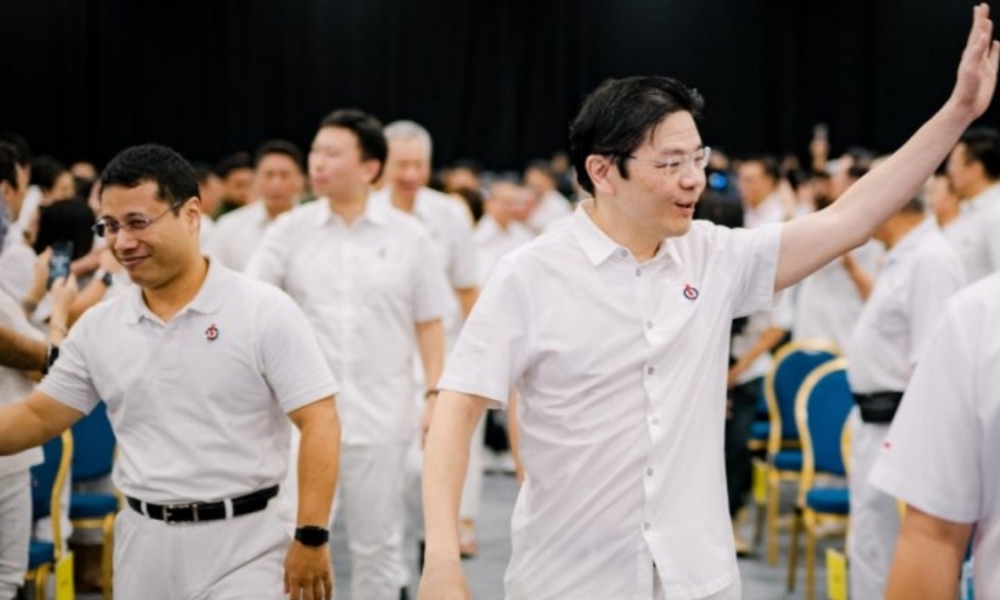
Speaking at the launch of the Marsiling-Yew Tee Masterplan, Wong said the world is “entering a more dangerous and unpredictable” phase.
“China has already retaliated with its own tariffs, and other countries will soon follow, I am sure. We may well end up with a full-blown global trade war,” he said.
Wong emphasised the need for unity and resilience, highlighting Singapore’s meritocratic system and social cohesion as key to weathering global storms. “While there are dark clouds ahead, we can look forward still with confidence in ourselves,” he added.
In a video released a day earlier on 4 April, Wong called the US decision a “seismic change in the global order” and warned that the rules-based system of global trade may be breaking down.
Deputy Prime Minister Gan Kim Yong echoed these concerns on 3 April, saying Singapore is reviewing its 2025 growth forecast and preparing economic support if necessary.
However, the government’s statements have drawn sharp responses on social media, particularly on The Straits Times’ and CNA’s Facebook pages.
One commenter wrote, “In short he's saying standby for an increase in GST to 15%.”
Another added, “We kenna GST hikes every year. What's 10% tariffs 😁”
A frequent concern was that such warnings were being used to justify future domestic price hikes. “This message is to pre-empt you for the rising cost of living. So when they raise again, [the government] can blame external factors,” one post read.
Some questioned the substance of the government’s messaging. “Stop telling us the problem, you and your team are paid to provide the solutions!” said one user on CNA’s platform. Another wrote, “Being the highest paid politicians, we don’t need you to summarise the situation. We need solutions.”
On CNA, frustration about high ministerial pay was a recurring theme. “You're paid a handy sum of more than $2 million per annum. Why don't you figure out a solution instead of telling us to embrace the impact?” one person commented.
There were calls for practical policy changes. “You can clamp and control cost of living — not by mere vouchers but transportation, COE, utility bills,” one Facebook user wrote.
Another posted, “So we paid our taxes in cash but only to be given as vouchers. Can vouchers pay off medical bills for the elderly?”
Some saw the message as politically timed. “Before voting you come out calm the people, after voting increase all the price,” read one post.
Another remarked, “This is the same fear mongering tactic like the last election during Covid.”
A few pointed to perceived inaction on alternatives. “Mr Wong chose to stay and not fight back just because the opponent is the US. He still has ample time to look for alternatives instead of telling people to embrace the impact.”
Others expressed dissatisfaction with what they saw as a pattern of shifting responsibility. “The world is changing, but not ministers’ salaries,” said one.
Another observed, “You solve it to prove that you and your ministers are worth a million-dollar salary!”
There were some who defended the government’s position or emphasised Singapore’s limited global influence, but these comments were fewer in number and often met with rebuttals.
As the situation unfolds, the government has stated that it is closely monitoring developments and remains ready to intervene if necessary.
However, with both global tensions and domestic unease rising, the coming months may test not only Singapore’s economic resilience, but also the public’s patience.