Is the government going to tweak HIP like it tweaks GRCs?
A recent response to parliamentary question confirmed the government is reviewing HIP rules, including clustering small blocks to meet the 75% threshold. But if larger blocks can override smaller ones, this risks the tyranny of the majority—where consent is replaced by numerical dominance. It may look democratic, but feels engineered.


On 14 January 2026, the Ministry of National Development (MND) responded to a parliamentary question filed by Member of Parliament Hazlina Abdul Halim.
She had asked whether the Ministry would review the voting framework for the Home Improvement Programme (HIP), following a recent case where two ageing HDB blocks narrowly failed to secure enough votes for the upgrade.
In her question, Hazlina also asked whether alternative upgrading options could be offered to ensure essential maintenance support, even where the HIP vote does not pass.
In reply, National Development Minister Chee Hong Tat confirmed that a review is underway. Among the options being considered is allowing blocks with fewer units to be grouped together to vote as a cluster — an approach intended to help them meet the 75 per cent support threshold required for HIP works to proceed.
The reply follows two closely watched votes in Seng Poh estate, where Block 34 Kim Cheng Street and Block 35 Lim Liak Street missed the threshold by just two and one votes respectively. Due to their small size — 24 and 15 eligible units — just a handful of abstentions or dissenting votes made a decisive difference.
The government’s proposal appears aimed at addressing this statistical challenge. But it introduces a larger democratic problem: by clustering blocks together, there is a real risk that the voting power of larger blocks could override the will of smaller ones. That risks replacing local consent with majoritarian control.
Clustering creates numerical imbalances
Under the current system, each block votes independently. This means that a small block can determine its own outcome based solely on the preferences of its residents.
Clustering changes this. If a block of 80 units is grouped with one of 15, the outcome of the vote will be determined disproportionately by the larger block. A clear “no” from the smaller block could be cancelled out by a strong “yes” from the larger one — even if the residents in the smaller block have valid, distinct reasons to reject the works.
That raises a fundamental question: if votes are meant to reflect consent, how can a smaller group’s decision be erased by a majority they never asked to join?
This is not democratic consensus. It is a numbers game — one that introduces a form of majoritarian override that risks becoming the tyranny of the majority.
Echoes of electoral boundary strategy
The logic behind this proposal is not new. It mirrors long-standing electoral practices in Singapore, where Group Representation Constituency (GRC) boundaries are regularly redrawn, often without public explanation or criteria.
In both cases — GRCs and HIP clustering — local distinctions are absorbed into larger units, and numerical dominance replaces local voice. The result is a governance structure where outcomes can be shaped not by persuasion or compromise, but by design.
In housing, this means residents in one block may be compelled to accept disruptive in-flat upgrades due to votes cast in an entirely different block. In elections, it has long meant that political support in one area can be diluted or redirected to favour a preferred result.
The concern is not just that rules are changing, but that they seem to change when outcomes become inconvenient.
Re-polling without rules, clustering without clarity
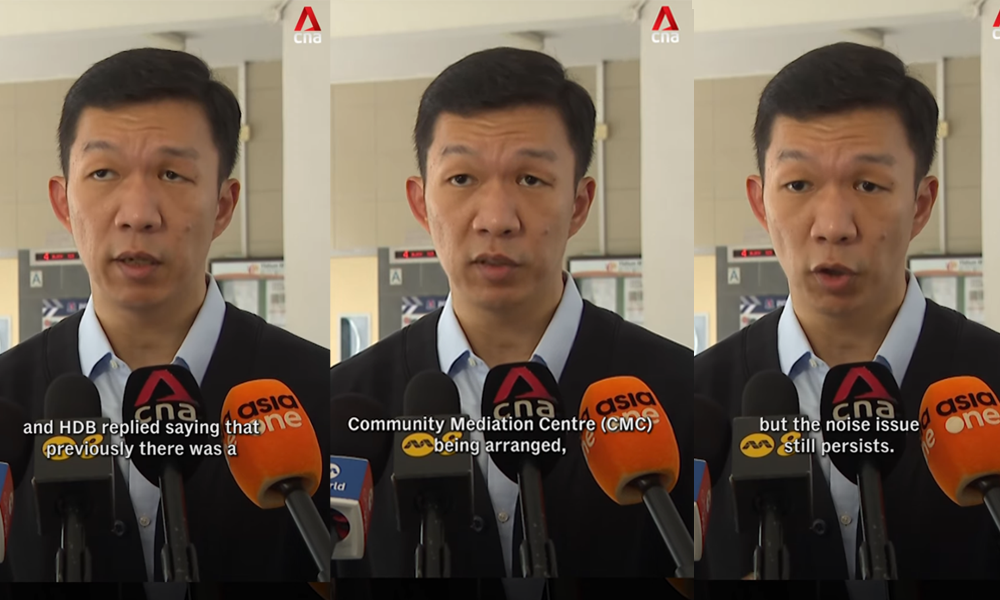
The government’s approach to re-polling raises similar concerns. In 2017 and 2023, four blocks that initially failed HIP votes — one in Serangoon and three in Lengkong Tiga — were allowed to re-poll after appeals from residents and MPs. All four passed the second time.
But the process remains opaque. There are no published criteria for re-poll eligibility, no standard timeline, and no guarantees of equal treatment. Now, with clustering under review, the absence of procedural safeguards becomes even more significant.
Without clear rules, residents cannot know whether their estate will be allowed a second vote, how clusters will be formed, or whether their preferences will be respected within those clusters.
A policy framed as democratic begins to look discretionary — a system more focused on securing outcomes than protecting process.
If HIP is essential, make it policy — not conditional
There is no dispute that HIP offers valuable upgrades for ageing estates. But if these works are considered essential, they should be delivered as a national policy — with clearly defined exemptions, safeguards, and dispute resolution mechanisms — rather than through a voting process that is revised when outcomes fall short.
If resident support is sought, it must be respected — not retroactively circumvented.
Changing the framework after a close loss, or reshaping the voting unit to secure a favourable outcome, undermines not only the scheme’s integrity but also public trust in the process itself.
Too often, policies are structured around the appearance of choice — frameworks that give the impression of consultation, but are ultimately designed to deliver a single, preferred result.
This has become a recurring feature of how the PAP government governs: holding up the form of democracy, while hollowing out its substance.
If the outcome is already decided, the process should not pretend otherwise.