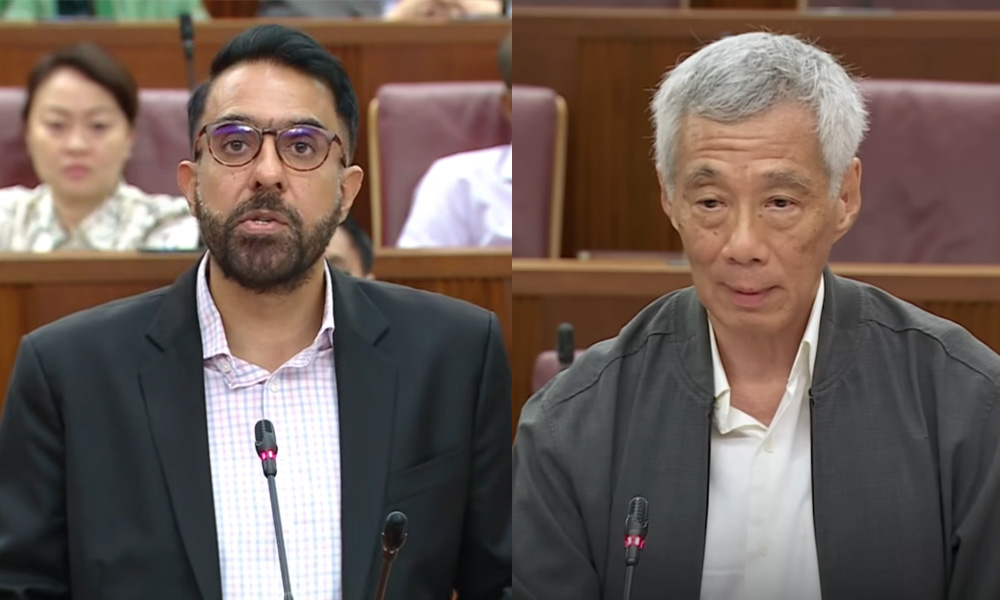
Why the Workers’ Party should reject the Leader of the Opposition role
The Leader of the Opposition role, created at the PAP’s discretion and now used to pressure the Workers’ Party, has become a poisoned chalice. With no constitutional safeguards and vague privileges, it exposes opposition figures to political risk while offering little protection. The WP should reject the position and assert its independence on its own terms.


Since its formal establishment in 2020, the office of the Leader of the Opposition (LOO) has been held exclusively by the Workers’ Party (WP).
But in light of recent events—the conviction of Pritam Singh, the parliamentary motion declaring him unsuitable, and Prime Minister Lawrence Wong’s decision to remove him from the role—it is time for the WP to seriously reconsider whether it should continue participating in this arrangement at all.
Not because the party lacks capable leaders. But because the position itself is neither constitutionally mandated nor politically neutral. It is a role offered—and now withdrawn—at the discretion of the ruling People’s Action Party (PAP), and used to place the WP on trial in both institutional and public terms.
To understand what is happening now, one must revisit a telling remark made by then-PAP Secretary General Lee Hsien Loong during the 2006 General Election.
At a rally, Lee said that if there were 10 or more opposition members in Parliament, he would have to spend time “thinking what is the right way to fix them” instead of thinking of what is the right policy for Singapore.
“...I’m going to spend all my time – I have to spend all my time – thinking what is the right way to fix them, what is the right way to buy my own supporters over, how can I solve this week’s problem and forget about next year’s challenges?” said Lee.
Today, with 12 WP MPs and NCMPs in Parliament, that remark has aged with uncomfortable accuracy.
“Fixing the opposition”: the long shadow of the AHPETC saga
What better example of that “fixing” than the long-running saga involving the Aljunied–Hougang–Punggol East Town Council (AHPETC)?
The legal campaign began with accusations of financial mismanagement and misuse of public funds by the WP-run town councils after the party took control of Aljunied GRC in 2011 — the first Group Representation Constituency ever won from the PAP — and later Punggol East SMC in 2013.
In July 2017, a civil suit was initiated by an independent panel targeting eight defendants, including WP leaders and their managing agent FMSS, alleging breaches of fiduciary duties.
The legal process stretched for nearly a decade. It placed a heavy financial and psychological toll on WP MPs and volunteers. Over a million in legal costs were raised through public donations.
Yet, by the time the case concluded in 2025, the three senior WP leaders were cleared of the most serious allegations. In a closing gesture, they announced that more than S$57,700 in remaining cost awards would be donated back to the very town councils that had once sued them.
The result: nearly a decade of litigation that drained the party’s resources and cast a long shadow over its leadership—only to end with the most serious allegations against them substantially weakened or dropped altogether.
The Singh case did not begin in court
Now, the same tactic appears to be playing out again.
Singh’s removal as LOO is not merely a response to a parliamentary motion based on a court ruling—it stems from a charge that originated from a referral by a PAP‑majority Parliament to the Attorney‑General’s Chambers, which is headed by Lucien Wong, now serving his fourth term as Attorney‑General and formerly the personal lawyer to Lee Hsien Loong.
The referral itself was based on findings by the Committee of Privileges, which was chaired by Tan Chuan-Jin, who later resigned in disgrace following revelations of an extramarital affair with a fellow PAP MP.
In other words, the entire legal process was initiated through a political mechanism controlled by the ruling party, which holds a supermajority of the seats in Parliament.
To portray the outcome as purely judicial is to ignore its political provenance. While the courts adjudicated the case independently, the path to prosecution itself was political from the outset.
The subsequent conviction, though upheld by the courts, must therefore be seen within this broader context—as part of a longstanding strategy to erode the WP’s credibility and portray its leadership as ethically unfit.
This distinction matters. It is not an attack on the judiciary to acknowledge that the trigger for legal action was parliamentary and partisan in nature.
Nominating another Leader of the Opposition is a trap
PM Wong has now invited the WP to nominate another MP to assume the LOO role, provided the individual has not been implicated in earlier findings and meets the “high standards” of the office.
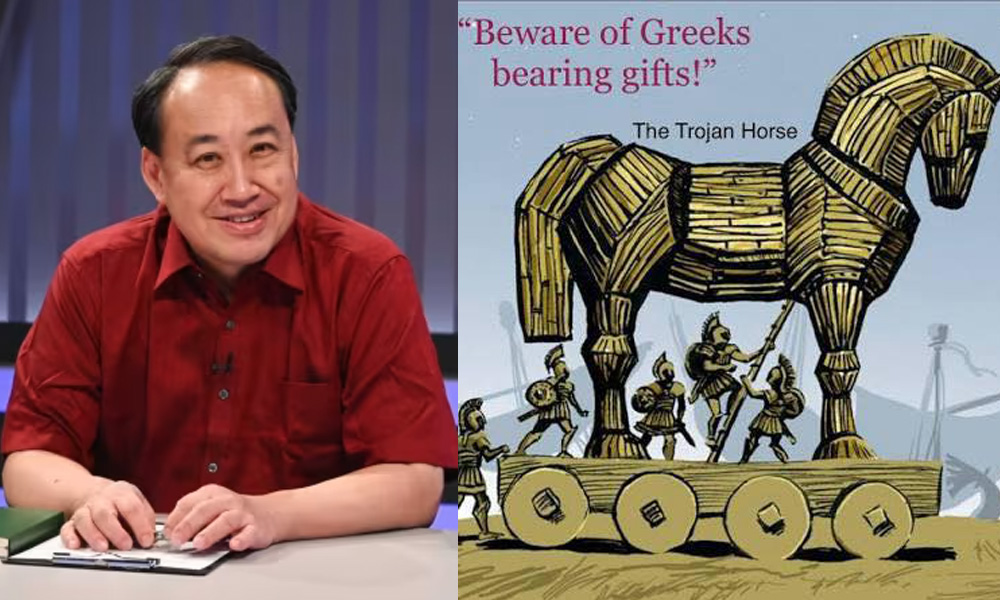
This is a poisoned chalice.
To put forward another name is to offer another target. Another individual to be scrutinised, tested, and eventually used as evidence—if anything goes wrong—that the WP has no leaders of integrity.
It keeps the spotlight fixed on personalities rather than performance, and on alleged moral failings rather than policy debate. Worse, it risks exposing other senior WP figures to the same cycle of political escalation.
Why should the WP cooperate in a process that systematically places its leaders in harm’s way?
This manoeuvre by the PAP is also a naked attempt to shape the internal leadership dynamics of WP.
By removing Singh as LOO and pressuring the WP to nominate another MP, the ruling party may be seeking to sow doubt among WP cadres about whether Singh should remain as party chief.
This creates an artificial tension between internal leadership and external designation. With the WP set to convene a Special Cadre Members’ Conference to review Singh’s conduct—following the disciplinary panel’s findings after his conviction was upheld by the High Court—there is a real risk that PAP’s external manoeuvring will influence internal party decisions.
The WP must resist such manipulation and assert its independence in determining its leadership, on its own terms and timeline.
A role created — and withdrawn — at the Prime Minister’s prerogative
Although a de facto opposition leader has existed in Singapore’s Parliament since 1955, the formal office of the LOO was only established in 2020. It was created following the General Election in which the WP secured ten seats.
Crucially, this was not the result of constitutional reform or parliamentary consensus. It was announced unilaterally by then-Prime Minister Lee Hsien Loong. The office, its privileges, and even its continued existence depend entirely on the Prime Minister’s prerogative.
There is no constitutional guarantee to the role. No statutory protection. No independent process governing appointment or removal. What is given by executive grace can be withdrawn by executive decision.
Empty privileges, symbolic power
Supporters of the LOO role often point to its privileges: first right of response in debates, extended speaking time, staff support, and confidential government briefings.
But even here, the substance appears thin. When asked in Parliament how often such briefings were actually given, Leader of the House Indranee Rajah declined to provide details, saying only that the privilege existed.
This raises a legitimate question: is the role meaningful in practice, or largely symbolic?
Extra speaking time and an office do not protect opposition MPs from politicised processes. Nor do they meaningfully alter the balance of power in Parliament. What they do provide is a convenient lever of control.
Walking away is not weakness
The Workers’ Party does not need a ceremonial title to represent Singaporeans effectively. Its mandate comes from voters, not from executive designation.
By declining to nominate another LOO, the WP would not be abdicating responsibility. It would be making a principled statement: that opposition legitimacy cannot rest on positions granted and withdrawn at the discretion of the ruling party.
Until the role of the LOO is constitutionally recognised, protected from arbitrary removal, and insulated from partisan pressure, it remains a managed concession—not a democratic safeguard.
Sometimes, refusing the game is the strongest move.