PAP’s elite recruitment loop undercuts its own political renewal narrative
Despite justifying high ministerial pay as a tool to draw top talent from the private sector, the PAP’s latest slate of candidates shows deep reliance on civil servants, academics, and military figures—raising concerns about political diversity and leadership renewal.
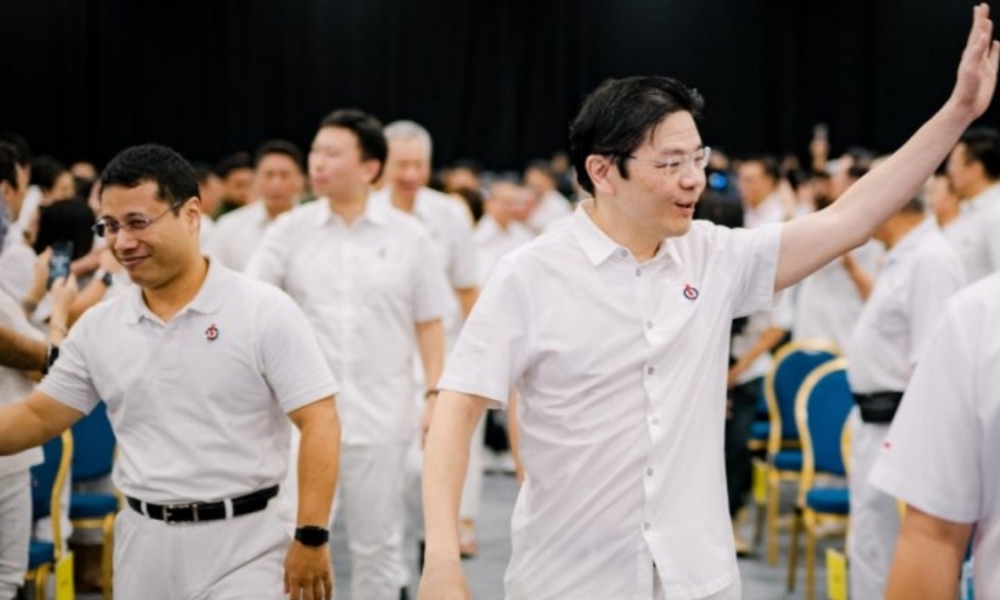

When Bloomberg reported in December that the People’s Action Party (PAP) was accelerating its search for future leaders, it portrayed a party obsessively preparing for succession, with Prime Minister Lawrence Wong keen to broaden the leadership pool well before 2030.
But beyond this narrative of strategy and foresight lies a more structural contradiction: the PAP’s leadership renewal overwhelmingly draws from within its own institutional orbit.
Lawrence Wong himself exemplifies this pathway.
Before entering politics, he was already a high-ranking civil servant, serving in the Ministry of Trade and Industry, the Ministry of Finance, and as Principal Private Secretary to the Prime Minister.
His transition into politics was less a bold leap than a smooth career continuation.
This has become the norm rather than the exception.
Despite having long defended its globally unmatched political salaries — more than S$2 million for the Prime Minister and around S$1 million for ministers — as essential to attracting top private-sector talent, the slate of PAP candidates for GE2025 reveals otherwise.
Among the newly introduced and prospective candidates, the vast majority hail from the civil service, military, academia, or other state-linked bodies:
- Jeffrey Siow, former second permanent secretary at MTI and MOM
- David Neo, ex-SAF general and Covid-19 response lead
- Jasmin Lau, former deputy secretary at MOH
- Shawn Loh, former Ministry of Finance officer
- Foo Cexiang, former MOT director
- Goh Pei Ming, former SAF chief of staff
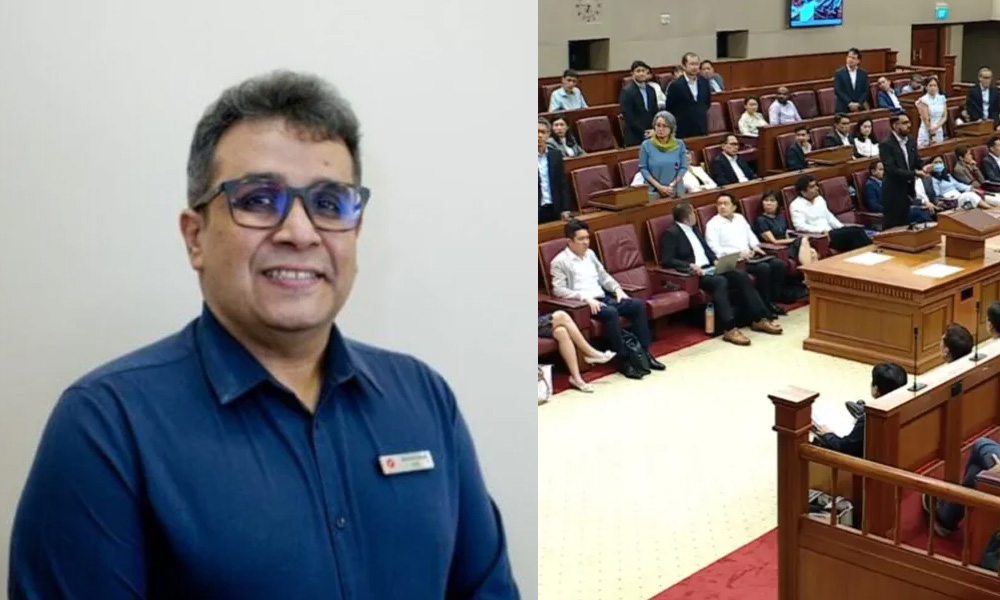
- Syed Harun Alhabsyi, psychiatrist and former NMP
Only a small handful of candidates — such as Bernadette Giam, Gabriel Lam, and Theodora Lai — are formally from the private sector.
But even among these, their professional profiles hardly reflect the kind of business or leadership accomplishments that inspire broad public confidence.
This deepens the contradiction at the heart of the salary justification.
If the pay is meant to draw exceptional leaders from the private sector, but the talent pool remains dominated by state-linked figures — many of whom would likely have entered politics regardless — then the policy rationale no longer holds.
Beyond the insular pipeline, the party’s approach to candidate rollout has also raised questions.
Several potential candidates have appeared at events months in advance, but formal introductions were delayed until just weeks before the election.
This contrasts with the opposition, which typically reveals its candidates late due to fears of pressure or disqualification.
The PAP, however, controls the timing of the election itself — making its own last-minute confirmations a curious sign of internal uncertainty, not tactical caution.
The use of Nominated Members of Parliament (NMPs) as political testbeds further undermines public trust in the system’s transparency.
Syed Harun Alhabsyi, who resigned as an NMP in February 2025 and stood in the Nee Soon GRC as a candidate, fuelling perceptions that the non-partisan NMP scheme is being used to soft-launch political aspirants under the guise of independence.
His co-resignee, lawyer Raj Joshua Thomas, chose not to contest in the election, saying that he would like to earn his stripes first — a decision that may have been influenced by backlash surrounding the use of the NMP platform for partisan advancement.
These developments expose a broader issue: Singapore’s political leadership pipeline is narrowing, not expanding, despite rising electoral competitiveness.
The Workers’ Party has attracted talent from law, economics, and academia — often with strong global credentials — without relying on high salaries or state affiliation.
Other opposition parties have shown similar depth: the Progress Singapore Party (PSP) has fielded candidates with diverse and professional backgrounds, including former civil servants and business leaders, while the Singapore Democratic Party (SDP) continues to feature authoritative experts such as Dr Paul Ananth Tambyah, an internationally respected infectious diseases specialist.
In contrast, PAP appears to lean more heavily on familiar institutional sources, despite commanding the world’s highest political salaries.
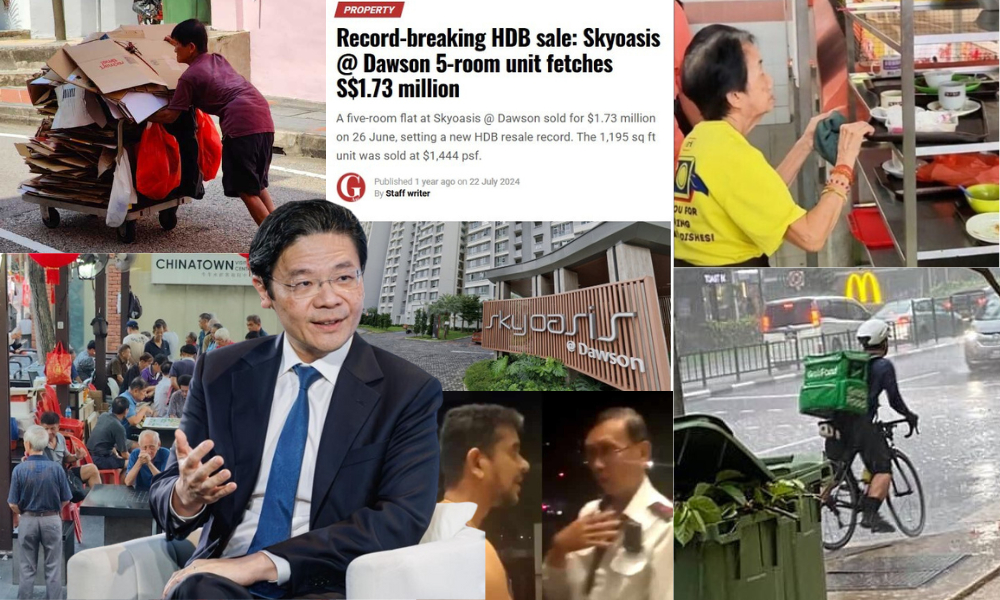
The insularity also risks creating a political class increasingly disconnected from everyday Singaporeans.
From housing and eldercare to child-rearing and rising costs, many of these burdens are experienced indirectly, if at all, by leaders whose income, networks, and support systems are far removed from those they represent.
As Singapore heads toward a more plural political future, the central question may no longer be whether the PAP can maintain dominance — but whether it can credibly justify its leadership model.
Voters may begin to ask: Is the million-dollar salary drawing in world-class external leaders, or simply rewarding those already in the club?