US tariffs will significantly impact Singapore economy, says PM Wong
Prime Minister Lawrence Wong warned on 8 April that newly announced US tariffs will have serious consequences for Singapore’s economy, with growth expected to slow and job losses likely. The Government will respond with Budget support and a new taskforce to assist affected sectors.
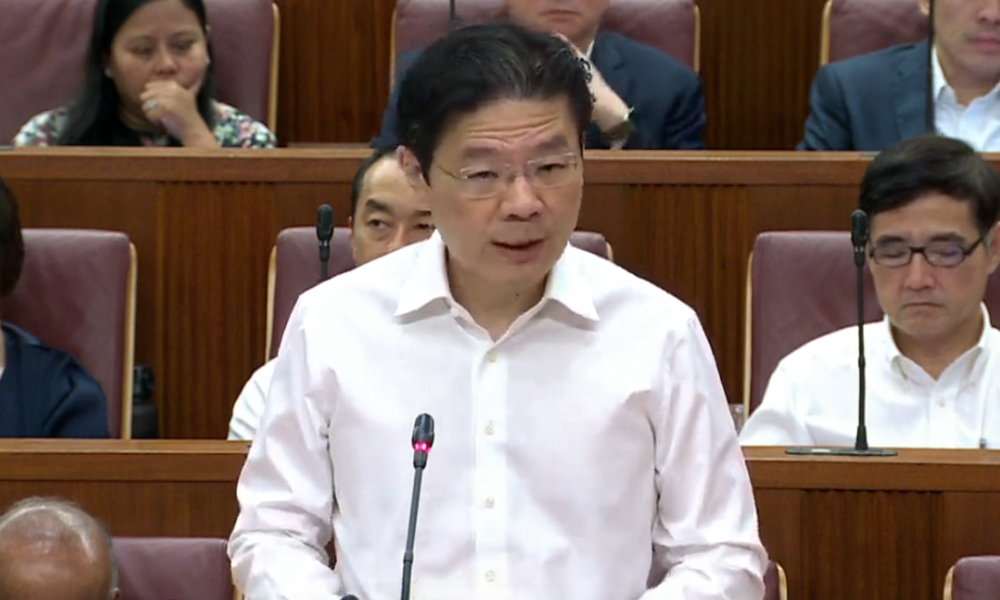

The recent imposition of sweeping tariffs by the United States will deliver a heavy blow to Singapore’s economy, Prime Minister Lawrence Wong told Parliament on 8 April in a ministerial statement.
The tariffs, announced by US President Donald Trump on 2 April, include a 10 per cent duty on Singapore’s exports, taking effect from 9 April.
“These tariffs will hurt the Singapore economy, businesses and workers,” said PM Wong, who also serves as Finance Minister.
“Singapore may or may not go into recession this year. But I have no doubt our growth will be significantly impacted.”
He added that outward-oriented sectors such as manufacturing, wholesale trade, and transport would bear the brunt of the fallout, given weakening global demand.
The Ministry of Trade and Industry’s earlier forecast of 1 to 3 per cent GDP growth for 2025 is being reassessed and is likely to be revised downward, PM Wong said.
In anticipation of the economic strain, the Singapore Government will activate several support measures outlined in Budget 2025. These include short-term relief schemes such as CDC and SG60 vouchers, U-Save rebates, and enhanced ComCare Assistance for vulnerable groups.
The Government is also forming a new taskforce led by Deputy Prime Minister Gan Kim Yong to help businesses and workers adapt to the changing economic landscape.
This taskforce will involve economic agencies and partners including the Singapore Business Federation, National Trades Union Congress and the Singapore National Employers Federation.
Workers who are laid off will receive support under the SkillsFuture Jobseeker Support scheme, to be rolled out later in April.
Businesses will benefit from corporate income tax rebates and initiatives aimed at boosting productivity and helping them access new markets.
PM Wong emphasised that Singapore is ready to act decisively as needed. “We have the resources to do so because of the financial discipline and prudence we’ve exercised over the decades,” he said.
He also warned that the global economic environment is entering a more protectionist and volatile phase, driven by strategic considerations over economic efficiency.
“The new era will be more volatile, with more frequent and unpredictable shocks,” he said. “We must be ready to stand firm, and protect our interests, no matter how the external winds may blow.”
While Singapore will strengthen ties with partners who share its commitment to open trade, PM Wong criticised the US’ tariff move as unjustified.
“If the tariffs were truly reciprocal, the tariff for Singapore should be zero,” he argued, noting that Singapore already imposes zero tariffs on US goods and maintains a trade deficit with the US.
“These are not actions one does to a friend,” he said. “We are very disappointed by the US’ move, especially considering the deep and long-standing friendship between our two countries.”
Beyond national concerns, PM Wong laid out three broader implications of the US tariff regime for the global economy.
First, he said the tariffs are a rejection of World Trade Organization (WTO) rules, especially the Most Favoured Nation (MFN) principle that underpins equal treatment among members.
“If more countries adopt the same approach, the rules-based trading system will unravel,” he warned. “Small countries like Singapore risk being sidelined.”
Second, he pointed to the growing likelihood of a global trade war. Citing the Smoot-Hawley Act of the 1930s, he noted that retaliatory tariffs historically deepen economic crises, and today's global interconnectivity makes such risks even more severe.
Third, PM Wong noted a shift toward a “me first” mindset in global economics, replacing past norms of cooperation with zero-sum approaches that undermine international institutions and trade norms.
He also expressed concern about a destabilising US-China relationship. If tensions escalate further, the global economy could face disastrous consequences, he warned.
Multinational and local firms in Singapore have already expressed concerns about weakening demand and uncertainty. Some have delayed projects while assessing the full impact of the tariffs.
“These are reactions from companies based here. But I am sure the same conversations are happening in boardrooms everywhere,” he said.
PM Wong concluded with a rallying call for unity and resilience.
“The Government will do everything we can to steer Singapore through the choppy waters, and make sure no one is left behind,” he said.
“Our little red dot will continue to shine... Singapore will hold our ground as a beacon of stability, purpose and hope.”