GE2025: PM Wong warns losing more PAP ministers would weaken Singapore
Prime Minister Lawrence Wong warned on 28 April 2025 that losing more PAP ministers would weaken governance, impair stability, and threaten Singapore’s future, as he urged voters to support PAP for a strong mandate in the 3 May General Election.
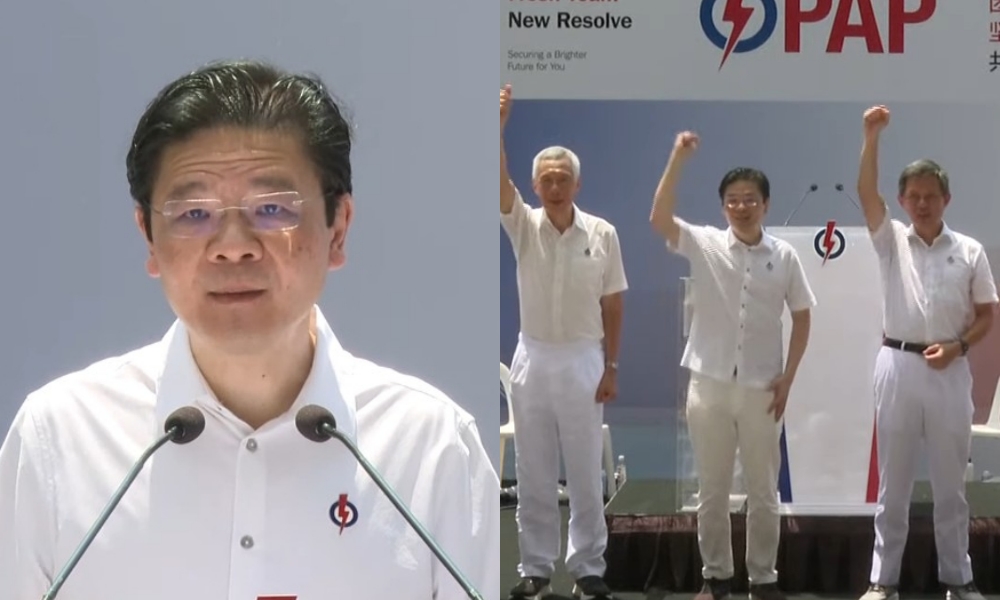

On 28 April 2025, Prime Minister Lawrence Wong warned that losing more ministers from the People's Action Party (PAP) would weaken Singapore’s Cabinet, impair governance, and endanger national stability.
Speaking at the PAP Lunchtime Rally held at Raffles Place, Wong cautioned that political instability could threaten everything Singaporeans have built.
He urged voters to seriously consider the risks at this pivotal moment.
Wong criticised alternative parties for failing to address serious challenges ahead.
He stressed that a fragmented political landscape would erode the government's mandate and diminish its ability to steer the country through turbulent times.
Wong painted a sombre picture of the global environment, describing a new crossroads where "storm clouds are here."
He pointed out that businesses are pulling back, markets are volatile, and investors are growing increasingly cautious.
“This is not a passing storm. The storm will be here for some time because the world has changed,” Wong said, emphasising that Singapore must be prepared for prolonged challenges.
He warned that if Singapore was not careful, the country could lose everything it had worked hard to build over decades.
Wong noted that although it would have been easier during an election campaign to present only a rosy picture, PAP's tradition has always been to be upfront and honest.
Wong criticised alternative parties for not seriously discussing the critical challenges ahead during the campaign.
“Have you heard any opposition party talk seriously about the challenges we face? No, not a single one,” he said.
'Impact of losing ministers would be serious'
He accused alternative parties of wanting more seats in Parliament without shouldering the responsibilities of governance.
Wong highlighted that while each alternative party alone may lack the numbers to form a government, together, their growing presence could destabilise the political landscape.
He warned that breakthroughs by alternative parties in multiple constituencies could result in a PAP government returned with a severely weakened mandate.
Wong stressed that losing three or four ministers would weaken the Cabinet, the government, and ultimately Singapore itself.
He challenged alternative parties' claim that life would simply continue even if key ministers were lost, asking voters to consider seriously the implications for governance and stability.
Wong defends GST hike as vital to support seniors and maintain Singapore’s fiscal strength
Turning to fiscal policies, Wong defended the government's decision to raise the Goods and Services Tax (GST), calling it a difficult but necessary measure to support Singapore’s ageing population.
He emphasised that the revenue from the GST hike was crucial for sustaining assistance programmes and ensuring long-term fiscal health.
Wong reassured that the support package introduced in the Budget was “not a one-off thing” and that aid would continue as long as necessary. If conditions worsened, the government was prepared to do more, with contingency plans ready to be activated.
He also pointed out that enhanced permanent GST vouchers were provided to lower- and middle-income households to alleviate the tax burden.
Wong criticised alternative parties for politicising the GST issue during elections, warning that delaying the increase would have undermined public finances.
Wong urges strong mandate for PAP in 3 May election to safeguard Singapore's interests
Highlighting the importance of foreign policy, Wong said that conducting diplomacy in a world where "might is right" had become significantly more challenging.
He called for a “clear mandate” from voters in the 3 May election so that he and his team could represent Singapore's interests confidently on the global stage.
Even during the election campaign, PAP leaders continued engaging international partners.
Wong cited Deputy Prime Minister Gan Kim Yong’s virtual meeting with United States Secretary of Commerce Howard Lutnick as an example of ongoing diplomatic efforts.
Wong noted that Gan, who is leading a PAP team contesting Punggol Group Representation Constituency (GRC), was shouldering critical responsibilities, including trade negotiations with the United States.
Wong assured voters that PAP would not respond defensively to global crises but would seek new opportunities for growth.
Although he acknowledged that this downturn was a “fundamental change in the global order” rather than a temporary crisis, he expressed confidence that Singapore would bounce back by being agile and forward-looking.
He shared plans to strengthen international partnerships and outlined that he had “many countries” to visit post-election to ensure Singapore remains well-positioned globally.
'Weakened mandate would embolden foreign powers'
Wong warned that a weakened mandate for PAP would make it harder to advance Singapore’s interests internationally.
“When I meet my counterparts, they will assess what the GE results mean to all of us; what does it mean for our political strength,” Wong said.
He added that if PAP's mandate was eroded, foreign powers might be tempted to push Singapore around.
In contrast, a strong mandate would allow his team to protect Singapore’s sovereignty and ensure that the “little red dot continues to shine brightly even in a troubled world.”