Thaipusam and the reality of PAP promises
The PAP has made numerous promises over the years, from achieving a Swiss standard of living to boosting fertility rates and protecting local jobs. Yet, many remain unfulfilled. As Singaporeans face rising costs, job insecurity, and widening inequality, questions grow over whether these commitments were ever meant to be kept.

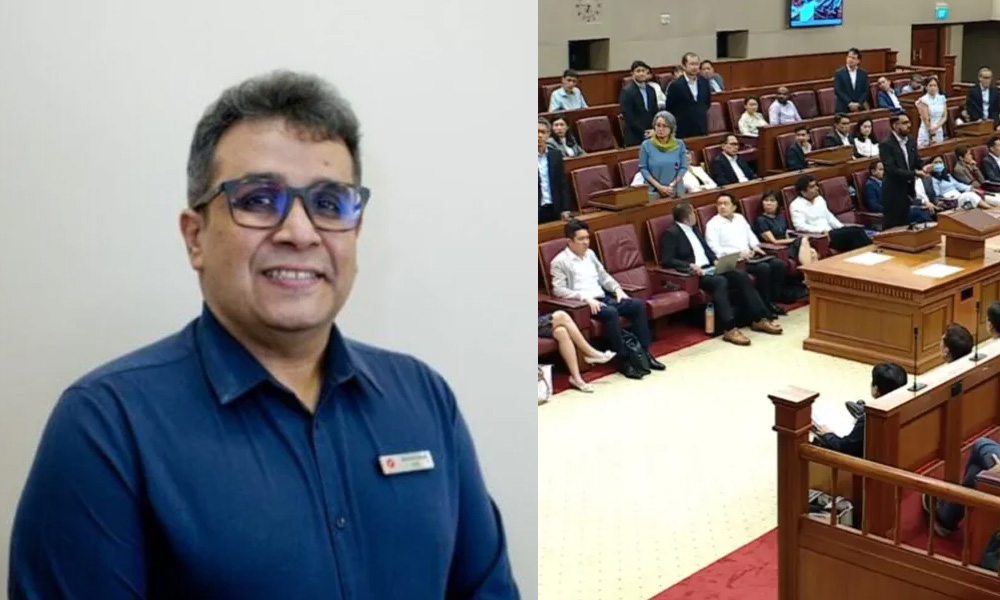
During the Committee of Supply debate for the Manpower Ministry, Workers' Party Member of Parliament Associate Professor Jamus Lim called for the reintroduction of Thaipusam as a public holiday and highlighted an implicit promise made by the People's Action Party (PAP) government in 1968—that if Singapore prospered, the government might reconsider reinstating it. Yet, Minister of State for Manpower Gan Siow Huang outright rejected the idea, stating that the current public holiday structure was carefully considered and should not change. This rejection came with no regard for Singapore’s economic prosperity, contradicting the suggestion made by E.W. Barker when Thaipusam was removed as a public holiday. But the discussion in this article is not just about Thaipusam. It highlights a larger issue: how often does the PAP follow through on its promises? If a remark made in the 1960s can be dismissed as outdated, what about the many promises made in just the past 20 years? From economic aspirations to social policies, we examine key commitments made by the PAP since the early 2000s—and how they have measured up.
1. Goh Chok Tong’s “Swiss Standard of Living”
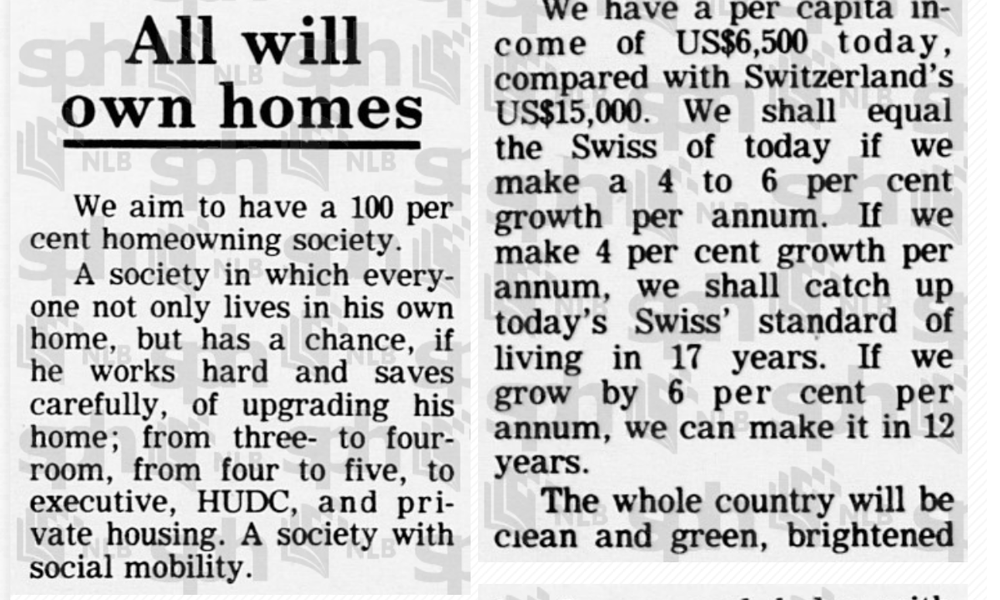
One of the most well-known pledges by a PAP leader was Emeritus Senior Minister Goh Chok Tong’s promise of a Swiss standard of living. "We shall equal the Swiss of today if we make a 4 to 6 per cent growth per annum. If we make 4 per cent growth per annum, we shall catch up today's Swiss' standard of living in 17 years," Despite years of development under Goh's leadership as Prime Minister and continuing to the present day, Singapore has indeed reached Swiss-level costs of living but has failed to deliver on other aspects—such as worker protections, social security, and quality of life. In contrast, Switzerland offers: ✅ Strong labour protections ✅ Comprehensive welfare support ✅ Employment security Singapore, however, has seen: ❌ Stagnating wages for many middle-class workers (About 50% of Singaporean workers do not pay income tax, meaning they earn less than S$20,000 a year) ❌ Rising job insecurity due to foreign labour policies (Total employment grew by 88,400 in 2023, with the majority of the increase (83,500) coming from non-residents. The resident employment figure includes both Singapore citizens and permanent residents.) ❌ A weak social safety net compared to other developed nations The promise of a Swiss standard of living seems to have materialised only in terms of costs, not benefits.2. Lee Hsien Loong’s 2004 Pledge to Address Fertility Decline
When former Prime Minister Lee Hsien Loong took office in 2004, he explicitly promised to tackle Singapore’s low fertility rate. In his swearing-in speech, he stated:"We must deal with complex and sensitive issues such as the ageing population, immigration, and encouraging more Singaporeans to get married and have more babies."Yet, nearly two decades later, Singapore’s Total Fertility Rate (TFR) has plummeted to 0.97 (2023&2024), one of the lowest in the world. Instead of meaningful reforms, the government’s primary response has been to increase immigration, rather than directly addressing the financial and social pressures that discourage young couples from having children. Despite this clear failure, fertility issues are still framed as an ongoing challenge, rather than an unmet commitment from two decades ago.
3. Income Inequality and Social Mobility
For years, the PAP has promised to ensure that every Singaporean has a fair shot at success. Yet, economic inequality has widened, and social mobility has slowed:- Wealth gaps have grown: A small elite holds a disproportionate share of national wealth, while younger Singaporeans struggle with rising costs.
- Public housing prices have skyrocketed, raising concerns about long-term affordability.
- CPF withdrawal restrictions tightened despite past assurances to Singaporeans, with the government citing the need to secure retirement savings.