Lawrence Wong sidesteps Pritam Singh’s point on GST hike’s contribution to inflation
Prime Minister Lawrence Wong dismissed Pritam Singh’s claim that the GST hike “turbocharged” inflation but did not directly refute Singh’s key point—that the increase significantly contributed to inflation. Instead, Wong focused on overall inflation trends, sidestepping the government’s own data cited by Singh.
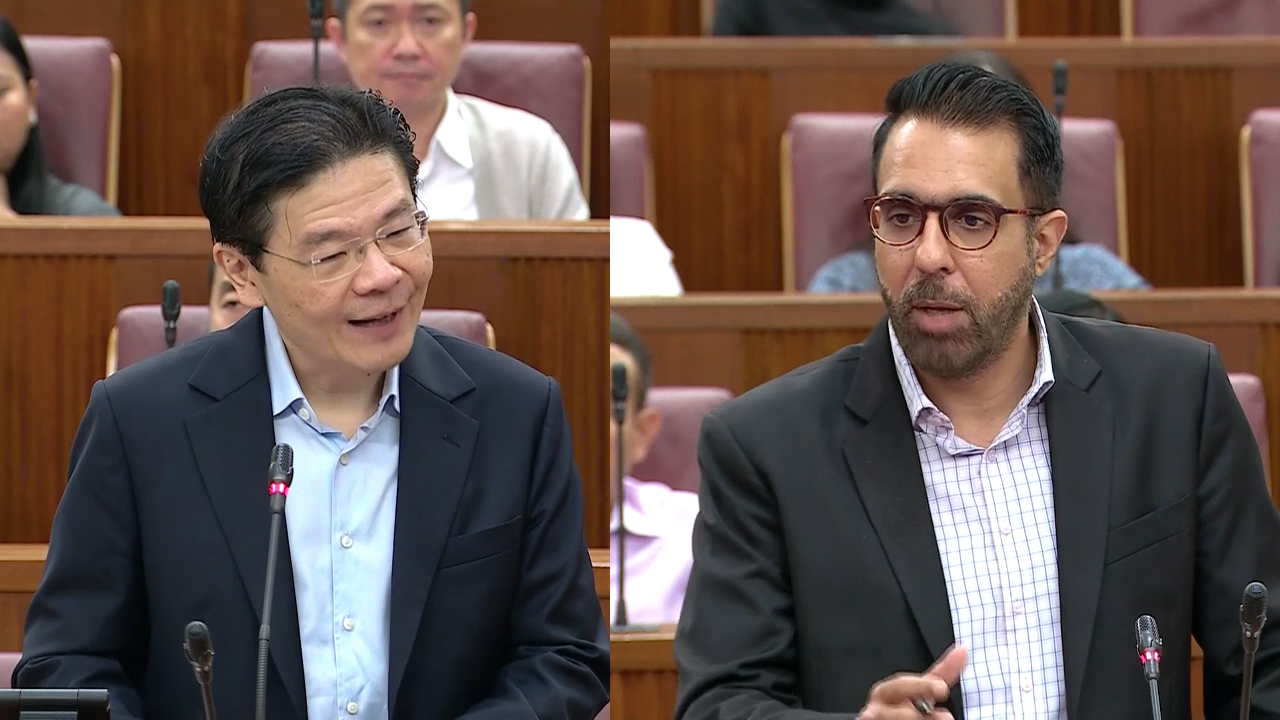

Prime Minister Lawrence Wong rejected opposition leader Pritam Singh’s claim that the Goods and Services Tax (GST) hike “turbocharged” inflation, but his response appeared to sidestep the key issue Singh was highlighting—the GST hike’s direct contribution to inflation.
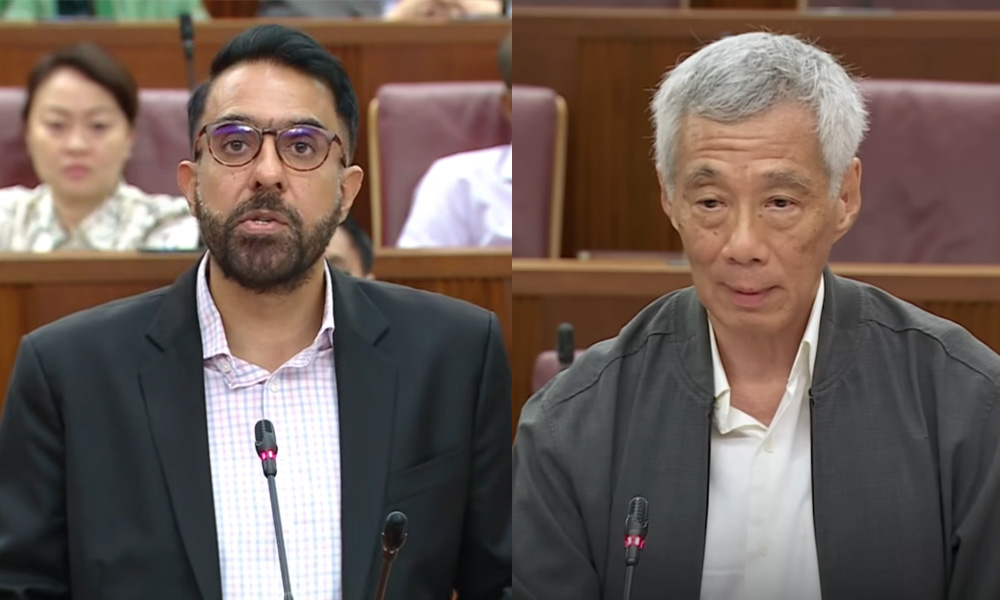
Speaking in Parliament on 28 February during the budget debate, Wong insisted that external factors, such as global supply chain disruptions and rising energy costs, were the main drivers of inflation.
He pointed to the Consumer Price Index (CPI), which showed inflation falling from 6.1% in 2022 to 4.8% in 2023 and further to 2.4% in 2024, even after the GST increase.
"Where is the turbocharging?" Wong asked. "Look, I know elections are approaching, but this chamber is not an election rally. Let's not get carried away by hyperbole and have a debate based on facts."
However, Singh never claimed that GST was the sole or even primary cause of inflation—only that it had significantly worsened the situation.
In his clarification, Singh pointed to the government’s own data, which estimated that the GST increase contributed “slightly less than one percentage point” to core inflation.
He noted that, based on the Monetary Authority of Singapore’s (MAS) 2024 core inflation projection of 2.5% to 3.5%, this meant the GST hike was responsible for around 40% of core inflation at the lower end of the estimate.
For 2024 as a whole, MAS Core Inflation is expected to average 2.5–3.5%. Excluding the impact of the increases in the GST rate, core inflation is forecast at 1.5–2.5%.
Rather than disputing this specific point, Wong countered with a theoretical argument: "If I take that view, then I really should be raising GST at a time of very high inflation. Then the proportionate impact would be quite small."
He then suggested that if the Workers' Party truly believed their own argument, they should not have objected to the timing of the GST hike.
This response, however, did not directly address Singh’s argument. Singh was not making the case that the GST should have been raised during high inflation to "shrink" its proportional impact.
Instead, he was pointing out that the GST hike had a measurable and significant impact on inflation, something the government itself had acknowledged in its projections.
Wong’s attempt to reframe the debate around overall inflation figures did not disprove Singh’s point—it arguably reinforced it.
Beyond the inflation debate, Wong also sought to justify the GST increase, arguing that it was a “difficult but necessary” decision to secure long-term funding for public services.
Without the increase, Singapore would have ended the last financial year in deficit, he claimed.
"Governance is about making responsible choices, not just popular ones," Wong said. "We must ask ourselves, do we want short-term populism or long-term stability?"
He also highlighted measures like the Assurance Package and the GST Voucher scheme, designed to offset the impact of the tax hike on lower-income groups.
However, critics have pointed out that such offsets are temporary or limited, while the GST increase is permanent.
In addition, Wong defended the government’s fiscal projections against opposition claims that they were overly conservative and led to excessive revenue collection.
He argued that Singapore’s budget estimates were generally accurate and contrasted the country’s prudent financial management with the debt-heavy approaches of other economies.
While Wong framed the GST hike as a necessary policy move, his response to Singh’s inflation argument left a key question unanswered.
By focusing on overall inflation trends rather than the GST’s specific contribution, Wong avoided addressing the core of Singh’s argument—one that was based on the government’s own data.