WP chief Pritam Singh critiques Budget 2025, calls for fiscal accountability and cost-of-living reforms
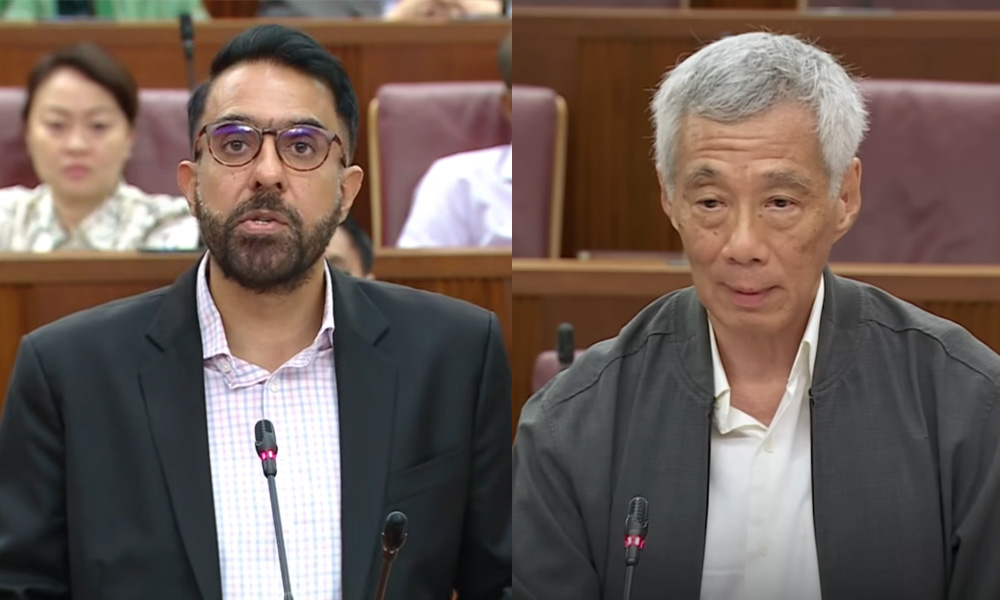
Leader of the Opposition and Workers’ Party (WP) chief Pritam Singh delivered his speech in Parliament on 26 February 2025, responding to Budget 2025. Singh raised concerns over the cost-of-living crisis, fiscal surplus, and the government’s budgeting accuracy. He questioned the necessity of the Goods and Services Tax (GST) hike and called for stronger fiscal accountability
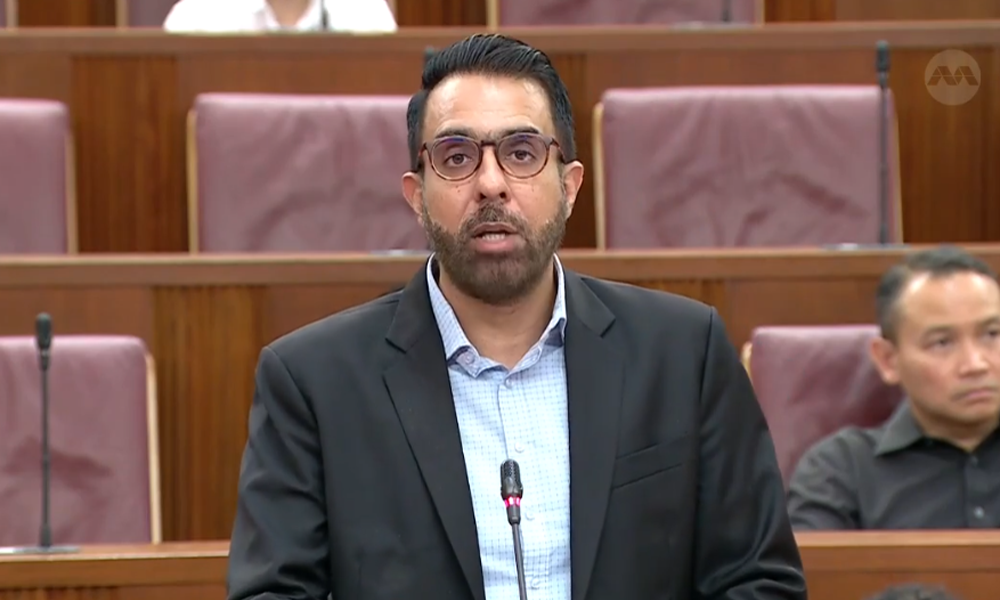

Leader of the Opposition and Workers’ Party (WP) chief Pritam Singh delivered his speech in Parliament on 26 February 2025, responding to Budget 2025.
He focused on Singapore’s long-term future, the government’s fiscal strategy, and the country’s economic trajectory.
Singh raised concerns over the cost-of-living crisis, questioned the necessity of the Goods and Services Tax (GST) hike, and called for stronger fiscal accountability.
Singapore’s economic outlook and major infrastructure projects
Singh acknowledged the government’s efforts in infrastructure development, particularly the Changi Airport Terminal 5 project and the continued expansion of Tuas Port.
“These are no mean feats and Singaporeans are proud of the achievements of all who made this happen,” he stated.
However, he highlighted emerging challenges such as nuclear power integration and energy imports.
He called for government transparency regarding nuclear safety, resource resilience, and cost implications for households, stating that “the Government naturally must address these concerns.”
Concerns over cost-of-living and fiscal surplus
Singh strongly criticised the government’s approach to addressing cost-of-living pressures, stating that while voucher schemes such as the $800 Community Development Council (CDC) vouchers and $800 SG60 vouchers provide temporary relief, they are not long-term solutions.
“The numerous vouchers will give us help for a little while, but not for long. After all, no GST offset package lasts forever,” he remarked.
He pointed out that while official figures indicated economic growth of 4.4% in 2024, with inflation easing and median wages rising, these statistics do not align with the realities faced by many Singaporeans.
“Life is very tough for the Singapore that is in the heartland. Concerns over jobs, prices, housing costs, and opportunities continue for many Singaporeans and their households,” he said.
Singh also highlighted a demographic shift, noting that Singapore’s total fertility rate had fallen below 1 for the first time, while the population had exceeded 6 million.
He questioned the government’s long-term urban planning strategies and called for greater transparency on housing policies, asking, “With finite land, how many more does the Government seek to squeeze in?”
Impact on businesses and competition from Johor-Singapore SEZ
The WP chief warned that Singaporean businesses face increasing competition, particularly from the Johor-Singapore Special Economic Zone (SEZ).
He cited reports of Singaporeans travelling across the border for cheaper goods and services, including medical care.
“With the JB-Singapore Rapid Transit System starting operations in 2026, many businesses will have to seriously review how far they can expect Singaporean customers to continue patronising them,” he cautioned.
He also expressed concerns about the rise in foreign recruitment in essential sectors, such as Auxiliary Police Officers (APOs) from China, India, the Philippines, and Myanmar, as well as paramedics.
He noted that while foreign hires address manpower shortages, they also create concerns about job competition and national integration.
Fiscal responsibility and GST concerns
One of Singh’s strongest criticisms was directed at the government’s fiscal management. He questioned the necessity of the GST increase from 7% to 9% when Singapore ended the term with a projected $14.3 billion fiscal surplus.
“A fiscal surplus of $6.8 billion is projected for 2025. Even after the latest CDC and SG60 voucher programme, 2024’s fiscal surplus has been revised massively upwards to $6.4 billion,” he pointed out.
He argued that poor fiscal projections had led to an unnecessary burden on Singaporeans.
“The decision to go ahead with a GST hike when inflation was raging was poor. We have seen Assurance Packages and CDC vouchers dished out to cushion the GST blow, but when these handouts stop, the 9% GST will remain,” he warned.
Singh reiterated the WP’s longstanding call for an independent Parliamentary Budget Office to enhance fiscal transparency and accountability.
“Compared to 10 years ago, total public expenditure has nearly doubled. Greater fiscal accountability and the introduction of institutions that track and account for public expenditure are ideas whose time has come,” he asserted.
"Why the PAP went headlong and headstrong into raising GST, and thereby turbo-charging inflation further, is something only the PAP itself can answer to Singaporeans for. As every Singaporean knows, a 1% rise in GST does not lead to a 1% rise in the cost of a cup of coffee."
Call for stronger national unity
In his concluding remarks, Singh emphasised the importance of national unity amid global uncertainties, including shifting geopolitical dynamics between the United States and China.
He stressed the need for stronger support for the Singapore Armed Forces (SAF) and the Home Team, stating that their role in ensuring national security is “an important source of strength for Singapore.”