Courts rule on law, people rule on mandate: testing Edwin Tong’s criticism of Pritam Singh
In CNA’s The Assembly, Pritam Singh said the “court of public opinion can be bigger than any court”, citing WP’s election showing. Law Minister Edwin Tong called the remark “outrageous” and warned sentiment cannot trump judgments. Our view: courts decide law; voters decide mandate — different domains that coexist.

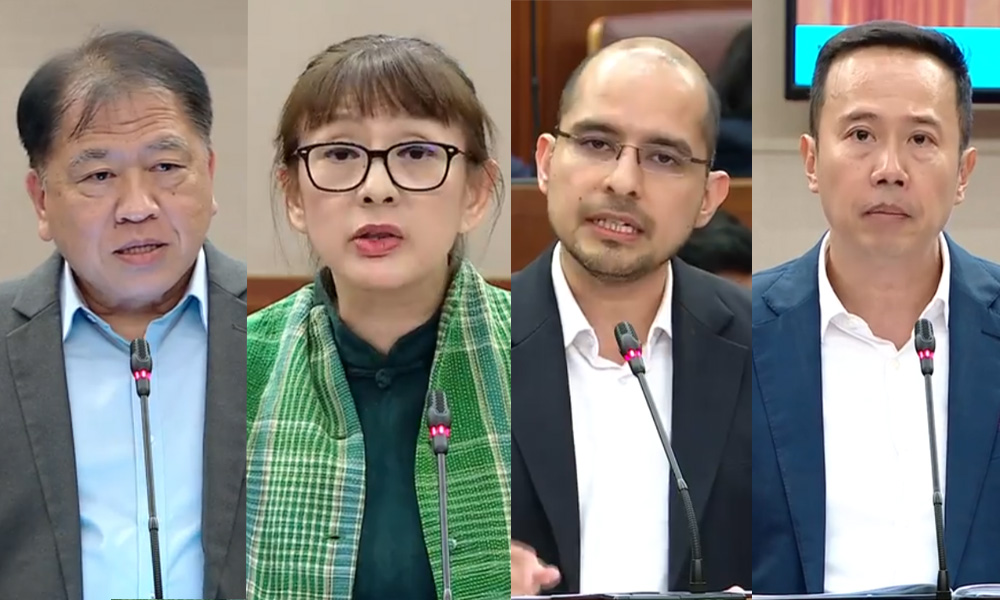
In CNA’s The Assembly episode (filmed months before his 4 November 2025 appeal), Pritam Singh was asked how he felt about being called a liar over the Raeesah Khan case. He replied that he was not losing “much sleep”, adding:
“I’m in the business of politics. My political opponents will do whatever it takes to lower my esteem and the esteem of my party in the public eye.”
He then made the line now at the centre of debate:
“The court of public opinion can be bigger than any court in the world.”
He grounded that view in personal conscience:
“If your conscience is clear, then people can throw whatever they want at you, and you’ll still be standing. And if there was something my conscience wasn’t in agreement with, I don’t think I’ll be sitting here today.”
Pointing to the 2024 General Election, he said the Workers’ Party “did pretty respectably”, adding: “People have eyes; people can see what’s happening… and you’re thankful for the support that you get, no matter what people try and throw at you.”
How Edwin Tong characterised those remarks
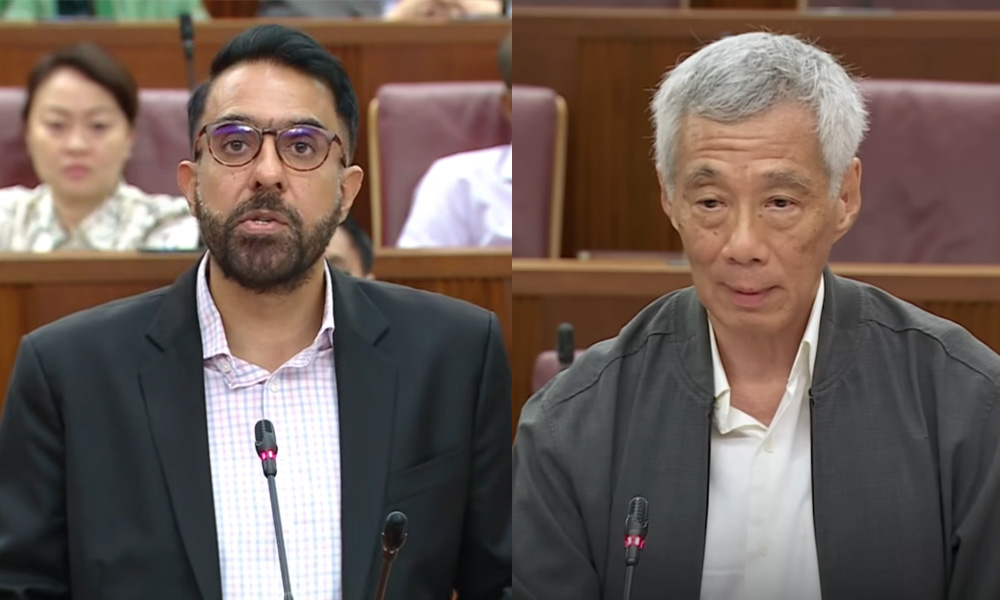
On 8 November, speaking at a doorstop during a community leadership event in Buona Vista, Minister for Law Edwin Tong called the “court of public opinion” sentence “outrageous, plainly wrong and completely unacceptable”.
He warned that no one should “dismiss or denigrate” a court’s judgment or suggest public opinion can “trump” it, calling that a “very dangerous idea” that risks “rule of the mob”.
He likened the stance to the rhetoric of “populist politicians who attack judges and courts when rulings go against them” and stressed that no one is above the law — “not the Leader of the Opposition, not any minister”.
Two domains, not one: what the contested sentence actually describes
Read in full, Singh’s line is not a licence to disobey judgments. It draws a boundary between domains that co-exist:
- Courts decide whether specific charges are proven, applying rules of evidence and procedure.
- Citizens decide whether, taking everything together, a person still deserves public trust and a mandate.
The judicial verdict binds the present; the public verdict shapes the future. History offers many examples of leaders who survived politically — or were later restored — not because courts first absolved them, but because electorates did.
That is not “mob rule”; it is how democratic legitimacy operates alongside the rule of law. Tong’s insistence on respecting judgments is important.
But reading Singh’s sentence as an invitation to ignore courts overstates it. A fair middle ground is simple: obey the judgment; let voters decide the mandate.
The hinge everyone overlooks: prosecutorial discretion
Courts can only rule on what is charged, when it is charged, and how it is framed. Evidence rules, burdens of proof and available remedies all sit inside the charge sheet. This is why the decision to prosecute is the decisive hinge in political cases. It frames the legal battlefield, sets the public narrative, and often influences whether, months or years later, the ballot box will confirm, complicate or contradict what the courtroom concluded.
The Singapore pathway in focus
In Pritam Singh’s case, the journey to court did not begin with the judge. It began in Parliament. The Committee of Privileges investigated former MP Raeesah Khan’s false statements and recommended that Khan be fined S$35,000 for two instances of lying to Parliament.
In the same report, it recommended that two Workers’ Party leaders — Pritam Singh and Faisal Manap — be referred to the Public Prosecutor. Parliament, with a government majority, endorsed those steps and referred the matter to the Attorney-General’s Chambers (AGC). The AGC then exercised its discretion to prosecute Singh.
That sequencing matters. The person who lied in the Chamber was set for a fine; two party leaders were set for potential prosecution. When the trial later turned heavily on contested recollections — a significant amount of “he-said-she-said” evidence — many remained unconvinced that the case should have proceeded at all.
Singh was convicted at first instance and has appealed; the legal process should run its course. Yet the broader civic question remains: was the charging choice the right tool, proportionately applied, at the right time?
A recent local illustration: independence on sentence, constraint on scope
The S Iswaran matter shows both truths at once. On 24 September 2024, the prosecution amended and pared down the case; two corruption counts were reframed to lesser offences and Iswaran pleaded guilty to five charges, with many others taken into consideration.
The State asked for six to seven months’ imprisonment. On 3 October 2024, the court imposed 12 months — a clear demonstration of judicial independence on quantum.
But that independence operated entirely within the boundaries of the charges the Prosecution chose to file and proceed with. Even the most independent court cannot punish for offences that are not before it.
In other words, independence on sentence can sit alongside an inherent constraint on scope, because scope is set by prosecutorial choice and the charge sheet.
Global patterns: when electorates unwind prosecutorial narratives
The split between legal culpability and political legitimacy is not novel, nor uniquely local.
- Brazil — Luiz Inácio “Lula” da Silva. Convicted and imprisoned on corruption charges; later annulled on jurisdiction and due-process grounds; then re-elected president. Courts corrected the legal record; voters restored the mandate. The hinge was the initial prosecutorial and judicial pathway.
- Malaysia — Anwar Ibrahim. Years of prosecutions and convictions; royal pardon in 2018; appointed prime minister in 2022 after a hung parliament. Law ran its course; clemency and coalition politics completed the arc.
- South Africa — Nelson Mandela. Lawfully convicted under apartheid law; elected president in 1994 once the political order changed. The electorate delivered a national settlement beyond judicial timeframes.
- Turkey — Recep Tayyip Erdoğan. Jailed in 1999 over a poem; by 2003 prime minister, thereafter dominant for two decades. The charge became the opening chapter in a political identity voters endorsed.
- India — Indira Gandhi. Election set aside by the Allahabad High Court in 1975; returned to office in 1980 after political turbulence. Courts and politics spoke at different moments to different questions.
- United States — Eugene V. Debs. Ran for president from prison in 1920, winning nearly a million votes — a century-old reminder that ballots can register dissent from the State’s charging story even without victory.
These examples do not say courts were wrong or prosecutions illegitimate. They show that the legal case and the political verdict answer different questions on different timelines. Courts apply statutes to the evidence before them. Electorates weigh the larger tapestry — state conduct, proportionality, timing, and a leader’s wider record.
Public judgment is not populism — and mandate is not a court verdict
It is fair to criticise populism when politicians urge defiance of court orders or attack judges without basis.
But public judgment is different. It accepts that courts must rule on the law as it stands and the record before them, while still reserving to citizens the right to decide whether a leader deserves a mandate after seeing the wider canvas — character, proportionality, context and consequence.
In systems like Singapore’s, judges have long acknowledged a simple truth: courts apply law; Parliament makes law. And Parliament is composed of MPs elected by the public.
In that sense, even the law that binds today is the product of public opinion channelled through elections. Because laws can later be amended or repealed, court-endorsed outcomes may be retrospectively judged by society as excessive or unjust; equally, once-controversial figures may be restored by voters when norms and majorities shift.
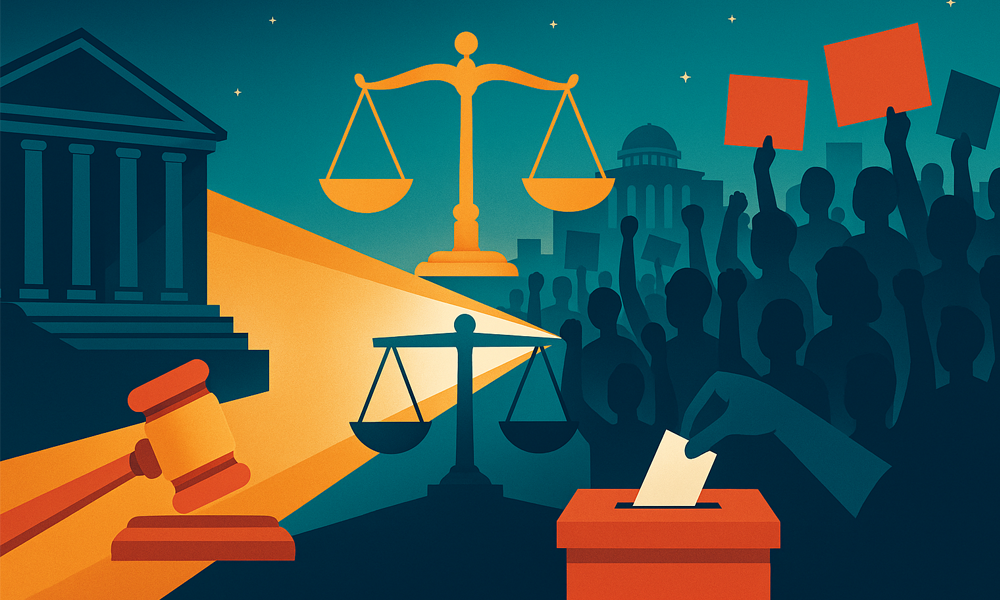
None of this denies the rule of law. It recognises two domains that co-exist: the court’s verdict binds the present; the public’s verdict shapes the future.
Seen in this light, Pritam Singh’s line — that “the court of public opinion can be bigger than any court in the world” — reads less as defiance and more as political realism.
Courts cannot confer a mandate. They determine legal culpability under current statutes. The electorate, at a later moment and on a broader brief, decides whether someone should lead.
Bringing it back to the present debate
“No one is above the law” remains non-negotiable. The courts decide the case before them and issue reasoned grounds. But the electorate’s verdict on leadership is separate from the court’s verdict on law.
That separation matters in this case. Parliament’s Committee of Privileges recommended that Raeesah Khan be fined for lying in the Chamber, while two Workers’ Party leaders were referred for possible prosecution — a route Parliament endorsed and which led to the AGC’s decision to charge. The trial then turned heavily on contested recollections.
Whatever one’s view of that pathway, courts cannot try cases they are not given, and citizens may still decide that the political mandate should not turn on such a record.
If the appellate court clears Singh, the legal record will show it. If it upholds the conviction, that judgment stands and should be obeyed.
Separately, voters will, in due course, render their own verdict on leadership. Holding both truths does not diminish the judiciary; it clarifies roles:
Courts decide law. People decide mandate. Laws can be reworked; mandates can be renewed or withdrawn. That is how a democratic society reconciles today’s binding judgment with tomorrow’s evolving sense of justice.