Budget 2025: PM Wong announces measures to boost enterprise growth, innovation, and infrastructure development
In Singapore's 2025 Budget, Prime Minister and Finance Minister Lawrence Wong unveiled a series of initiatives designed to fuel enterprise growth, foster innovation, and upgrade infrastructure. Key measures include a S$1 billion semiconductor R&D facility, a S$150 million AI initiative, and a S$1 billion Private Credit Growth Fund to support high-growth businesses.
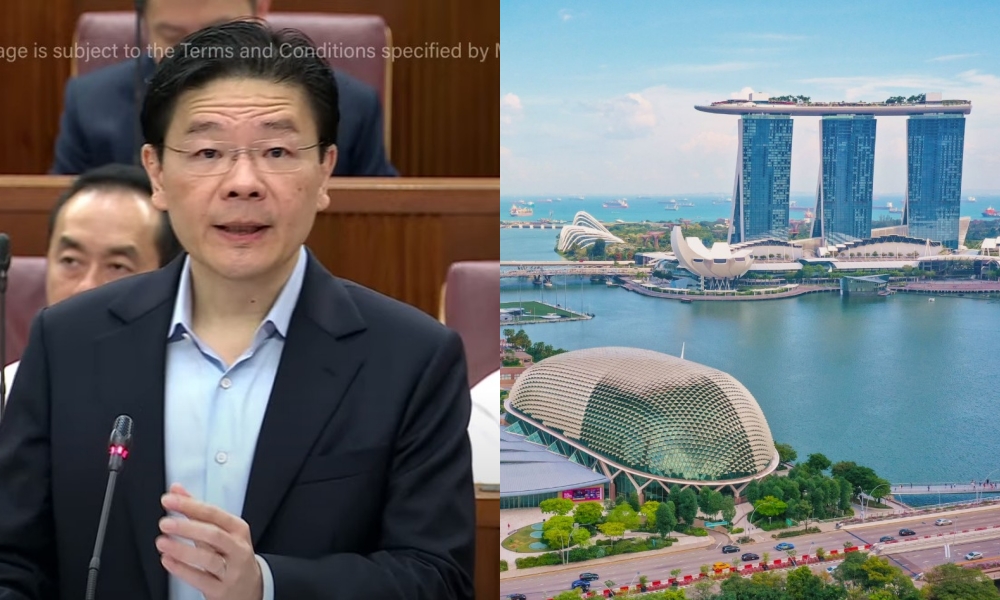

On 18 February, Prime Minister and Finance Minister Lawrence Wong unveiled Singapore's Budget Statement for 2025, outlining set of measures designed to propel the country’s enterprises, technology, and innovation sectors forward.
A central theme of the budget was the government’s unwavering commitment to supporting enterprises as they scale up, execute growth strategies, and compete on the global stage.
S$150M to help enterprises use AI
Wong highlighted several initiatives that would extend Singapore's support schemes, particularly in areas of internationalisation and mergers and acquisitions. The government will continue its efforts to enable companies to tap into global markets, making it easier for local businesses to venture beyond Singapore’s borders and expand their footprint.
To further support this goal, the Economic Development Board (EDB) will launch the Global Founder Programme later this year. The programme will leverage the EDB’s extensive network of multinational companies and entrepreneurs to attract global founders to establish and scale their ventures in Singapore.
The budget also announced the launch of the Enterprise Compute Initiative, which will provide up to S$150 million in funding to help businesses integrate artificial intelligence (AI) solutions into their operations.
This initiative will pair eligible companies with major cloud service providers, giving them access to AI tools, computing resources, and expert consultancy services. According to Wong, this will significantly aid enterprises in their transformation journeys, empowering them to leverage AI for better efficiency and competitiveness.
S$1 billion Private Credit Growth Fund for high-growth local enterprises
The Budget also included the introduction of the S$1 billion Private Credit Growth Fund, aimed at offering more financing options for high-growth local enterprises.
This new fund is set to play a pivotal role in easing access to capital for businesses with strong growth potential, helping them scale up their operations and compete more effectively in global markets.
S$3B top-up to the National Productivity Fund
Singapore’s commitment to innovation and research and development (R&D) was evident in the Budget announcement, with Wong detailing plans to maintain the country’s competitive edge in cutting-edge industries.
A S$3 billion top-up to the National Productivity Fund (NPF) will ensure that businesses continue to improve productivity, innovate, and train workers to stay competitive in a rapidly evolving global economy.
On the biotech front, the public biosciences and medtech research infrastructure in Singapore’s Greater One-North area will be refreshed.
This will provide state-of-the-art facilities designed to encourage collaboration within the research community and accelerate the translation of research into commercial solutions.
Additionally, Singapore is set to develop a national semiconductor R&D fabrication facility, estimated to cost about S$1 billion.
This facility will offer industry-grade tools for researchers and industry partners to prototype and test new innovations in the semiconductor space, which remains a critical part of Singapore’s technology strategy.
Fostering Technological and Innovative Growth
The importance of technology and innovation in Singapore’s long-term economic growth was underscored by Wong.
He acknowledged that, while Singapore cannot compete with larger economies in terms of scale, it excels in key areas.
For example, Singapore supplies more than 10 per cent of the world’s semiconductors and produces one-fifth of global semiconductor equipment.
Additionally, the country produces over 80 per cent of the world’s DNA chips, a crucial tool in advancing life sciences.
“These strengths in technology and innovation are critical for our long-term economic success,” said Wong.
He also highlighted Singapore’s growing local tech ecosystem, citing successful companies like Grab, Sea, and Razer, which have become regional or global leaders in their respective industries.
Sustaining Growth and Stability
Despite a robust growth rate of more than 4 per cent in 2024, Wong acknowledged that sustaining such high growth in the long term would be challenging.
However, he emphasised that if Singapore could maintain 2 per cent to 3 per cent growth per annum over the next decade, it would significantly improve the standard of living for all Singaporeans.
The government’s strategy to maintain this growth includes upholding sound monetary and fiscal policies, harnessing market forces to drive efficiency, remaining open to new ideas, and strengthening Singapore’s tripartite partnership, which has been a cornerstone of the nation’s economic stability.
Wong stressed that the Budget 2025 would focus on three key areas to propel Singapore’s growth: technology and innovation, enterprise development, and infrastructure investments.
These initiatives, he said, would ensure that Singapore remains well-equipped to navigate the challenges of the future while improving the quality of life for its people.