Where is the iron in Lawrence Wong? Hiding from direct response to Lee Hsien Yang?
Prime Minister Lawrence Wong’s decision to stay silent and allow an unnamed spokesperson to address Lee Hsien Yang’s call to demolish 38 Oxley Road raises questions about his leadership style. This approach contrasts with late Lee Kuan Yew’s directness, sparking debate on handling legacy issues.


Prime Minister Lawrence Wong’s choice to remain silent on the call to demolish 38 Oxley Road, responding only through an unnamed government spokesperson, has raised questions about his leadership approach.
Rather than addressing LHY’s appeal personally, Wong’s response was issued through an unnamed government spokesperson on Friday, prompting questions over whether this approach contrasts with the decisiveness expected of Singapore’s leadership.
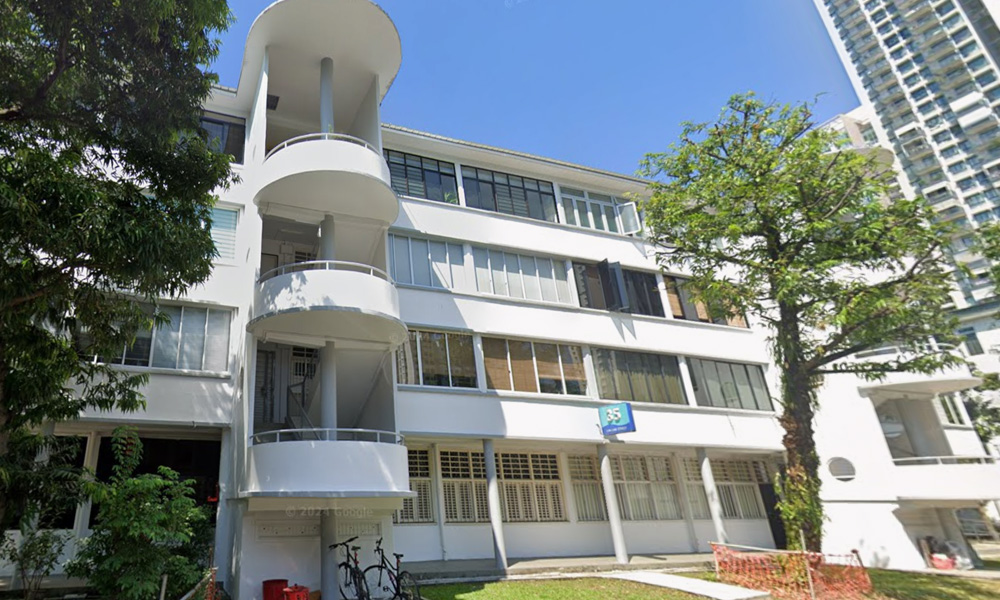
On 25 October, LHY publicly appealed to Wong to honour Lee Kuan Yew’s will, which called for the house’s immediate demolition once Dr Lee Wei Ling no longer resided there.
With her recent passing, LHY argued that this condition had been met and called on Wong to demonstrate leadership by fulfilling his father’s wishes. “This is your responsibility,” he stated, urging Wong to “Please lead” on the matter.
However, Wong has not addressed LHY’s appeal directly, opting instead for a statement from an unnamed Ministry of Digital Development and Information spokesperson.
The spokesperson countered LHY’s claims, calling them “inaccurate” and accusing him of “creating a false urgency.”
According to the spokesperson, Lee Kuan Yew’s will did indeed favour demolition, but the late leader acknowledged the possibility of preserving the property should future generations choose to do so.
The spokesperson added that the government is committed to “keeping options open” to allow for broader public consideration, underscoring a cautious and flexible approach to handling the legacy of 38 Oxley Road.
The government also shared images of Lee Kuan Yew’s email to the Cabinet from December 2011, in which he acknowledged that Cabinet members unanimously felt that the house should not be demolished, despite his intention to do so.
“I have reflected on this and decided that if 38 Oxley Road is to be preserved, it needs to have its foundations reinforced and the whole building refurbished,” he wrote. “It must then be let out for people to live in. An empty building will soon decline and decay.”
Many netizens online have interpreted this statement from Lee Kuan Yew as a reluctant acceptance, given the opposition from Cabinet members. Lee Hsien Loong, who was the Prime Minister at the time, has stated that he recused himself from the decision.
One netizen commented, “In normal English: We bullied an old man into accepting the one thing he didn't want to be his legacy, and now we are going to be performatively mad at everyone who isn't happy about it.”
Wong’s decision to remain silent has raised questions about whether his response aligns with the firm, confrontational style famously modelled by Singapore’s founding Prime Minister, Lee Kuan Yew.
Known for his uncompromising, direct approach to governance, Lee Kuan Yew once declared in a rally speech, “Whoever governs Singapore must have that iron in him. Or give it up. This is not a game of cards. This is your life and mine. I’ve spent a whole lifetime building this, and as long as I’m in charge, nobody is going to knock it down.”
This statement, resonating with generations of Singaporeans, captured Lee Kuan Yew’s boldness and clear-cut resolve in the face of contentious issues.
Lee Kuan Yew’s son, former Prime Minister Lee Hsien Loong (LHL), attempted to emulate his father’s iconic message in his 2015 rally speech, although many found that his tone fell short of his father’s well-known impact.
In fact, LHL had previously deferred the decision to a future government in 2015, when he addressed the matter of his family house in Parliament.
He said, “Mr Lee’s position on 38 Oxley Road was unwavering over the years, and fully consistent with his lifelong values. We should respect his wishes, as well as those of Mrs Lee."
"Dr Lee Wei Ling has informed me that she intends to continue living in the house at 38 Oxley Road. Therefore, there is no immediate issue of demolition of the house, and no need for the Government to make any decision now. If and when Dr Lee Wei Ling no longer lives in the house, Mr Lee has stated his wishes as to what then should be done. At that point, speaking as a son, I would like to see these wishes carried out. However, it will be up to the Government of the day to consider the matter.”
He reaffirmed this in his 2017 ministerial statement.
Now that Wong has taken the baton from LHL as Prime Minister, surely his administration is the Government of the day to decide.
To some, Wong’s silence may suggest an unwillingness to engage directly on a complex, potentially polarising matter, particularly since the governing party's preference is likely to run counter to majority views that favour respecting Lee Kuan Yew's last wishes.
LHY’s public call adds to a legacy debate stretching back to a ministerial committee report in 2018, led by Senior Minister Teo Chee Hean, which proposed three main options: preserving the house as it stands, conserving only historically significant areas, or demolishing the structure entirely. Wong, a member of that committee, is no stranger to the complex discussions surrounding the property.

The government’s spokesperson also referenced judicial findings from 2020, which suggested that LHY and his wife, Mrs Lee Suet Fern, had misrepresented the circumstances surrounding the drafting of Lee Kuan Yew’s will.
This context, the spokesperson argued, sheds light on LHY’s motives, suggesting his calls should be considered cautiously.
However, the government under Wong seems to overlook the fact that correspondence between Lee Kuan Yew and his lawyer, Kwa Kim Li, shows Lee Kuan Yew made these statements believing his house was going to be, or had already been, gazetted. In his last will, he tried to enforce his wishes, stating that his strongest desire was for the family house to be demolished.
As Singaporeans reflect on the balance between Lee Kuan Yew’s legacy and modern leadership expectations, Wong’s indirect handling of LHY’s appeal raises larger questions about how Singapore’s leaders approach the nation’s foundational symbols.
Wong’s response, or lack thereof, speaks to the evolving nature of leadership in Singapore—a divergence from the founding father’s direct style that may signal a more measured, cautious approach.
Yet, in the face of LHY’s direct challenge, the public is left to ponder: Where is the iron in Lawrence Wong?