Chee Hong Tat rejects PSP's call for COI on 6-day EWL disruption
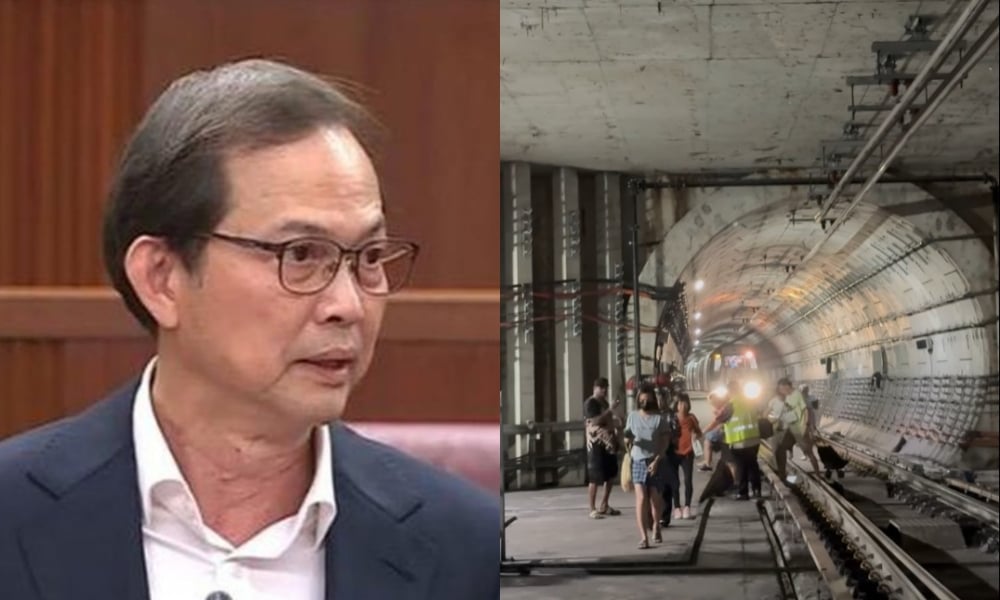
During a Ministerial Statement on 15 October, Transport Minister Chee Hong Tat rejected opposition calls for a Committee of Inquiry into the six-day disruption of the East-West Line (EWL). He expressed confidence in the Land Transport Authority's ongoing investigation to identify the root causes of the incident and assured that the findings will be publicly released.


During a Ministerial Statement on 15 October addressing the six-day disruption of the East-West Line (EWL), Transport Minister Chee Hong Tat rejected calls from opposition Members of Parliament to convene a Committee of Inquiry (COI).
Instead, he expressed confidence in the ongoing investigation led by the Land Transport Authority (LTA) to conduct a thorough inquiry and identify the root causes of the incident. He assured that the findings will be released publicly.
Minister Chee informed the House that the LTA is investigating the root cause of the axle box failure while reviewing fault detection and incident-handling procedures.
Additionally, to supplement its efforts, the LTA will be supported by an Expert Advisory Panel chaired by Malcolm Dobell, former Head of Train Systems for the London Underground, and five other local and international experts.
The Ministry of Transport’s Transport Safety Investigation Bureau (TSIB) will also conduct an independent safety investigation.
"We expect the investigations to be completed in the next few months, and the findings will be released publicly. LTA will mete out penalties if the investigations reveal lapses," Minister Chee added.
In a supplementary question, Ms Hazel Poa, Non-Constituency Member of Parliament (NCMP) from the Progress Singapore Party (PSP), sought clarification on the differences between the LTA's investigation approach for the EWL disruption and a COI.
Minister Chee acknowledged the distinctions between various types of investigations but emphasised that all approaches share common elements: thoroughness, evidence-based methodologies, and a focus on understanding what happened, determining root causes, and identifying areas for improvement.
Ms Poa colleague, NCMP Leong Mun Wai further challenged the Minsiter to explain the difference between this incident and the 2011 breakdown, which led to a COI, and whether a new COI would help ensure that recommendations from the 2011 COI have been fully implemented, including any non-technical factors that should be considered.
Minister Chee responded by reiterating his earlier assurance that thorough investigations would be conducted by the LTA and TSIB, upported by an Expert Advisory Panel.
He explained that although both the 2011 breakdown and the current incident involved serious disruptions, the operational context and performance of the MRT system today are vastly different.
In 2011, the mean kilometers between failures (MKBF) was only 60,000 km, whereas today, all MRT lines exceed the target of 1 million MKBF, he said.
Minister Chee further argued that other significant incidents, such as the flooding at Bishan and the Joo Koon collision, did not result in COIs but were still thoroughly investigated by LTA, leading to improvements.
He assured Mr Leong that the findings from the 2011 COI had been implemented, as evidenced by the overall reliability improvements in the MRT system.
Ms Poa, persistently on the issue, in a supplementary question reminded the MInsiter that under COI, it allows for the public hearing of inputs from experts, rather than reading about it in a summarized version in a report.
She again pressed whether Minister would allowing such public hearings due to greater transparency will be helpful to what's building and maintaining public trust and confidence.
Without addressing the issue of transparency, Mr Chee reaffirmed his confidence in the thoroughness of the ongoing investigations by the LTA and TSIB, underscoring that the ultimate goal remains to ascertain the facts, determine the root causes, and identify areas for future enhancement.