Guidelines introduced for pickleball play in HDB courts amid rising noise complaints
With noise complaints from pickleball games on the rise, guidelines are being implemented in HDB estates, including court access restrictions and adjusted playing hours, while Town Councils consider converting facilities and building indoor courts to reduce disturbances.
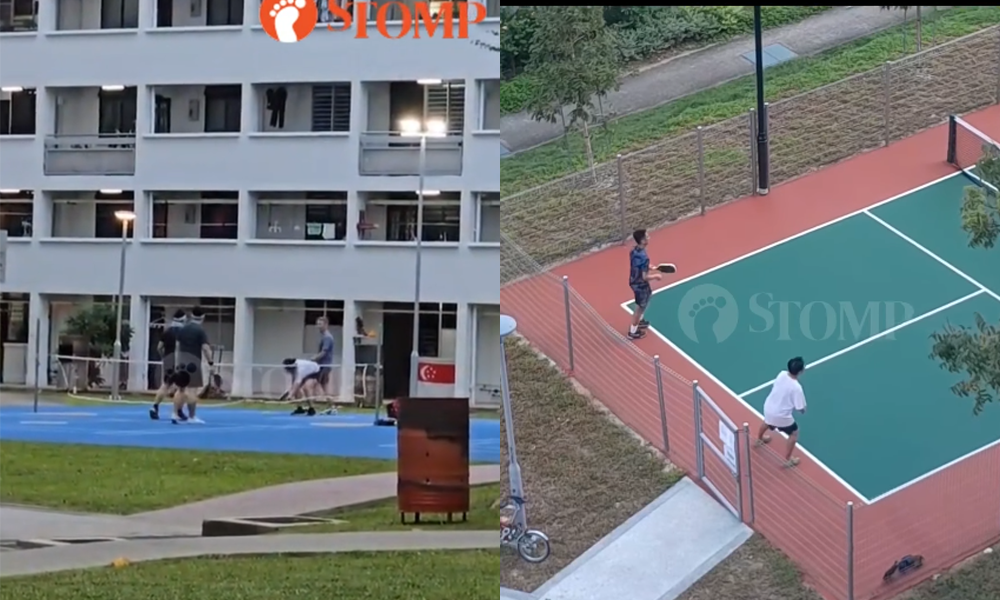

Town Councils across Singapore have begun implementing localised guidelines for pickleball play in Housing and Development Board (HDB) estates, following a rise in noise-related complaints from residents.
Between January 2024 and August 2025, the Municipal Services Office received 701 complaints concerning pickleball-related noise, according to the Minister for National Development, Chee Hong Tat.
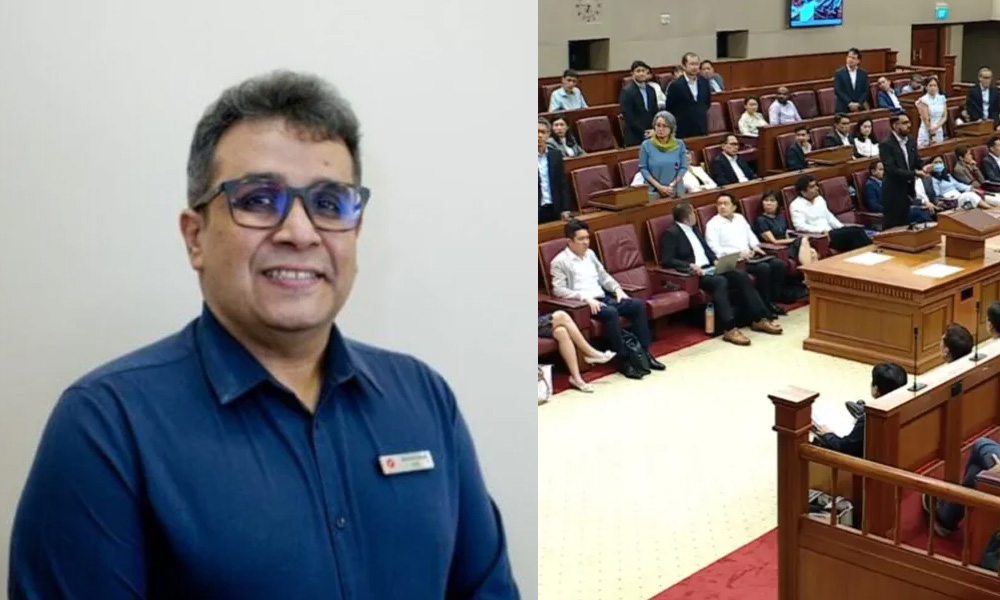
The issue was raised in Parliament by Member of Parliament for Sengkang GRC, Associate Professor Jamus Lim, who asked whether the government intends to regulate the sport’s play in public spaces, given its growing popularity and associated noise disamenities.
Quiet hours and local measures introduced
Under current community noise guidelines, all residents are advised to observe quiet hours between 10.30pm and 7am. These guidelines apply not only to individual households but also to shared spaces like game courts in HDB estates.
Town Councils (TCs) have been adopting specific local measures to manage the concerns. These include putting up advisories at affected courts, working with Grassroots Leaders to mediate between players and nearby residents, and imposing restricted access hours.
For instance, at courts with gates, some TCs now lock the facilities at 9pm. Others have displayed signage requesting that games be confined to designated hours.
Four Town Councils restrict court access
At least four Town Councils, including Ang Mo Kio, Marine Parade-Braddell Heights, Sengkang and East Coast, have moved to limit pickleball activity on community hard courts.
In Ang Mo Kio, authorities cited “prolonged noise and court congestion” as reasons for enforcing earlier closure times.
Marine Parade-Braddell Heights has set permitted play hours between 9.30am and 10pm, as displayed on signage at Mountbatten’s multipurpose court.
Member of Parliament for the area, Gho Sze Kee, said balancing the needs of residents is a priority.
Speaking to CNA, she acknowledged that while some pickleball enthusiasts may be disappointed by the new rules, “the fostering of the community spirit, the kampung spirit, goes a long, long way to resolve issues such as neighbourhood disputes.”
She added that managing court usage was one of her priorities in her first 100 days as an MP and that players had expressed understanding of the new restrictions.
Experts have noted that the complaints are particularly significant in the context of Singapore’s high-rise public housing design, where sound transmission is naturally amplified.
Associate Professor Lee Siew Eang from the National University of Singapore’s College of Design and Engineering explained that pickleball produces high-frequency sounds when the ball is struck by a paddle.
These sounds are more perceptible and irritating to human ears than lower-frequency sounds.
“That is why people may find it more disturbing than a lower frequency sound, because our hearing is more sensitive to high frequency sounds,” he said.
Additionally, the vertical structure of HDB blocks exacerbates the issue.
“Sound travelling upward is a very natural thing,” Assoc Prof Lee added. “So even in a small court, if we have some barrier walls, it may not be absolutely effective because apartments two or three storeys high – they will still hear quite loudly and clearly.”
Potential facility upgrades and conversions
In Parliament, Assoc Prof Lim also suggested converting existing sports courts into multi-purpose facilities equipped with sound dampeners.
In response, Minister Chee explained that Town Councils may apply to HDB for consent to conduct such conversion works.
Approval will be subject to compliance with technical and safety standards, and a review of whether the proposed changes might introduce other disamenities.