Jamus Lim urges fair solutions for 38 Oxley Rd, warns against state overreach and ‘majority tyranny’
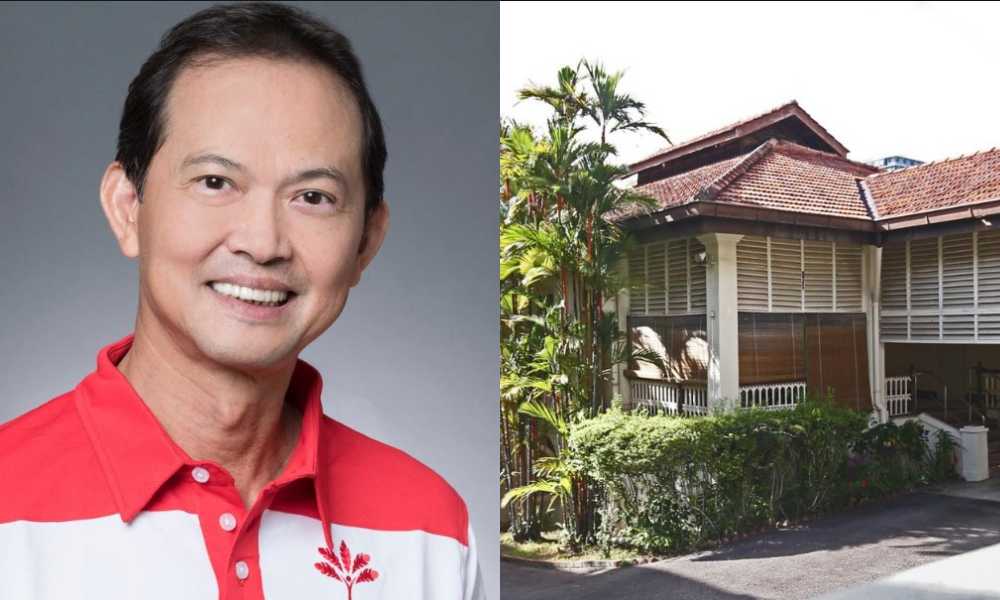
Workers’ Party MP Jamus Lim reflected on the 38 Oxley Road dispute in a 17 Nov Facebook post, highlighting tensions over when the state should exercise powers to take over private property. He noted the Oxley case is unprecedented due to its intangible historical value and the owner’s objection. Lim urged avoiding state overreach and called for a fair, compromise solution.


SINGAPORE: In a Facebook post on 17 November 2025, Associate Professor Jamus Lim, the Workers’ Party Member of Parliament for Sengkang GRC, urged caution in ensuring that state institutions are not inadvertently corralled into roles they should not fulfil.
He added that, to the extent that many Singaporeans hope to preserve the memory of Lee Kuan Yew and the nation’s heritage, a compromise solution for 38 Oxley Road ought to be found.
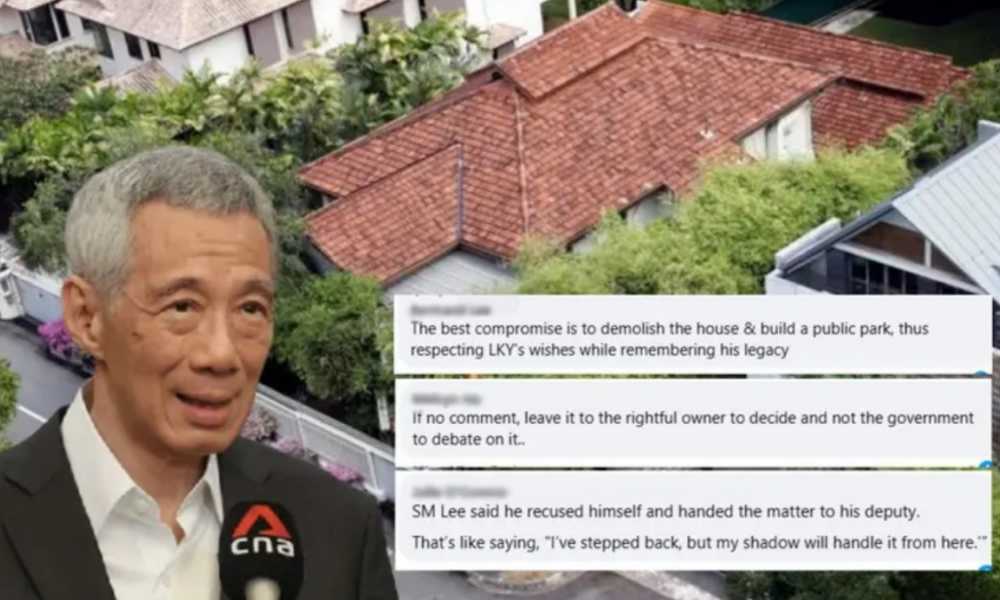
The remarks were made following the Government’s announcement of its intention to preserve and potentially acquire the property, after the National Heritage Board stated on 3 November 2025 that the Preservation of Sites and Monuments Advisory Board (PSMAB) had assessed 38 Oxley Road to be of “historic significance and national importance”.
In his post, Assoc Prof Lim noted that much had already been written about the long-running 38 Oxley Road matter.
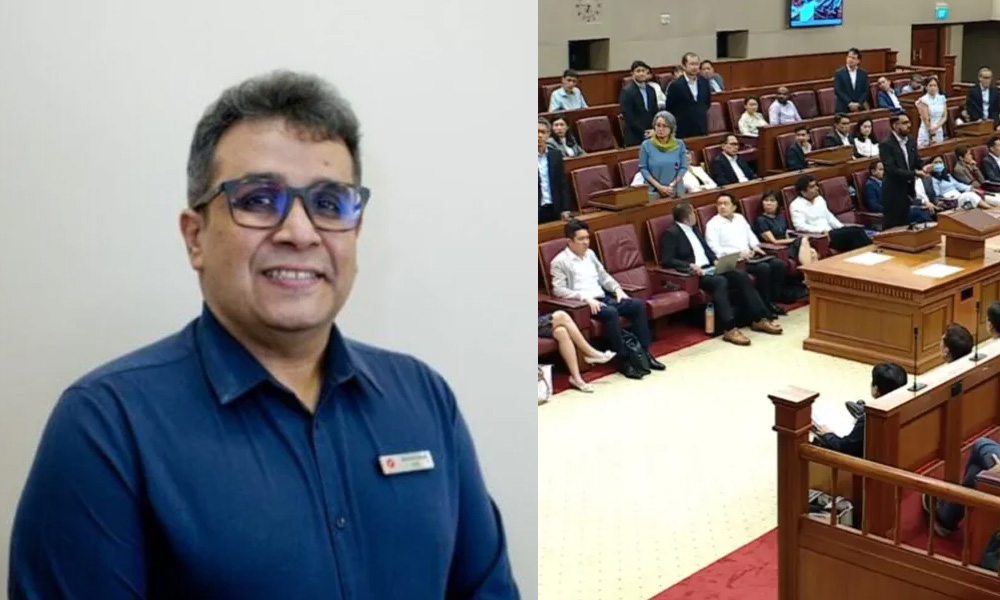
While he did not wish to “spill much more electrons” on the topic, he expanded on his earlier parliamentary remarks made on 6 November 2025.
Lim argued that the real tension lies in understanding what it means for the Government to exercise its right to take over private property, and what circumstances justify doing so.
Typically, he said, the economic case for eminent domain—where the state takes possession of private property for fair compensation—is grounded in the belief that the public interest outweighs individual rights.
However, this principle alone is insufficient. “If so,” he wrote, “we would suffer from all sorts of insecurities in society that would come from the tyranny of the majority.”
Instead, there should also be an overwhelming efficiency case for such an intrusion, which is why eminent domain is usually concerned with land for schools, hospitals, public housing or transport infrastructure.
Debating eminent domain and the limits of state power
Lim emphasised that the Oxley property stands apart because the public interest at stake is intangible and relates to historical and national significance.
For that reason, the property would not be preserved under the Land Acquisition Act of 1966 but under the newer Preservation of Monuments Act passed in 2009.
He pointed out the unprecedented nature of the present situation: the property’s owner has objected to gazetting.
This makes the unfolding events “novel” and without clear precedent in Singapore’s legislative history.
Lim reiterated that his party would not take sides in what he described as, ultimately, a private family dispute best resolved within the family.
His principal concern, he clarified, is that state institutions must not be drawn into functions they should not serve or used inappropriately.
At the same time, Singaporeans who hope to preserve Lee Kuan Yew’s legacy should be able to obtain a reasonable, compromise solution.
“I made one such suggestion in Parliament,” he wrote, “but I’m sure there are others.”
Jamus Lim recalls Lee Kuan Yew’s desire for demolition
On 6 November, Assoc Prof Lim drew attention to what he called an inherent conflict that the Preservation of Sites and Monuments Advisory Board must address.
He acknowledged that the Oxley Road house has clear national historical value and therefore, “metaphorically belongs to all of us”.
The Government has previously gazetted private properties as national monuments, so such a move would not be unprecedented.
However, he highlighted that Lee Kuan Yew had expressed a well-known preference for the house to be demolished.
The current owner, Lee Hsien Yang, has also applied to demolish the property.
While the Government had not yet decided whether to gazette the site, it had stated that, if preservation occurs, all private living spaces would be removed so as to remain consistent with Lee Kuan Yew’s wishes.
Seeking clarity on how public and private interests are weighed
Lim asked the Government to clarify whether any formal framework or scoring mechanism existed to weigh public benefits against private preferences when considering eminent domain for the purpose of national monument gazetting.
He questioned how much weight should be accorded to the owner’s stated preferences, especially given that there has historically never been any objection from an owner to an intended gazette.
He also asked whether the Government would consider a future course of action that strongly favours privacy while still allowing gazetting.
One possibility he proposed was for the property not to be demolished but for the site to be closed to visitors unless the owner explicitly grants permission.
Another approach he floated involved dismantling the site’s main structures and reconstructing them at the Founders’ Memorial.
Such proposals, he argued, could preserve the public interest in national heritage while also respecting private property rights.
“These approaches strike me as more respectful of both the public interest benefit of preserving elements of the site for posterity, while also accommodating the private property rights of the owner,” he said.
Government’s response: independent assessment and open options
In response to Lim’s parliamentary queries, Acting Minister for Culture, Community and Youth David Neo explained that the PSMAB is independent and composed of experts in the relevant fields.
The Board does not weigh private wishes—be they those of Lee Kuan Yew or Lee Hsien Yang—when assessing a site. Rather, it scores each site strictly on technical merit.
Neo outlined the process used, which follows international best practice. Sites are evaluated based on national significance, historical merit, and architectural or design merit.
He provided an example: sites with deep relevance to historic events or individuals would be assessed as possessing strong historic merit.
As for the various options Lim suggested, Neo advised that it remained too early to comment.
The Government had not yet decided on preservation or acquisition, and technical experts had not even been able to inspect the property.
They would need to visit, examine the structures and weigh costs and benefits before arriving at any recommendation.
Neo stressed that “all options are open” with respect to the site’s future configuration. Some of the possibilities Lim proposed, he noted, could indeed be feasible, but any discussion remained premature pending a full assessment.
Lee Hsien Yang: 38 Oxley Road will be "a monument to the PAP’s dishonour of Lee Kuan Yew"
On 17 Nov, in a letter to Prime Minister Lawrence Wong, Lee Hsien Yang, as executor of Lee Kuan Yew's will and owner of 38 Oxley Road, has objected to the Government’s plan to preserve and potentially acquire the property, arguing it would dishonour his father, who he said consistently wished for the house to be demolished.
Acting Minister David Neo set today as the deadline for objections before a final decision is made.
LHY rejected claims that Lee Kuan Yew had softened his stance, calling such arguments false.
He recounted his father’s instructions to demolish the house unless blocked, and noted strong public support for doing so. Lee said the final decision now rests with PM Wong and warned that preservation would become “a monument to dishonour.”