Netizens split over Jamus Lim’s COE discount proposal, Jeffrey Siow defends market system
Workers’ Party MP Jamus Lim proposed COE discounts for families, caregivers, and persons with disabilities, arguing for fairness in car ownership. Acting Transport Minister Jeffrey Siow defended the market-based system as fairer. Netizens’ reactions were mixed, with some supporting Lim and others criticising Siow for dismissing alternative proposals.
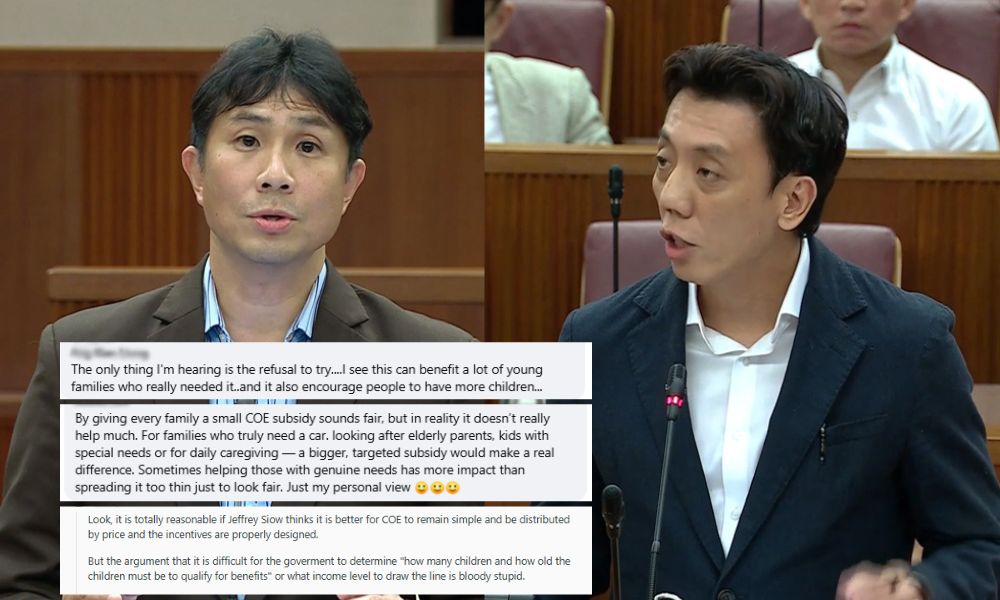

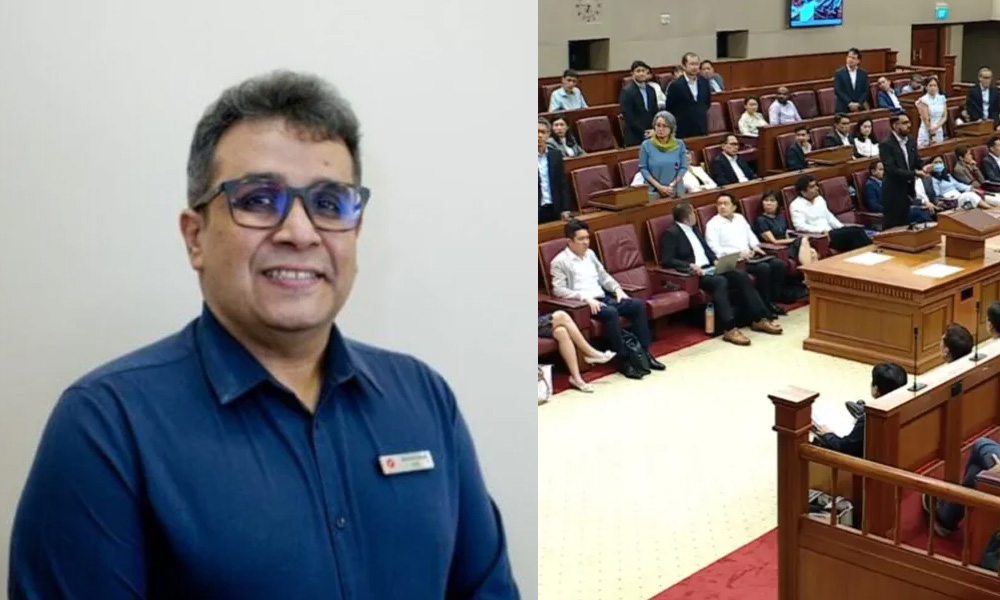
SINGAPORE: Associate Professor Jamus Lim tabled an adjournment motion in Parliament on 22 September titled “Toward Certificate of Entitlement 2.0”, calling for reforms to Singapore’s Certificate of Entitlement (COE) system.
The Workers’ Party MP for Sengkang GRC argued that while efficiency is important, equity should also play a role in car ownership policies.
He highlighted that families with young children, caregivers of elderly parents, and persons with disabilities face legitimate transportation challenges that public transport alone cannot always meet.
Proposing a Needs-Based Approach
Assoc Prof Lim began his speech by acknowledging the government’s emphasis on prioritising public transport in land-scarce Singapore but questioned whether the market-driven COE allocation was truly fair.
“Allowing prices to be dictated by the market simply abstracts from need, by allowing money to adjudicate between competing demands,” he said. “Those with more money will automatically be able to bid more to secure the limited resource.”
He identified three groups that would benefit disproportionately from car ownership: families with two or more young children, caregivers supporting elderly parents with chronic illnesses, and persons with disabilities.
To address this, he proposed targeted COE discounts within the existing auction framework, including:
- A 100% discount for persons with disabilities, extending the Disabled Persons Scheme.
- A 10% discount per additional child (beyond the first) for families with at least two children under 14.
- A 10% discount for households where a primary caregiver supports elderly parents over 80, or one parent with a chronic illness.
He also suggested means testing to ensure fiscal responsibility, limiting eligibility to households below the median income or excluding the top 20% of earners.
Beyond practical support, he argued that such measures would reflect societal values, reinforcing the importance of filial piety, family bonding, and care for vulnerable groups.
Government: Market-Based System Remains Fairest
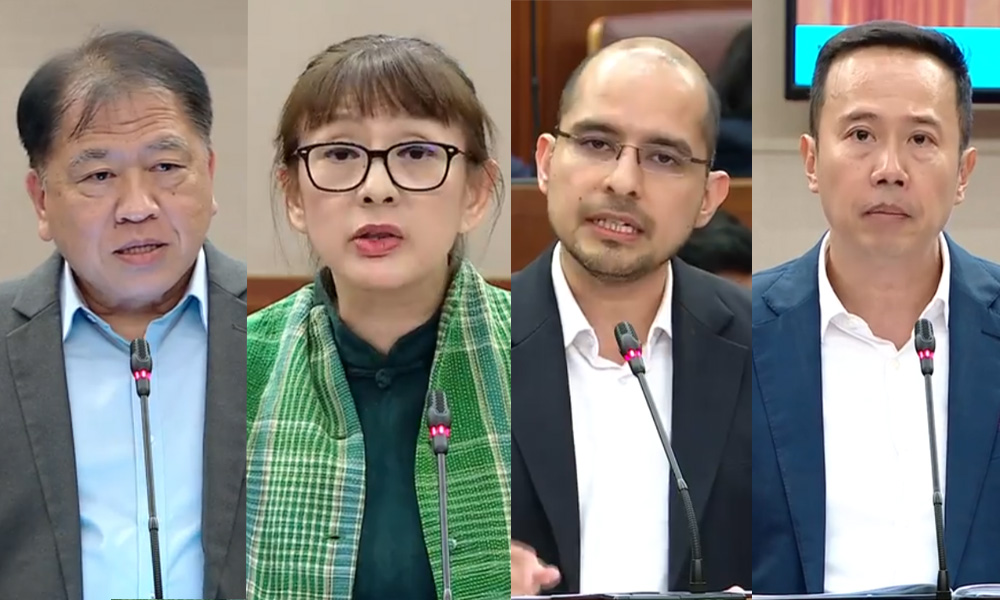
Responding to the motion, Acting Minister for Transport and Senior Minister of State for Finance Jeffrey Siow defended the current system as the most transparent and equitable given Singapore’s land constraints.
“We do not have enough land for every person, or even every household, to own a car,” he said, noting that roads already occupy 12% of Singapore’s land. “Any additional land take will come at the expense of other needs—housing, schools, hospitals, community facilities.”
He explained that COE revenues, which average between S$4 billion and S$6 billion annually, subsidise public transport as well as other essential national spending. This, he argued, ensures fairness to those who do not drive.
Challenges of a Needs-Based System
While acknowledging that some groups face difficulties, Siow cautioned that a needs-based COE allocation would be complex and subjective.
“What appears deserving to one person might not appear fair to another,” he said, questioning how the system would determine the right thresholds for family size, children’s ages, or income levels. He also asked whether cars should be withdrawn once a person’s circumstances changed.
“No matter how one draws the line, there will still be people who fall on the wrong side, who believe they are more deserving,” he added.
Rising COE Prices and Private Hire Car Bids
Siow also addressed concerns over rising COE prices, noting that supply had been doubled since 2023, with a one-off injection of 20,000 COEs announced in October 2024.
However, strong demand—driven partly by lower electric vehicle prices—continued to push up bids.
On the role of private hire car (PHC) companies, he clarified that less than 10% of successful bids in 2025 came from leasing firms.
Even excluding PHC bids, he said COE prices would not have been significantly lower.
In response to Assoc Prof Lim’s suggestion to move PHC bids to Category E, Siow warned this could lead to higher PHC fares and rentals, disadvantaging Singaporeans who rely on ride-hailing services instead of private cars.
Mixed Reactions from Netizens
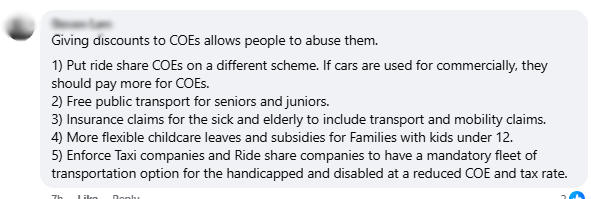
The debate on the COE sparked mixed responses from netizens across Reddit, CNA, and The Straits Times’ Facebook posts.
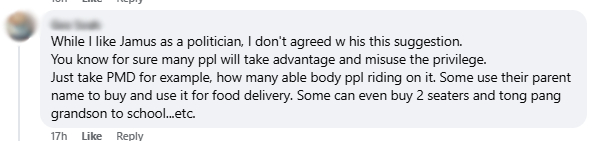
While some expressed support for the proposal, others argued it was open to abuse.
One user remarked, “You know for sure many people will take advantage and misuse the privilege.”

Support for Jamus Lim’s Proposal
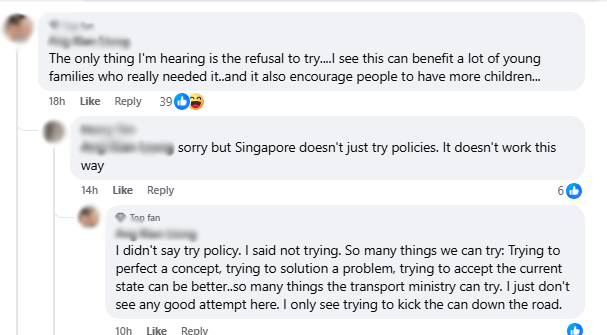
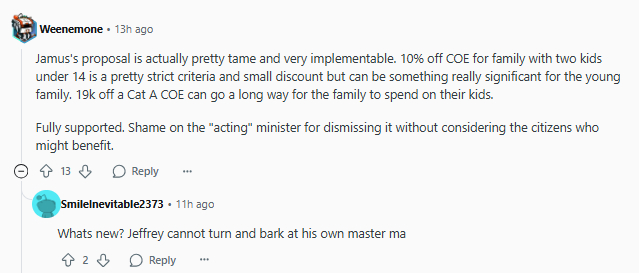
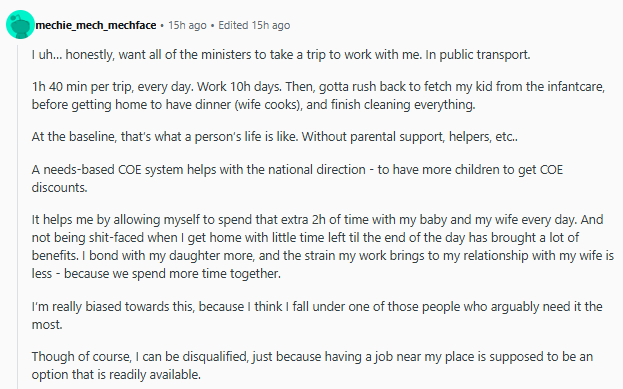
Several netizens welcomed the idea, with one noting that the proposal could benefit many young families who genuinely need support and might also encourage people to have more children.
One user, however, felt that giving every family a small COE subsidy might sound fair but would not help much in practice.
“For families who truly need a car—looking after elderly parents, kids with special needs or for daily caregiving—a bigger, targeted subsidy would make a real difference,” the user suggested.

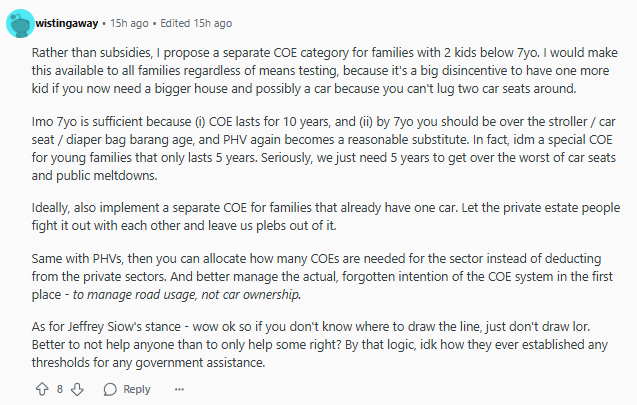
Another proposed a separate COE category for families with two children below seven years old.
“I would make this available to all families regardless of means testing, because it’s a big disincentive to have one more kid if you now need a bigger house and possibly a car because you can’t lug two car seats around,” the user said.
There were also calls to create separate COE categories for individuals and companies to bid.

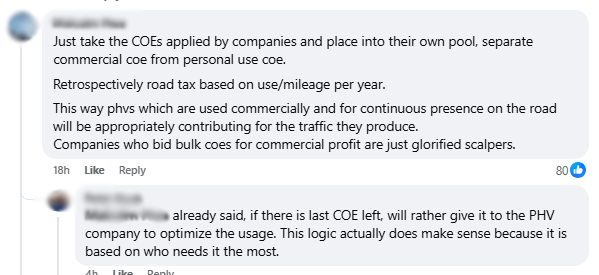

Netizens Slam Siow’s Response
Others turned their criticism towards Siow’s response.
One user wrote that the government’s argument about the difficulty of determining how many children, what ages should qualify for benefits, or what income level to draw the line was “bloody stupid.”
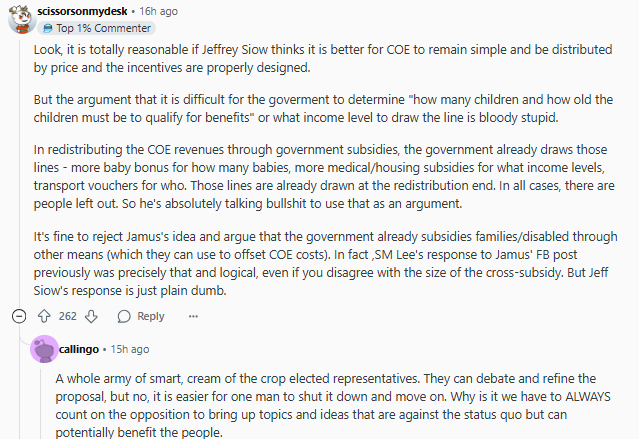
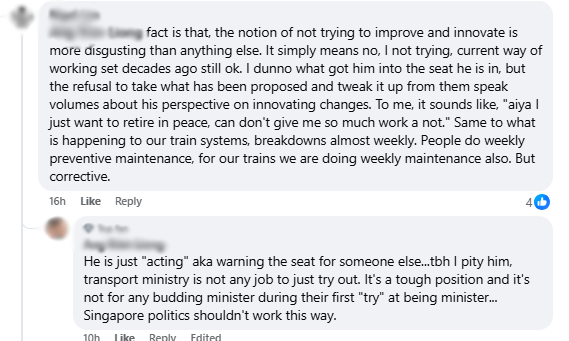
Another remarked, “Instead of debating the merits, go straight to claiming that an alternative proposal is ‘divisive’.”

A further comment added, “I wish they could still have some carve outs though, rather than just saying it’s administratively hard and will lead to more debates.”
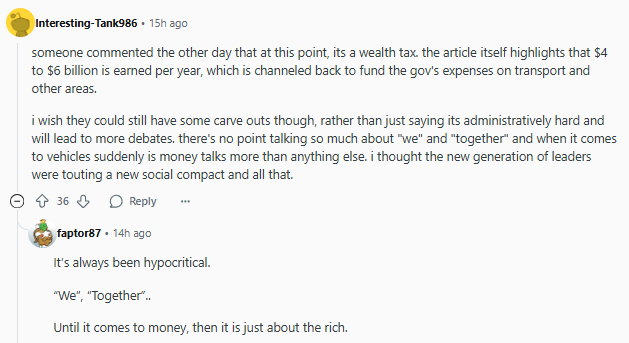
Others noted that any sound proposals from the opposition would likely be rejected, only for a similar idea to be introduced and implemented years later.
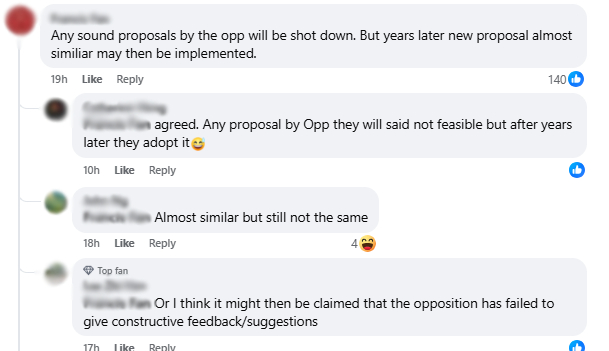
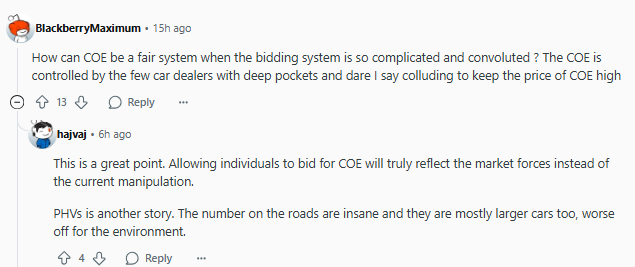
Some users also criticised the COE system itself, questioning its fairness, with one comment pointing out that the bidding process was complicated and convoluted.