SMRT: Power system fault may have caused three-hour Bukit Panjang LRT disruption on 3 July
A fault in the Power SCADA system may have caused a nearly three-hour disruption on the Bukit Panjang LRT on 3 July 2025, said SMRT Trains president Lam Sheau Kai. SMRT and LTA are investigating the issue amid ongoing renewal works set to be completed by end-2026.

SINGAPORE: A nearly three-hour disruption halted services on the Bukit Panjang LRT (BPLRT) line on 3 July 2025, after a fault in the system controlling power distribution triggered a power trip.
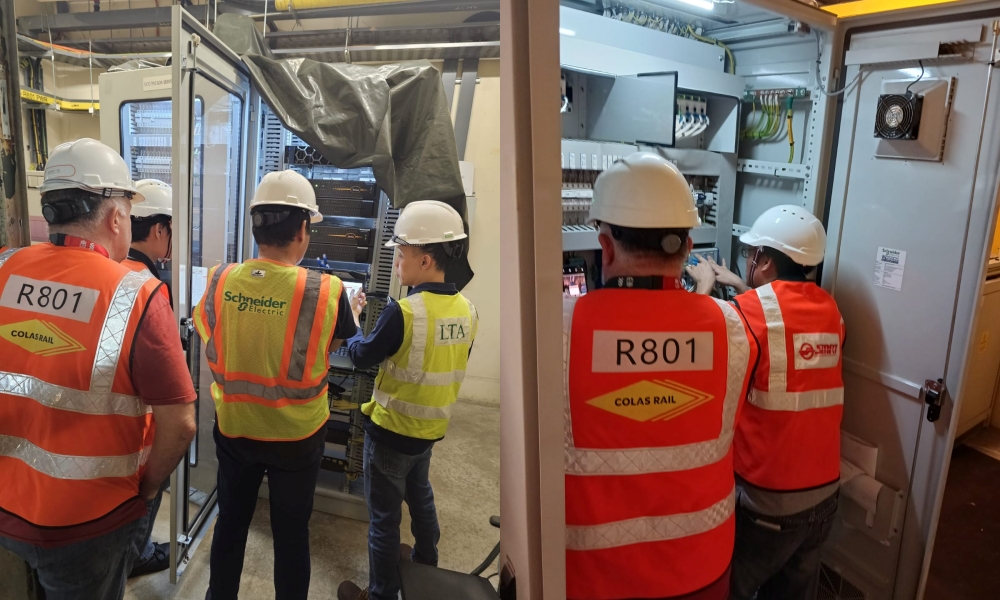
SMRT Trains’ president Lam Sheau Kai stated on 4 July that preliminary investigations indicated the issue may be linked to the Power SCADA (an acronym for supervisory control and data acquisition) system.
This system is integral to the BPLRT network’s operations, monitoring and controlling power distribution to maintain safety and reliability.
According to Lam, the Power SCADA system developed a fault that subsequently affected the Emergency Trip System (ETS), resulting in the traction power being tripped.
The SCADA system is part of the BPLRT Power Renewal Project, which is being conducted in collaboration with the Land Transport Authority (LTA), Colas Rail, Schneider Electric, and SMRT.
The power disruption began at around 8.50am and affected train services at all BPLRT stations.
Train services were progressively restored from 11.30am after the ETS was bypassed to reinstate traction power.
Five trains were stalled between stations, while seven others were stationary at platforms during the outage.
SMRT staff guided commuters from the stalled trains to the nearest stations safely.
In response, regular and bridging bus services were activated to support affected commuters during the disruption.
Additional staff were also deployed to man all stations throughout the rest of the day as a precaution.
Lam confirmed that LTA and SMRT have launched a full investigation into the incident, which includes a comprehensive design review of the Power SCADA system to enhance network stability.
He added that the organisations will continue to monitor the system closely as renewal works progress.
On behalf of the BPLRT renewal project team, Lam issued an apology for the inconvenience and thanked commuters for their patience and understanding.
This incident marked the second rail disruption in the week.
On 1 July, a signalling fault at Orchard station on the Thomson-East Coast Line caused service delays between Napier and Great World stations for two hours.
The Bukit Panjang LRT, which spans 8km, has a history of operational issues.
The most recent major disruption occurred on 22 October 2024, when service stalled during the evening peak between Bukit Panjang and Choa Chu Kang.
Trains did not resume until the next morning.
Initial investigations at the time pointed to a fault in one of the train’s wheel assemblies.
In response, LYA and SMRT announced reduced operating hours from Thursdays to Sundays, starting 14 November 2024 through to 31 October 2025, to accommodate renewal works.
These efforts include upgrading the BPLRT’s signalling system and testing both new and retrofitted light-rail vehicles.
Since 2022, LTA has been progressively implementing a new communications-based train control system to enhance train speed regulation.
The full system renewal is now slated for completion by end-2026, delayed by two years due to manpower shortages and supply chain issues stemming from the Covid-19 pandemic.
In 2024, the LRT network, which includes the Sengkang-Punggol lines, recorded an average daily ridership of 210,000, reflecting a 4 per cent year-on-year increase.