Paul Tambyah warns of political decline in Singapore, urges hope and reform post-GE2025
Speaking at an SDP appreciation dinner on 18 May, Dr Paul Tambyah warned that political stagnation in Singapore could lead to societal decline. He criticised the ruling party’s treatment of opposition parties and reiterated his belief in inevitable change and democratic reform.
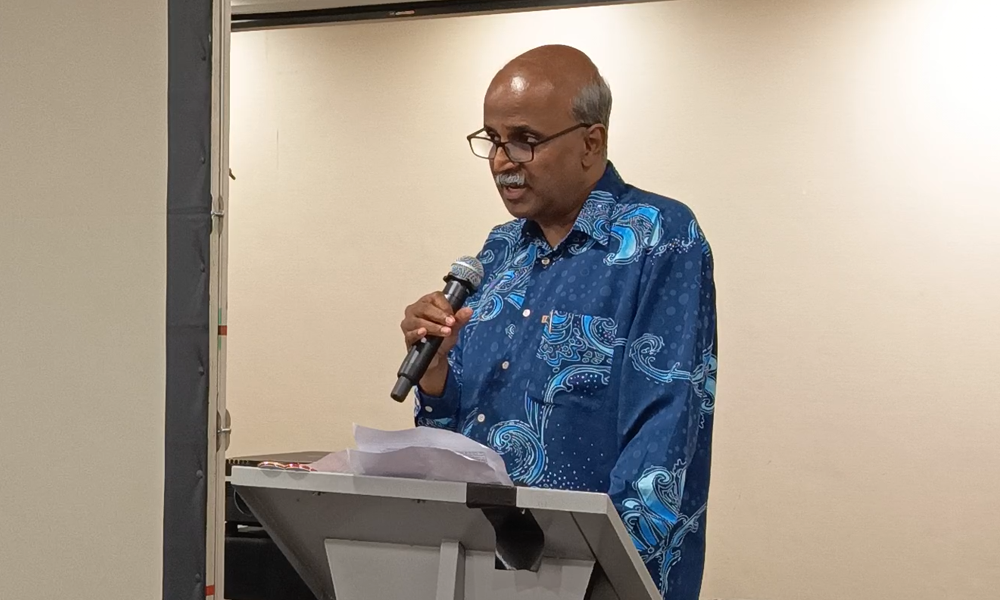

SINGAPORE: Chairman of the Singapore Democratic Party (SDP), Paul Tambyah, delivered a critique of Singapore’s political environment during a party appreciation dinner held on 18 May 2025.
He accused the ruling People’s Action Party (PAP) of systematically limiting opposition participation and stifling democratic development.
“Singapore seems determined to be mired in mediocrity—at least as far as its political leadership goes,” Tambyah said, reflecting on the results of the General Election held on 3 May 2025.
Tambyah likened the political contest to a manipulated football match, stating, “They keep shifting the goalposts, committing professional fouls, trying to shorten access to the pitch for opposition teams.”
He warned that such tactics would not only degrade the quality of politics in Singapore but lead to broader societal decline.
Referencing the recent election campaign, Tambyah pointed to key issues such as rising living costs and growing inequality.
He argued that fear-based narratives had dominated the electorate’s decision-making process.
“Fear of the unknown, fear of an unstable US president, fear that we will not survive without vouchers and $1 deals—this seems to have won the day,” he said.
Despite the disappointing election outcome, Tambyah maintained that the SDP remained committed to its principles.
“There are things we could have done better, but we should not blame ourselves or the people of Singapore,” he noted.
He drew parallels between Singapore and other authoritarian regimes, suggesting that the tactics used by the PAP are consistent with broader global patterns.
Quoting from political science literature, Tambyah stated, “Authoritarian regimes which hold regular elections tend to last longer than dictatorships who don’t.” The observation was originally made by Nic Cheeseman and Brian Klaas in their book How to Rig an Election.
Nevertheless, Tambyah offered a message of hope.
He envisioned a future in which Singapore could become a “functioning democracy” like Japan, Taiwan, or South Korea.
He urged his audience to consider the long-term view. “One day, maybe 10, 20 years from now—but hopefully sooner—Singapore will become a functioning democracy.”
Tambyah posed rhetorical questions that pointed to curbs on civil liberties: “Where were you when it was illegal to take a picture of yourself with a smiley face outside a state building? When people couldn’t walk to the Istana to deliver a letter?”
He continued, “Where were you when the POFMA law was used to silence criticism... or when ministers dined with billion-dollar money launderers and no one said anything?”
He praised the SDP for being the lone political voice standing firm through these challenges.
“One political party spoke up, went to court, and took a stand—because of you,” he told members.
He affirmed that the party’s persistence in contesting elections, despite the odds, was driven by the belief in a better Singapore.
Quoting an earlier interview with the South China Morning Post, Tambyah reiterated the spirit within the party: “Many say the SDP doesn’t have members—we have believers.”
He emphasised the conviction of his fellow party members: “Until that breakthrough comes, we stay true to ourselves, speaking truth to power.”
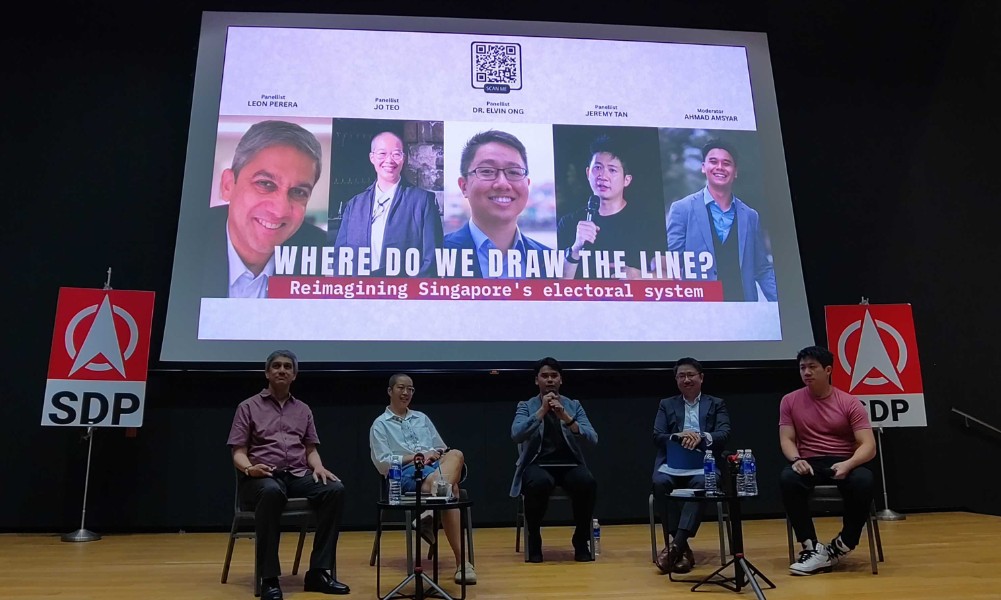
The appreciation dinner also featured key announcements from SDP Secretary-General Chee Soon Juan, who introduced the party’s five-year plan titled Renew, Rebuild, Reignite.
- The strategy includes three core initiatives:
- A coalition for electoral reform.
- The launch of the Orange and Teal Social Enterprise Co-operative.
A youth outreach programme aimed at engaging younger Singaporeans in civic discourse.
Tambyah also expressed heartfelt tribute to the party’s volunteers.
He credited their unwavering dedication during the GE2025 campaign, saying, “This dinner is for you.”
He acknowledged the many unseen contributions—flyer distribution, rally setup, and navigation of logistical and bureaucratic challenges.
Dr Tambyah contested in Bukit Panjang Single Member Constituency (SMC) during the General Election on 3 May 2025, but was defeated by PAP candidate Liang Eng Hwa, who secured 61.41 per cent of the vote.
Tambyah garnered 38.59 per cent of the vote. A total of 31,131 valid votes were cast, with 19,116 going to the PAP and 12,015 to the SDP.