Ho Ching's repost of article likening Xi Jinping to "mafia boss" sparks backlash and concern
On 21 April, Ho Ching shared a controversial article by Polish blogger Michael Petraeus, known as ‘Critical Spectator’, which likened Xi Jinping to a "mafia boss." The post sparked backlash and raised diplomatic concerns. By the morning of 23 April, the repost was no longer accessible on her social media page.


On 21 April 2025, Ho Ching, spouse of Singapore's former Prime Minister Lee Hsien Loong, shared a controversial article by Polish blogger Michael Petraeus, widely known as ‘Critical Spectator’, on her social media page.
The piece described China's top leader Xi Jinping as acting like a “mafia boss” over the past 12 years.
The repost prompted a flurry of reactions from netizens, ranging from support to sharp criticism.
Many questioned whether Ho’s sharing of the article equated to endorsement of its harsh characterisations of Xi, and raised concerns about potential diplomatic repercussions.
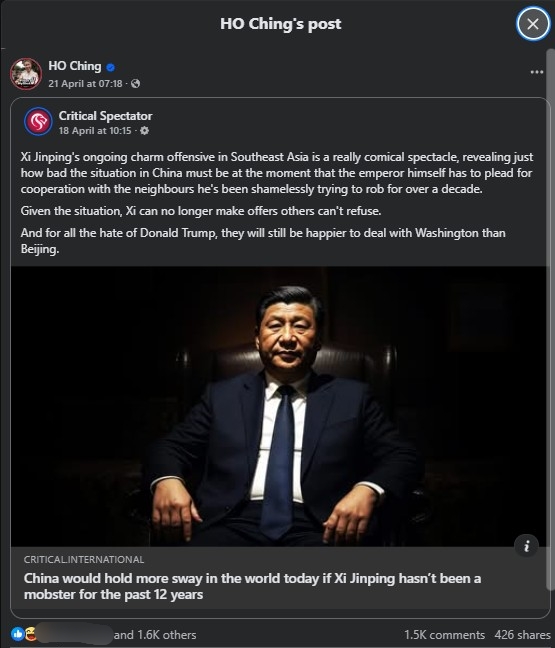
However, by the morning of 23 April, a check revealed that the repost was no longer accessible on her page. Prior to this, Ho’s post had garnered over 1,500 comments and had been shared more than 400 times.

The article, published on 18 April, labelled Xi’s charm offensive in Southeast Asia as “a comical spectacle”. Petraeus argued this suggested desperation on China’s part, claiming Xi now needs to plead for cooperation from neighbours he allegedly “tried to rob for over a decade”.
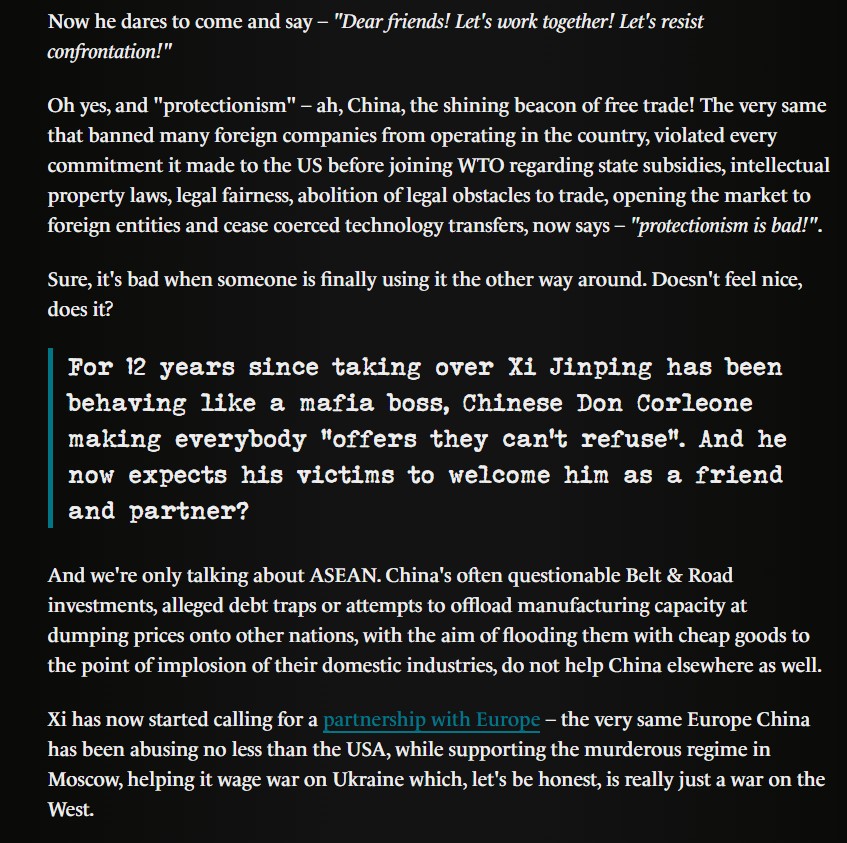
The article further criticised China’s stance on protectionism, accusing it of banning foreign companies, breaching World Trade Organization commitments, and coercing technology transfers. Petraeus described Beijing’s appeal against global protectionism as hypocritical, given these past actions.
Also under scrutiny was China’s Belt and Road Initiative (BRI), with the article asserting that it created debt traps and facilitated offloading China’s manufacturing excesses onto other nations. It characterised the BRI as exploitative and self-serving.
Petraeus also examined China's diplomatic overtures towards Europe.
He suggested that Beijing’s efforts to mend ties were undercut by its continued support for Russia amid the conflict in Ukraine and by historical actions that had strained international trust.
Petraeus wrote, “For 12 years since taking over, Xi Jinping has been behaving like a mafia boss, Chinese Don Corleone making everybody ‘offers they can’t refuse’. And he now expects his victims to welcome him as a friend and partner?”
Public split over Ho Ching’s repost as questions of intent and diplomacy emerge
Ho’s decision to reshare the article ignited online debate, especially given her status as a prominent public figure.
Critics argued that the post could jeopardise Singapore’s carefully managed relationship with China. Some expressed that public figures should observe diplomatic decorum, especially regarding foreign leaders.
Several comments advised that it was “not appropriate” to repost articles using terms like “mafia” in reference to a head of state. Others were concerned about the use of the lion symbol by the Critical Spectator, which they viewed as misleading.
One commenter wrote, “Madam, at this moment, I think you shouldn’t repost these comments.” Another added, “As a former leader’s spouse, you should understand diplomatic etiquette and not share disrespectful remarks about other nations’ leaders.”

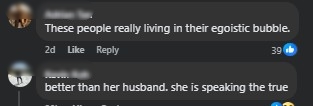
Yet, there was also a segment of users who voiced support. Some praised Ho’s candour and described her as “better than her husband”, saying she “speaks the truth”. One user said, “Time to wake up from the CCP bubble. Well done, Madam.”
Others questioned Singapore’s omission from Xi Jinping’s recent diplomatic visits, interpreting it as a snub. “Why was Singapore left out of those visits?” asked one commenter.
Another said, “These people are living in their egoistic bubble.”

Some responses defended the repost on free speech grounds. Derek Chai commented, “Seeing some of the comments here worries me. Since when do we start worrying what other countries think when we voice our views?”
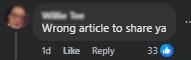
Other critics, however, described the Critical Spectator’s writing as sensational and untrustworthy. “Wrong article to share, ya,” one user posted. Another stated, “Confusing write-up. Everyone around me feels completely opposite of what’s written.”
One commenter argued that the post played into a Western media narrative, ignoring the complex geopolitical triggers behind international conflicts. They cautioned against generalisations and noted that “every country pursues its own interests”.

Concerns over national image and diplomatic sensitivity
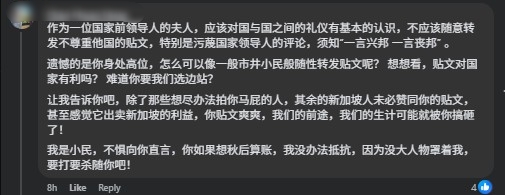
A user posting in Chinese wrote: “As a former national leader’s spouse, you should understand diplomatic courtesy. You shouldn’t casually share posts that insult other nations’ leaders. Words can make or break a country.”
Another strongly-worded Chinese comment expressed disappointment in Ho’s judgment, saying her post could endanger Singapore’s interests. It claimed that while the repost might feel good, it could have damaging consequences for livelihoods and the nation’s global standing.
Despite the range of opinions, the post remains public at the time of writing, with no official response from Ho Ching or the Singapore government.
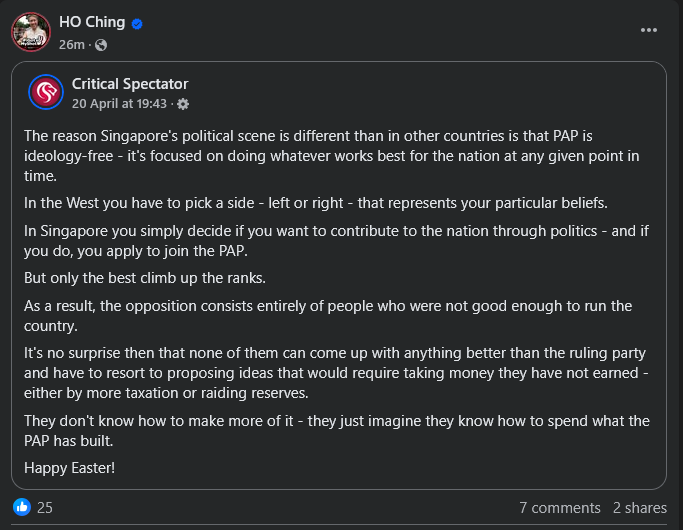
Ho Ching reshares Petraeus' praise for PAP's "ideology-free" governance, criticising opposition
Earlier, Ho Ching also reshared a separate post by blogger Michael Petraeus, who praised the People’s Action Party (PAP) as being free of ideology and focused solely on effective governance.
Petraeus claimed that Singapore’s opposition is made up of individuals deemed unfit to lead and accused them of relying on unsustainable proposals like higher taxes or spending reserves.
He argued that only the most capable rise through the PAP ranks, contrasting it with Western political systems that are ideologically divided.