Jo Teo challenges Ho Ching’s defence of Singapore’s electoral boundaries and vote value fairness
Jo Teo, a mathematical and theoretical physicist by training, has publicly challenged Ho Ching’s defence of Singapore’s redrawing of electoral boundaries, questioning the consistency of elector-to-MP ratios and the allocation of seats in group representation constituencies. Teo argued that the wide disparities undermine equal vote value, calling for clearer, data-based criteria in future reviews.
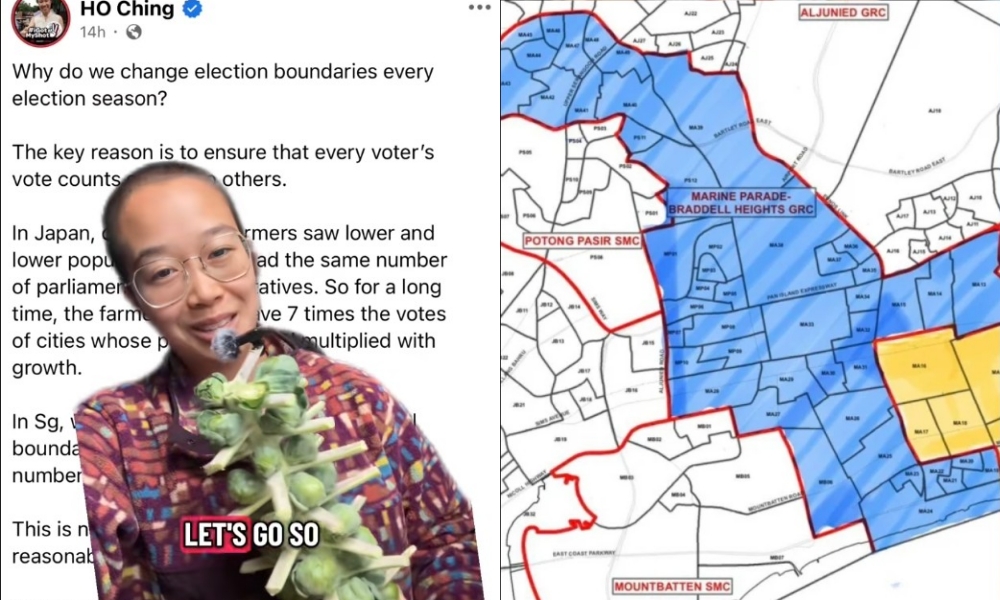

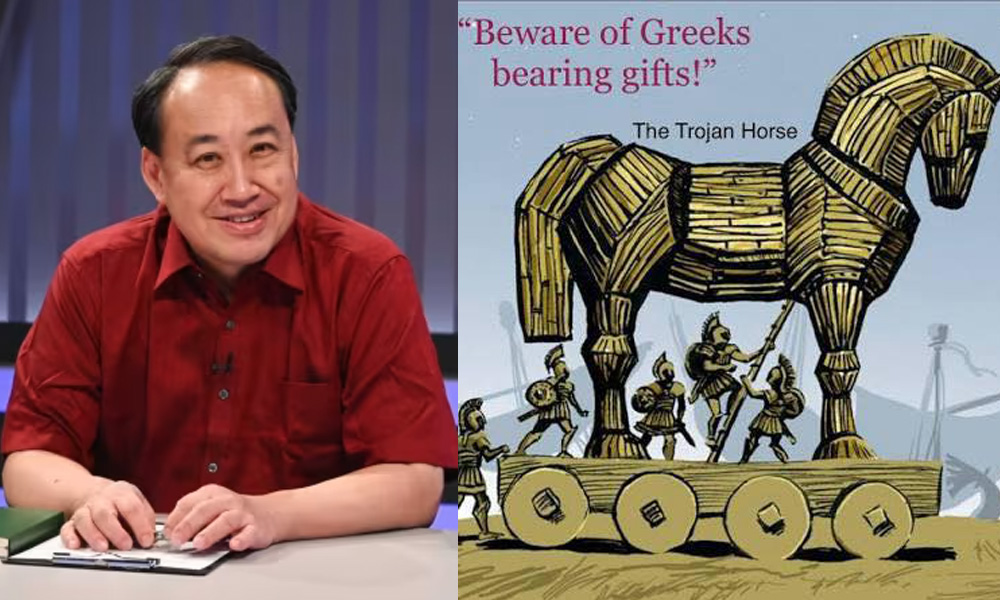
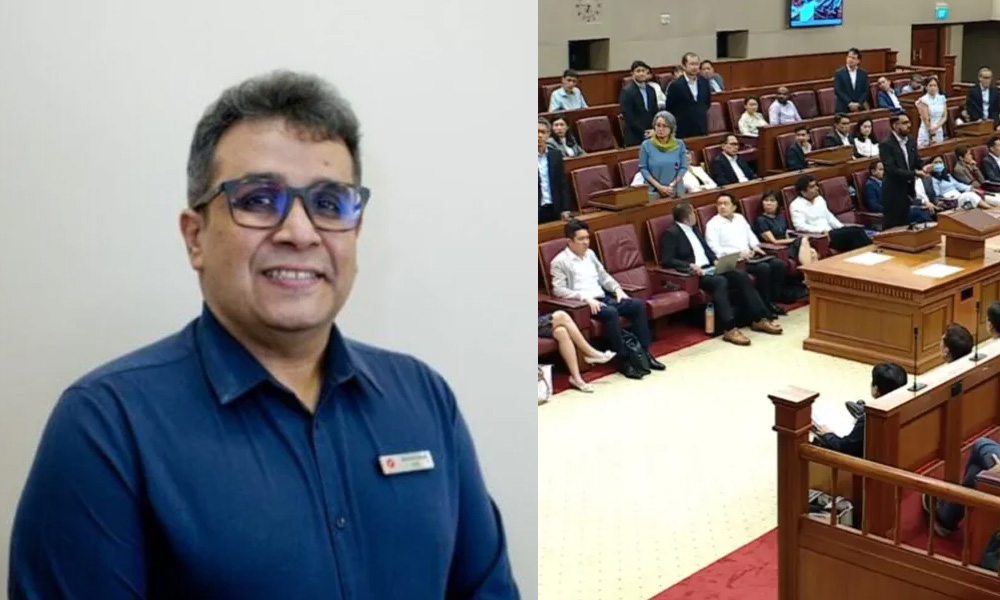
SINGAPORE: Jo Teo, a mathematical and theoretical physicist by training, has publicly challenged Ho Ching’s recent defence of Singapore’s redrawing of electoral boundaries.
Ho, the spouse of Senior Minister Lee Hsien Loong, had argued that claims of gerrymandering are often exaggerated, urging citizens to study the Electoral Boundaries Report and provide constructive feedback rather than criticise without full understanding.
In response, Teo shared a statistical analysis highlighting inconsistencies in elector-to-MP ratios, revealing a 51% difference between districts.
She argued that such disparities undermine the principle of equal vote value and drew attention to arbitrary differences between four- and five-member Group Representation Constituencies (GRCs).
"We both have Singaporeans' best interests at heart, right? So I hope you are sincere about accepting suggestions to the Electoral Commission. "
"Otherwise, punching down when the playing field already isn’t level speaks more about your leadership than anyone else’s," Teo told Ho.
Ho Ching defends boundary reviews as practical, not political
On 11 October 2025, Ho, also the former Chief Executive Officer of Temasek Holdings, published a lengthy Facebook post defending the frequent redrawing of electoral boundaries in Singapore.
She stated that the process exists to ensure voter parity and to accommodate population changes, dismissing criticisms of gerrymandering as “playing the victim card” and referring to dissenters as “crybabies” who risk being pampered.
Ho explained that Singapore adjusts electoral boundaries each election to ensure that every voter’s vote carries roughly equal weight, drawing comparisons with Japan, where rural votes historically outweighed urban ones.
She added that the number of voters per MP typically ranges from about 20,000 to 30,000, with adjustments taking into account factors such as new housing developments, natural or infrastructural boundaries, and large non-residential areas, including reservoirs and military zones.
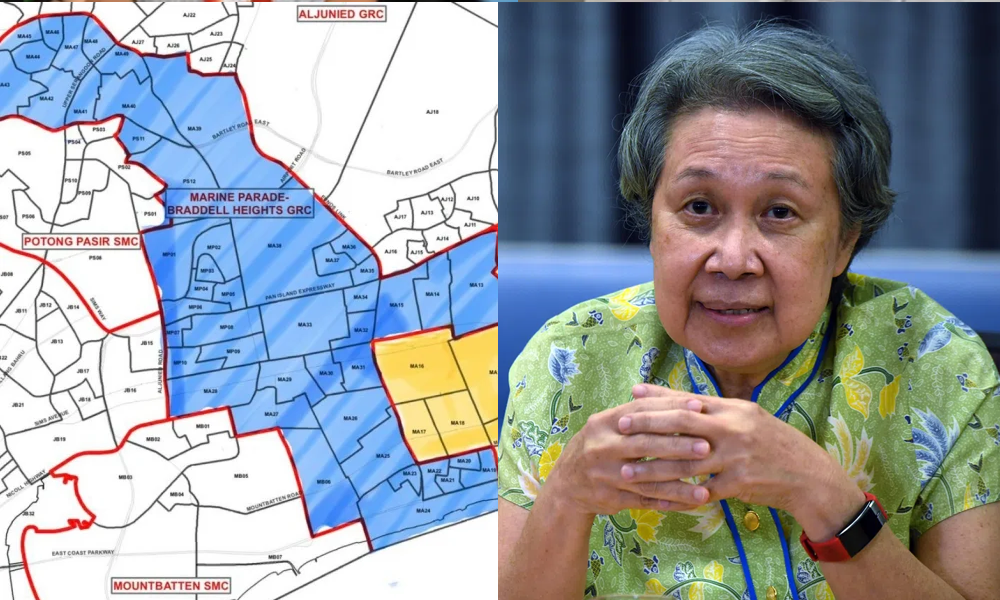
Some districts, like Potong Pasir and Hougang, were left unchanged for long periods to avoid perceptions of gerrymandering. Nevertheless, ongoing population growth requires periodic revisions.
Ho stressed that boundary changes are guided by practical considerations rather than political bias, urging citizens to engage constructively by studying the EBRC Report and providing specific recommendations.
She likened this approach to good design principles, emphasising the value of understanding why a system works rather than merely criticising it.
Teo responds with statistical critique on TikTok
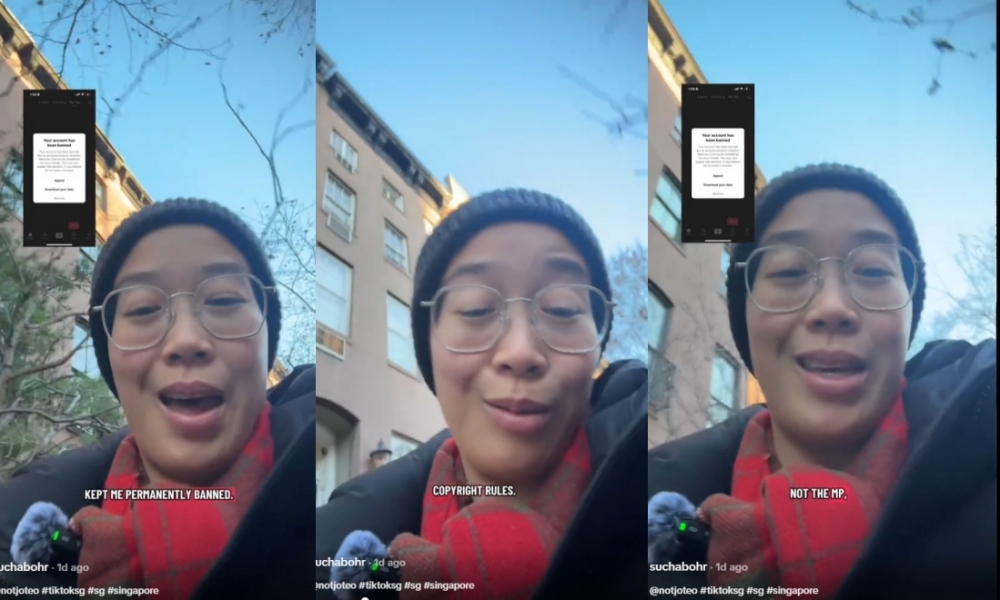
In a TikTok post on 12 October, Jo Teo sarcastically questioned Ho’s use of “we” in explaining why the EBRC changes electoral boundaries each election:
"Because last I checked, you’re not on the Electoral Boundaries Commission. Where is your name here, or could there possibly be something you’re implying regarding the independence of the EBRC?"
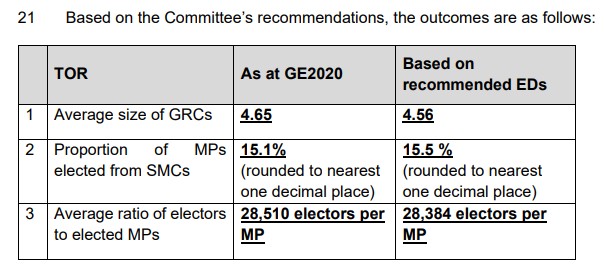
While Teo acknowledged Ho’s emphasis on ensuring that every voter’s vote counts equally—a fundamental principle of democracy—she pointed out that the 2025 EBRC report merely provided a mean number of electors per MP of 28,384 for the 2025 GE cycle, without further statistical breakdown.
Statistical evidence of unequal representation
Using data published for individual districts, Teo highlighted a substantial spread in the elector-to-MP ratio across districts, ranging from 22,000 to 33,000—a 51% difference.
"So your claim that every voter’s vote counts equally is not strongly supported by the data," Teo said, adding that this issue transcends partisan politics because it affects every Singaporean citizen.
"How can it be that someone in Kebun Baru has a vote worth 50% more than someone in Bukit Panjang, simply because they live in different areas?"
She further argued that such disparities affect access to constituency-level resources, including town council funding.
Concerns over arbitrary GRC seat allocation
Teo also raised concerns about how arbitrary the allocation of four- and five-member GRCs has become.
"Because we’ve allowed our range of electoral MP ratios to be so large, there is an entire region—plotted here in pink—where the GRCs could realistically have either four or five MPs and still fall within this range," she explained.
"This makes the decision between four or five MPs arbitrary and susceptible to partisan bias."
In the 2025 GE cycle, the four-MP GRC with the lowest vote value is Sengkang, while the five-MP GRC with the highest vote value is Marine Parade–Braddell Heights, according to Teo.
Although these two GRCs differ by 5,000 electors, Teo argued that the latter receives an extra MP, with no written justification for the decision.
Teo proposes objective threshold to eliminate arbitrary GRC allocations
While Ho encouraged the public to study the EBRC report and submit suggestions, Teo offered a concrete proposal.
She recommended removing the ambiguous range in which a district could have either four or five MPs by narrowing the electorate-to-MP ratio distribution.
Teo calculated that the maximum allowed deviation from the mean should be 3,154—just over 10%.
"Why is this beneficial? Because we now have an objective threshold for determining the jump between four and five MPs. It’s no longer arbitrary or subjective," Teo explained.
She added that narrowing the spread of the distribution would make votes more equal, ensuring that each Singaporean’s vote carries fair weight.