Singapore Democratic Party criticises lack of transparency in EBRC report, vows to press on for GE2025
The Singapore Democratic Party (SDP) has criticised the EBRC report, questioning the removal of Bukit Batok and Yuhua SMCs and calling the boundary changes lacking in transparency. Despite this, SDP remains committed to GE2025, focusing on national issues like the rising cost of living.


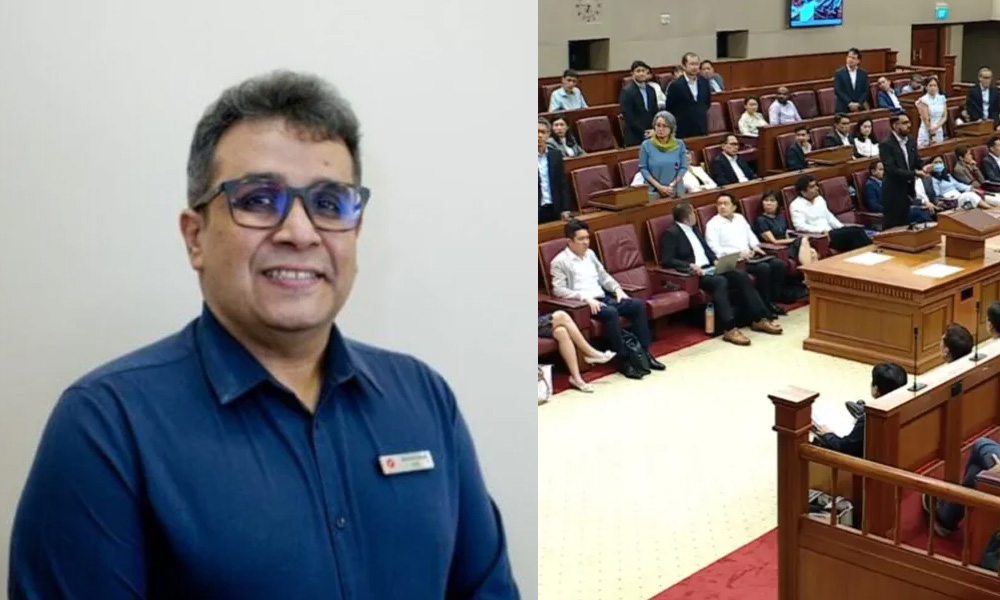
The Singapore Democratic Party (SDP) has expressed disappointment over the disappearance of Yuhua SMC and Bukit Batok SMC in the latest Electoral Boundaries Review Committee (EBRC) report, calling it a lack of transparency in the redrawing process.
In a statement issued on 11 March 2025, SDP questioned the timing of these changes, particularly given its recently successful fundraising efforts for Bukit Batok SMC, where it contested in the 2020 General Election.
The party also reaffirmed its commitment to contesting GE2025, despite what it sees as unfair obstacles in the electoral process.
SDP questions removal of Yuhua and Bukit Batok SMCs
The EBRC report, released on 11 March 2025, introduced significant boundary changes, increasing the total number of constituencies from 31 to 33 and adjusting electoral divisions to reflect population growth.
One of SDP’s key concerns is the absorption of Bukit Batok SMC and Yuhua SMC into larger GRCs, effectively removing them as standalone constituencies.
“It seems coincidental that this happened so soon after the highly successful fundraisers for the SDP campaign in Bukit Batok,” the party stated.
SDP’s Secretary-General, Dr Chee Soon Juan, contested Bukit Batok SMC in GE2016 and GE2020, securing 38.77% of the vote in 2016 before improving to 45.2% in 2020 against PAP’s Murali Pillai.
The removal of the ward eliminates the possibility of a rematch, raising concerns that electoral boundaries are being adjusted to disadvantage strong opposition contenders.
Similarly, Yuhua SMC, which SDP contested in GE2011 and GE2020, has also been absorbed into a larger GRC.
However, Bukit Panjang SMC, where SDP's Chairman, Dr Paul Tambyah, contested for the first time in GE2020 and secured 46.27% of the vote against PAP’s Liang Eng Hwa, has remained untouched in the latest EBRC report despite SDP’s strong performance.
Lack of transparency in boundary changes
Beyond specific constituency changes, SDP reiterated its longstanding criticism of Singapore’s electoral boundary review process, arguing that it is conducted without open discussion among stakeholders.
“The whole process of redrawing electoral boundaries lacks transparency, done without open discussion among stakeholders. We have had to contend with this for the last few decades,” SDP said.
Singapore’s electoral boundaries are drawn by the EBRC, a committee appointed by the Prime Minister’s Office, and there is no independent oversight or public consultation before changes are made.
Opposition parties have often accused the system of gerrymandering, arguing that strong opposition areas are frequently redrawn into new configurations.
SDP’s focus for GE2025: National issues over municipal concerns
Despite these challenges, SDP reaffirmed its commitment to contesting GE2025, stating that it would carefully study the changes before finalising its electoral strategy.
The party also shifted focus away from purely municipal issues, highlighting nationwide concerns such as the rising cost of living.
“While municipal issues are important, Singaporeans everywhere are hurting from the pressures associated with the rising cost of living and the government's inability to take meaningful action beyond simply handing out vouchers periodically,” the party said.
SDP has long positioned itself as a party that advocates for systemic policy changes, particularly in areas like healthcare affordability, wages, and housing costs.
SDP’s next steps in GE2025
With GE2025 expected to be called within months, SDP will need to reassess its electoral strategy following the removal of its previously contested SMCs.
The party has traditionally focused on Holland-Bukit Timah GRC and Marsiling-Yew Tee GRC, but it remains to be seen if it will adjust its targets in response to the new boundaries.
As opposition parties navigate the new electoral map, the potential for three-cornered fights remains a key issue, particularly as multiple parties express interest in overlapping constituencies.