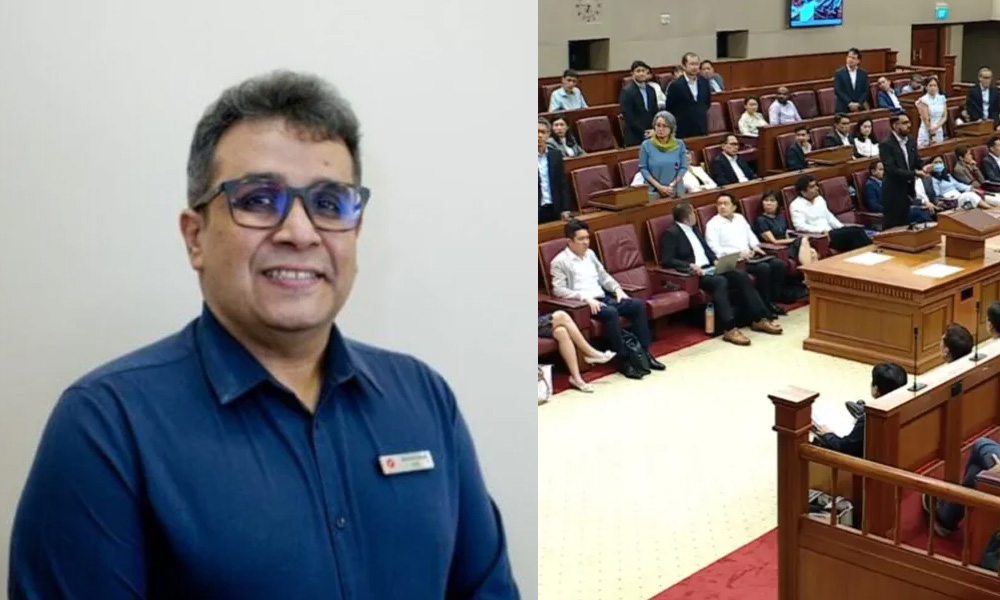
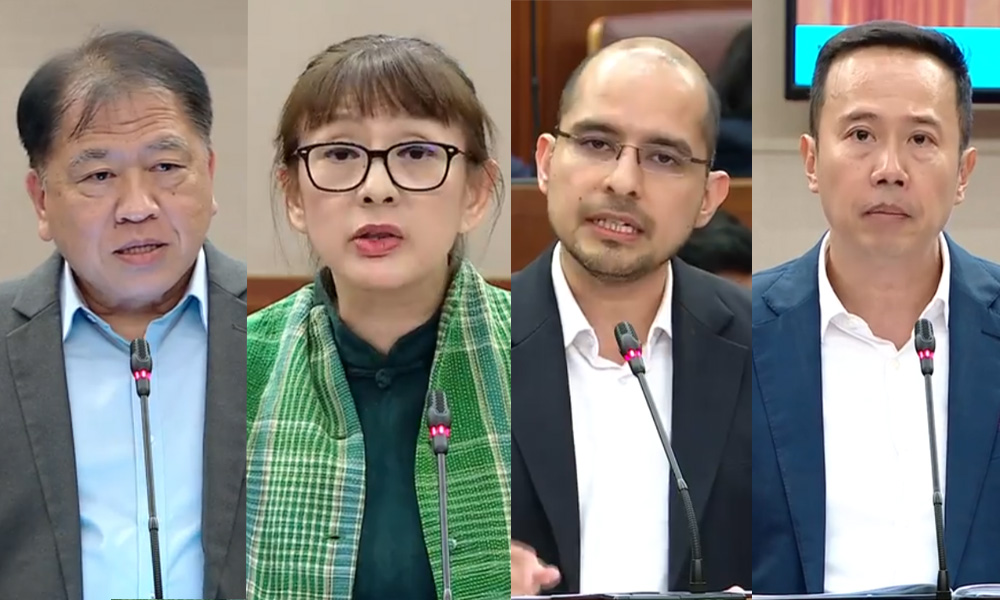
Minister Tan See Leng’s Cantonese quip in Parliament draws response from Leong Mun Wai and Hazel Poa
Minister for Manpower Tan See Leng’s Cantonese remark in Parliament, directed at PSP NCMP Leong Mun Wai, has sparked debate. Leong, unable to respond due to time constraints, later addressed the incident in a Facebook video. Fellow NCMP Hazel Poa also voiced support, highlighting Leong’s persistence in seeking employment data.
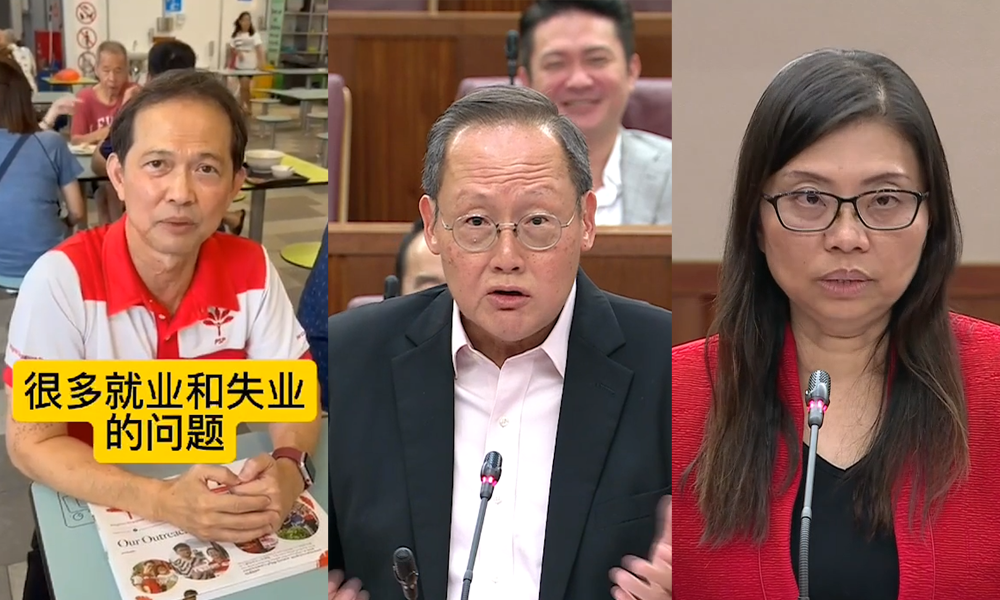

On 7 March 2024, Minister for Manpower Tan See Leng, during a parliamentary session, criticised Progress Singapore Party (PSP) Non-Constituency Member of Parliament (NCMP) Leong Mun Wai for repeatedly refusing to accept explanations on labour issues that had been addressed in previous sittings.
Leong, in his clarification, had asked about the displacement of existing resident PMETs by work pass holders who later obtained permanent residency, as well as the prevalence and reasons for underemployment.
He questioned whether the Minister could explain why there was no need for concern over the proportion of part-time workers among all employed residents increasing from 8.4% in 2009 to 10.1% in 2023.
He also asked the Minister to provide the corresponding increase in resident contract workers over the same period.
Additionally, he asked the Minister whether he agreed that, while wage growth in Singapore may be faster than in some developed countries like the UK, it is meaningless if it is still insufficient to keep up with the escalating cost of living and housing prices in Singapore.
Dr Tan stated that locally born Singapore citizens made up the bulk—63%—of the growth in the number of residents holding professional, managerial, executive, or technical (PMET) jobs from 2014 to 2024.
However, he also noted that one-third of these PMETs were converted from non-PMET roles, meaning that the increase was not entirely due to job creation but rather a reclassification (read our explanation here).
He added that many naturalised Singaporeans and permanent residents, who were included in the overall figure of 382,000 jobs created during that period, were married to locally born Singaporeans.
"We should not keep harping on an us-versus-them mentality because Singapore is a largely immigrant nation. We are all here because we love this country," he said.
Following a clarification from the Ministry of National Development in response to Leong’s remarks on housing, Dr Tan stepped up and directed a remark at Leong, quoting a well-known phrase from Hong Kong. The quote was featured in the 2004 Hong Kong film Blood Brothers, starring Andy Lau and Jacky Cheung.
Delivered in Cantonese, his statement implied that no matter how an explanation was given, it would not be accepted or acted upon correctly.
The remark drew laughter from People’s Action Party (PAP) Members of Parliament in the House.
Dr Tan said:
"Even if I’d said it, you wouldn’t listen to it. Even if you’d heard me, you wouldn’t understand. Even if you understood, you wouldn’t do it. Even if you did it, you would do it wrongly. Even if you did wrong, you wouldn’t own up to it. Even if you owned up, you wouldn’t correct yourself. Even if you corrected yourself, you did so begrudgingly. What do you want me to do?"
In response to reports of Dr Tan’s remarks, many Cantonese speakers interpreted the statement as dismissive and condescending.
However, Leong was unable to respond immediately, as the ministers had taken up the time allocated for the debate, and the session ended due to the guillotine rule.
Leong Mun Wai’s response
On 8 March, Leong addressed the incident in a Facebook video. He shared that during a meeting with residents, he was asked about the Minister’s remarks.
Leong stated that his persistent questioning in Parliament stemmed from Singaporeans’ concerns about employment.
He highlighted that the data provided by the Ministry of Manpower (MOM) combined figures for Singaporeans and Permanent Residents (PRs), making it difficult to assess job creation for locally born citizens.
According to him, Dr Tan refused to provide separate data, which led to his continued questioning in Parliament.
He suggested that despite not receiving the requested information, Dr Tan still made a fuss over the issue.
He said, "It is understandable. Since the Minister is in a high and mighty position, how would he understand the plight of ordinary citizens?"
Leong asserted that his role was to seek transparency, and he believed Singaporeans understood the party’s approach.
He ended with an impactful remark: "Fairness is in the hearts of the people."
Hazel Poa’s statement in support of Leong
Leong's colleague, Hazel Poa, also weighed in on the matter through a Facebook post. She acknowledged that she did not understand Cantonese initially and had to rely on a volunteer’s translation.
Poa, who is also PSP's Secretary General, noted that while she and Leong had different approaches, she respected his persistence.
She pointed out that his questioning had led to more information being released, including the revelation that 63% of the 382,000 PME jobs created for Singaporeans and PRs were attributed to locally born Singaporeans.
She acknowledged that while Leong’s phrasing might not be as polished as a Minister’s, his contributions should not be judged solely on eloquence. Poa commended his resilience in pushing for debates on jobs, public housing, and hawker culture despite facing criticism.
"Over the last four and a half years, Mun Wai has come under fire during many intense debates in Parliament. But he pressed on... And I have no doubt he will continue pressing on after this Cantonese quote, and whatever else may come," she wrote.
Poa concluded by calling for mutual respect in political discourse.
Despite a day having passed since Leong and Poa made their statements, no reports have been published by Singapore’s state media.
This underscores the uphill challenge faced by opposition politicians in the lead-up to the next general election.
While criticisms of them by PAP candidates will be widely reported and amplified by mainstream media funded by taxpayers, their rebuttals will have to rely on organic sharing by citizens on social media.