Pritam Singh questions job trends for graduates; Chan Chun Sing stresses long-term skills planning
Education Minister Chan Chun Sing emphasised the need for long-term skills planning to help university graduates adapt to evolving industries. During parliament sitting on 7 March, Leader of the Opposition Pritam Singh raised concerns over declining employment rates in certain fields, prompting MOE to highlight its ongoing industry collaborations and curriculum reviews to ensure graduate employability.
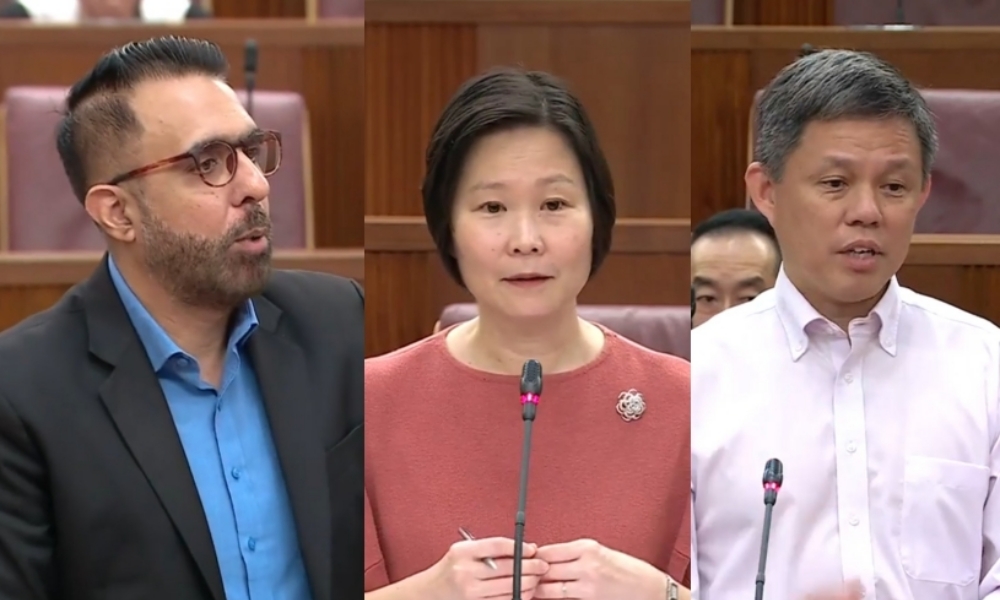

SINGAPORE: Education Minister Chan Chun Sing emphasised the importance of equipping university graduates with core and adjacent skill sets to prepare them for emerging industries, even those that do not yet exist.
Speaking in Parliament on Friday (7 March), he stressed the need for long-term skills planning through close collaboration between universities and industry partners.
In a supplementary questions, Leader of the Opposition Pritam Singh raised concerns over declining employment rates in certain university course clusters.
Citing data, he noted that employment rates for Arts, Design & Media graduates had fallen from 72.2% in 2022 to 60.9% in 2024, while Engineering graduates saw a drop from 91.6% to 79.3% in the same period.
Singh asked whether the Ministry of Education (MOE) viewed this as part of a long-term cyclical trend where university graduates might increasingly struggle to secure jobs.
Pritam Singh raises Concerns Over Long-Term Employability Trends
He also referenced Chan's previous comments on industry-university collaboration and adjacent skill development.
Singh asked if MOE would review course structures to formally integrate adjacent competencies into curricula instead of merely offering elective modules.
He suggested a structured approach to help graduates secure jobs outside their primary field of study.
MOE’s Response: Broad-based Education and Industry Collaboration
Minister of State for Education Gan Siow Huang responded that MOE supports a broad-based education system from early schooling through tertiary education.
She highlighted that students can already take modules beyond their specialisations to build adjacent skills. Gan also stressed that beyond technical skills, graduates must develop life skills to adapt to economic disruptions and upskill over time.
Acknowledging a decline in employment rates for polytechnic diploma holders, Gan explained that many polytechnic graduates are choosing to pursue further studies, which affects short-term employment statistics.
She cautioned against overgeneralising trends by combining polytechnic and university graduate outcomes.
Gan pointed out that the Graduate Employment Survey (GES) provides only a snapshot of employment six months after graduation.
"I think is important for us to take a step back and look at the employment of our Singaporean adults in the age group say 25 to 29, and the trend has been quite stable the employment rate is 95% and the long-term unemployment for this group is very low."
However, Singh clarified that his question focused on long-term structural employment trends for university graduates, rather than polytechnic diploma holders.
Gan reiterated that MOE examines employment trends over a decade or more, beyond the short-term fluctuations seen in recent years.
Chan Chun Sing: Focus on Skills Over Degree Numbers
Education Minister Chan Chun Sing then weighed in, arguing that the key issue is not the number of university graduates but whether they have the right skills for sustainable careers.
He cited examples of countries with high university graduation rates but poor employment outcomes, while others that emphasise vocational training achieve better job placement.
"The crux of the matter is what are the skill sets that we are equipping them with, that is most important and is not just about letting having everybody go to universities because we all want to go after the paper chase," Chan argued.
Chan underscored the importance of anticipating long-term skill demands instead of reacting to short-term market changes.
He stressed that Singapore must ensure its graduates can pivot to new industries as needed.
Impact of Economic Conditions on Graduate Employment
Earlier, Gan addressed MPs' questions on whether MOE would introduce additional measures to boost fresh graduates' employment rates following the 2024 Joint Autonomous University Graduate Employment Survey (JAUGES) results. She also responded to queries on the factors behind declining employment rates, sectoral variations, and rising median salaries despite fewer job opportunities.
Gan noted that employment rates fluctuate due to economic conditions, citing a strong post-COVID-19 recovery in 2021-2022, followed by fewer job vacancies in 2024. Some graduates took longer to secure full-time jobs, contributing to higher unemployment among fresh graduates.
Despite this, certain sectors, such as health sciences and business, maintained strong employment outcomes. Median salaries for fresh graduates rose by 4.2% in 2024, indicating continued employer demand for skilled workers.
Gan stated that the government remains committed to creating good jobs, particularly in growth sectors. She added that broader social factors, including job preferences and salary expectations, also influence employment outcomes.
Gan assured that MOE will continues to monitor both short-term employment trends and medium-term labour market shifts to ensure curricula remain relevant.
Autonomous universities will work closely with industry partners and provide career support services, including personalised coaching and job-matching assistance, to help graduates transition into the workforce, she added.
Jurong GRC MP Xie Yao Quan then asked if structural factors are contributing to declining full-time employment rates for fresh graduates, particularly in business, built environment, and engineering, which have seen significant drops since pre-Covid levels.
He also questioned whether the MOE would reconsider university course allocations based on these trends.
Gan responded that long-term employment rates for Singaporeans aged 25–29 remain stable, and fluctuations in sectoral employment rates are expected due to economic cycles.
She acknowledged that sectors like built environment and manufacturing face persistent challenges in attracting graduates and that agencies are working to improve industry engagement.
East Coast GRC MP Jessica Tan inquired about the rise in median salaries and whether there is a skills gap preventing fresh graduates from filling available positions.
Gan explained that the salary increase reflects market trends and higher enrollment in growth sectors, while universities continuously update curricula to match industry demands.
Pioneer SMC MP Patrick Tay highlighted concerns about ICT graduates facing a changing job market due to recent sector consolidation and AI-driven disruptions.
Gan acknowledged the sector's post-Covid stabilization but reassured that ICT graduates still have high demand and flexibility to pivot to adjacent industries, urging them to stay engaged with career services.