Jack Sim renews criticism of S$10 million coffee shop toilet grant, calls for stricter enforcement
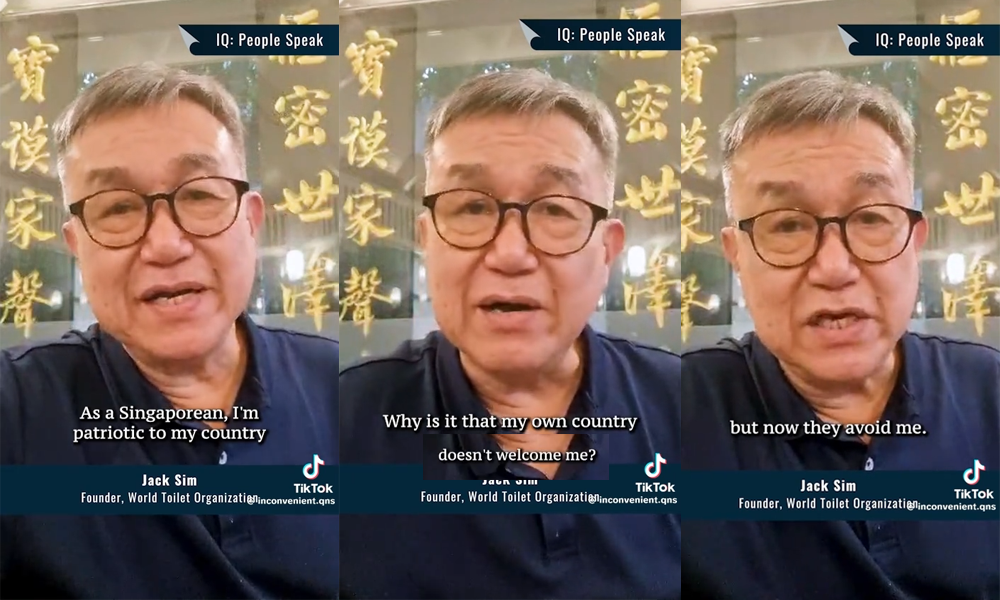
Jack Sim has intensified his criticism of the S$10 million coffee shop toilet grant, arguing that millionaire coffee shop owners should not receive public funds for hygiene upkeep. In a Facebook post on Thursday, he called for stricter enforcement, real-time monitoring, and public grading systems. He also questioned expert opinions featured in government-backed commentary

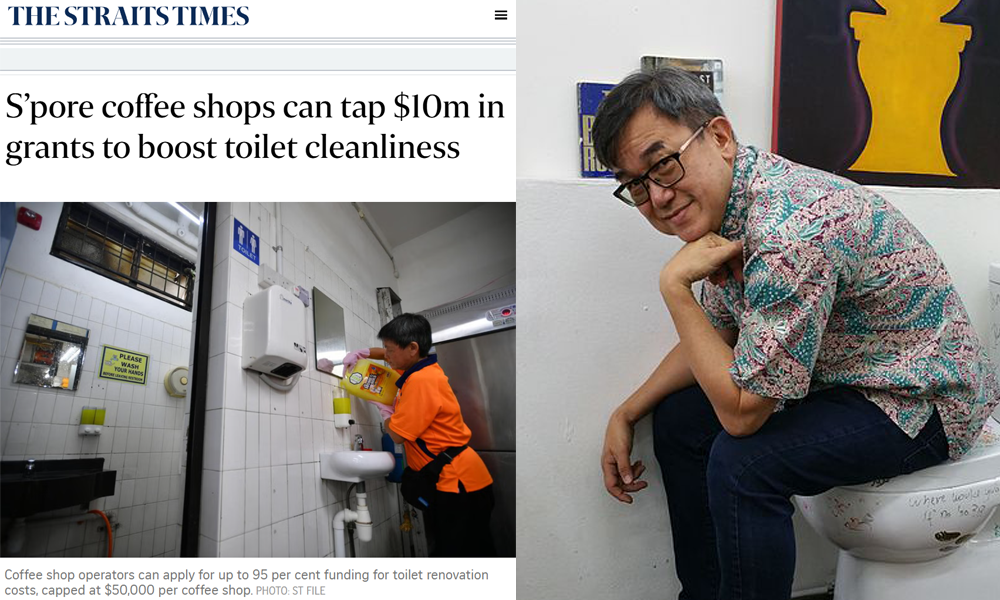
Singaporean entrepreneur and sanitation advocate Associate Professor Jack Sim has once again criticised the government’s S$10 million grant to improve coffee shop toilet hygiene, calling it a short-term fix that avoids real accountability.
Earlier in the week, Sim had described the initiative as a "grave mistake" that unfairly subsidises private businesses and questioned its long-term sustainability. He argued that coffee shop owners should be held responsible for maintaining clean toilets instead of receiving government grants.
In a Facebook post on Thursday, Sim further escalated his criticism, questioning why millionaire coffee shop owners needed public funding for basic hygiene upkeep.
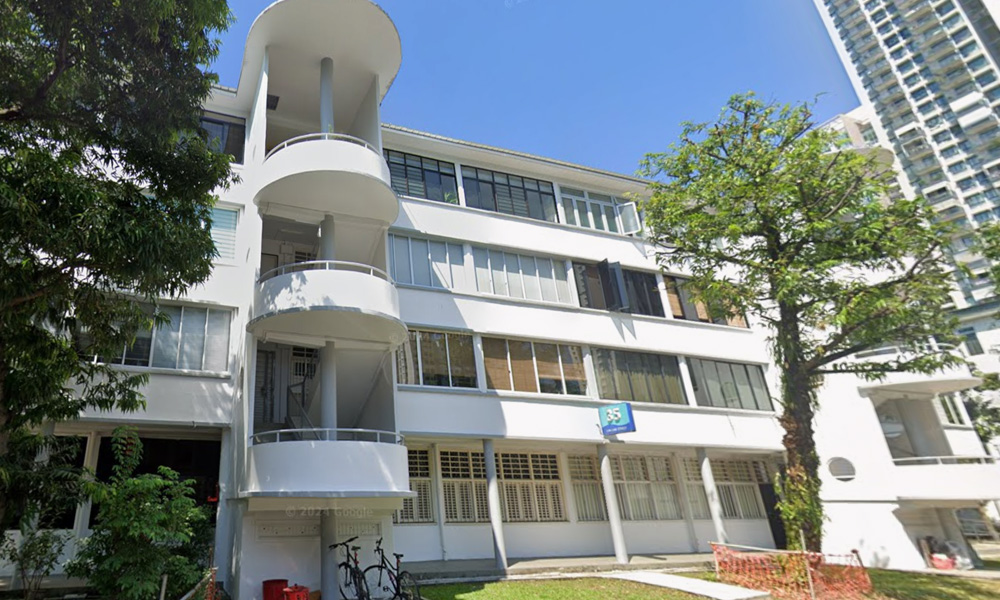
“Crazy Rich Millionaires of the Foochow Coffee Shop Owners Association, who own 35 coffee shops, have no money to clean their toilets,” he wrote, pointing out that the Ministry of Sustainability and Environment (MSE) is covering 95% of their cleaning costs despite existing laws requiring toilet owners to uphold cleanliness standards.
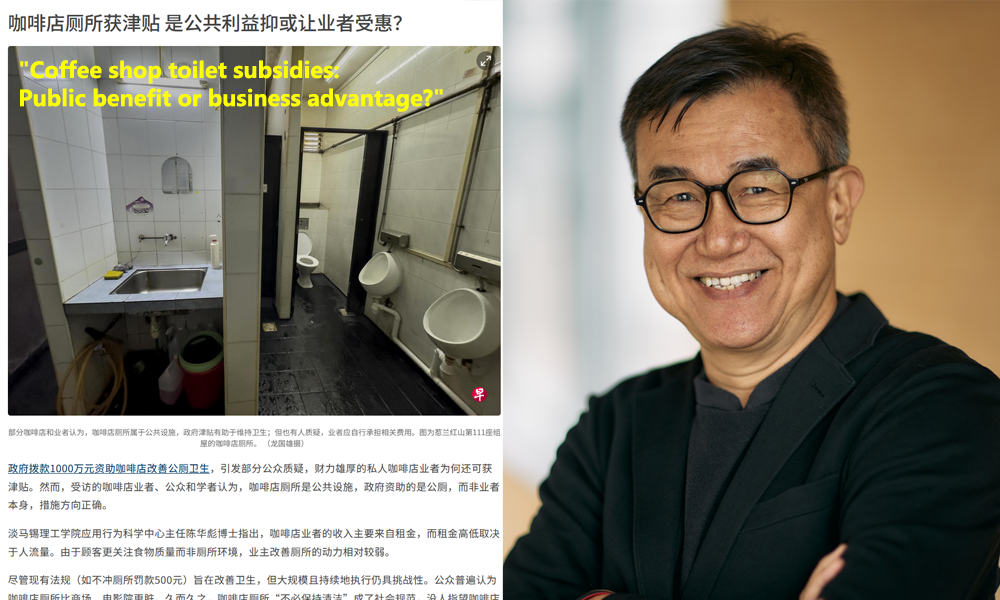
Sim included a screenshot of a mainstream media interview with the late Hoon Thing Leong, the former boss of Kim San Leng, a well-known coffee shop chain.
Hoon, who passed away on 29 April 2021 at the age of 72, built a coffee shop empire with over 30 outlets across Singapore. The chain is now managed by the third generation—Francis, Fiona, Andy, and Alfred Hoon.
By referencing Hoon, Sim appeared to highlight the financial strength of large coffee shop operators, arguing that they should be able to afford toilet upkeep without government assistance.
Sim highlighted that coffee shop operators who fail to provide basic amenities like soap or toilet paper, or who neglect hygiene, can be fined up to S$500.
More serious lapses carry fines between S$1,000 and S$5,000, and accumulating 12 or more demerit points within a year can lead to a suspension of one to three days.
“But with 60% of coffee shops rated as dirty, the current enforcement level is lax,” he said, arguing that the solution should focus on stricter penalties rather than grants.
Sim’s proposed solutions
Sim outlined several measures to improve public toilet cleanliness:
Stricter Enforcement & Transparency
- Increase surprise inspections by the National Environment Agency (NEA) and Singapore Food Agency (SFA) instead of relying on complaints.
- Raise fines for repeat offenders to at least S$2,000 and impose longer suspensions.
- Introduce a public toilet cleanliness grading system (A, B, C, D) similar to food hygiene ratings.
Smart Technology for Real-Time Monitoring
- Install IoT sensors to track cleanliness (odor, flush frequency, soap availability) and alert management when cleaning is needed.
- Implement a QR code feedback system to allow customers to report unhygienic conditions directly to authorities.
- Require F&B operators to log toilet cleaning digitally to prevent neglect.
Name and shame unhygienic coffee shops so that customers can avoid them, and make toilet maintenance a required part of hygiene training for F&B staff.
Sim also suggested Singapore take inspiration from China, where social media influencers use platforms like Red Note (小红书) to rate public toilets and encourage customer feedback. He argued that similar transparency would pressure business owners to maintain cleanliness or risk losing customers.
Sim: "30 years without results"
In another Facebook post on Thursday, Sim criticised the government’s lack of long-term solutions for dirty coffee shop toilets.
“We have been talking about this problem for over 30 years without results. As long as our government is unwilling to punish coffee shop owners for keeping toilets dirty, we will have no solution for the next 30 years,” he wrote.
He accused the government of “kicking the can down the road” and lacking a sustainable plan.
Sim also took aim at Professor Paulin Straughan, a sociologist from Singapore Management University whose views were featured in a Lianhe Zaobao commentary defending the grant.
“Important Note: Please note that Professor Paulin Straughan is a paid consultant of the NEA, and her opinion may or may not be influenced by this relationship,” he wrote, raising concerns about potential bias.
The Lianhe Zaobao commentary argued that coffee shop toilets function as public amenities and that the grant helps maintain hygiene rather than directly benefiting business owners. Experts quoted in the piece supported the grant, saying it would incentivise owners to improve hygiene standards.
However, Sim had rejected this reasoning in his Facebook post, insisting that the issue is one of enforcement, not funding.
“If you didn’t give money to shopping centres, why are you giving money to coffee shops?” he earlier asked.
Government response and ongoing public hygiene efforts
The government announced two separate S$5 million grants for coffee shop toilet hygiene during the Committee of Supply 2025 debate on 4 March. The Coffeeshop Toilet Renovation Grant funds facility upgrades, while the Coffeeshop Toilet Deep Cleaning Grant supports thorough cleaning efforts. Both grants, managed by the NEA, cover up to 95% of costs, with caps of S$50,000 for renovations and S$25,000 for deep cleaning per coffee shop.
MSE stated that it had endorsed 10 recommendations by the Public Toilets Task Force, co-chaired by Senior Parliamentary Secretary for Sustainability and the Environment Baey Yam Keng and Public Hygiene Council (PHC) Chairman Andrew Khng.
The task force was convened in 2024 to study and propose solutions for improving public toilet cleanliness.
Baey has defended the initiative, stating that coffee shop toilets are widely used by the public, particularly the elderly, and should be kept clean as they serve as “natural gathering points” for residents.
MSE also acknowledged that coffee shops face high footfall but often struggle with “limited manpower in cleaning and maintaining the toilets.”
As part of broader public hygiene efforts, the NEA and Singapore Food Agency (SFA) conducted nearly 19,000 public toilet inspections in 2023, resulting in about 1,300 enforcement actions.
Despite the government’s push for improved hygiene, Sim’s latest comments have intensified debate on whether public funds should be used to support private businesses or if stricter enforcement should be the priority.
Further details on the grants and application process will be released later this year.