Amy Khor rejects Jamus Lim’s call for 16-year COE for EVs, citing equity and system complexity
During the Ministry of Transport’s 2025 Committee of Supply Debate, Workers' Party MP Jamus Lim called for a 16-year COE duration for electric vehicles (EVs) post-2030, citing concerns about battery lifespan and high replacement costs. In response, Senior Minister of State Dr Amy Khor emphasised that the current 10-year COE period ensures equity and vehicle fleet renewal, while warning against multiple COE durations.


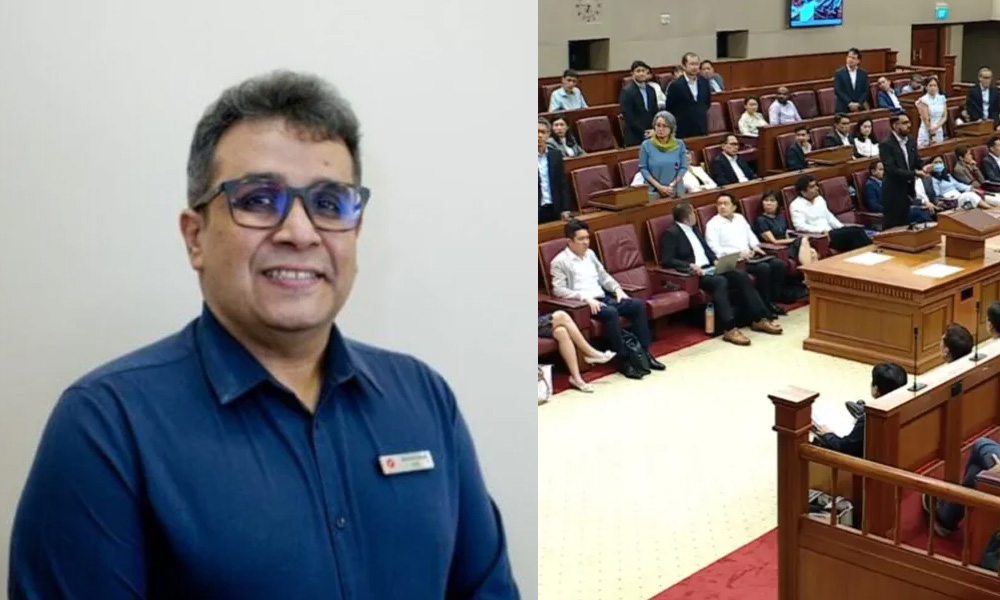
SINGAPORE: During the Ministry of Transport’s Committee of Supply Debate 2025 on 5 March, Workers' Party MP Associate Professor Jamus Lim raised concerns about the arbitrary 10-year Certificate of Entitlement (COE) duration, urging the Ministry to review it in light of electric vehicle (EV) battery lifespans.
He noted that the current 10-year COE duration, set in 1990, was based on vehicle turnover factors such as safety, efficiency, and maintenance costs.
However, for electric vehicles (EVs), these factors are now more dependent on battery lifespan.
While EV batteries typically last between 15 and 20 years, their warranties cover only eight years.
Given the high cost of battery replacement, Lim suggested a 16-year COE duration post-2030, when internal combustion engine (ICE) COEs phase out.
“There is much uncertainty over the genuine economic and technical lifespan of an EV,” Lim said.
“In light of this, the existing practice of the Ministry, which disallows the repeated renewal of shorter-term COEs, should also be eliminated to preserve maximum flexibility for EV drivers to extend the use of an environmentally friendly car."
Lim proposed an 8-year COE option to align with one battery cycle, while allowing those desiring longer durations the option of 16 years.
He also called for greater flexibility in COE renewals, arguing that restricting short-term renewals is counterproductive, especially since EVs are expected to last longer than traditional vehicles.
Dr Khor defends COE system, emphasises flexibility
In response, Senior Minister of State for Transport Dr Amy Khor clarified that the current 10-year duration is not tied to vehicle lifespan but is designed to ensure equity by preventing perpetual car ownership.
"We implemented a 10-year duration as part of our vehicle quota system to ensure greater equity, so that motorists do not own a car in perpetuity at the expense of future prospective owners," she explained.
Dr Khor argued that the current system already provides flexibility without needing to adjust COE durations.
If an EV owner chooses to deregister their vehicle before the COE expires, they can receive a pro-rated COE refund and higher Preferential Additional Registration Fee (PARF) rebates.
She also warned that having different COE validity periods for different vehicle types (EVs vs ICEs) would unnecessarily complicate the system.
Lim calls for COE revision to align with EV lifespan and government's shift to all-EV fleet
In his supplementary question, Lim argued that the 10-year COE duration is arbitrary and may not align with the lifespan of EV batteries, which are essential to EV sustainability.
He suggested that, given the government’s plan to phase out ICE vehicles by 2030 and transition to an all-EV fleet by 2040, revising COE durations could be considered.
Dr Khor responded, clarifying that the 10-year duration ensures equity and promotes vehicle fleet renewal.
She further clarified that while there is a 5-year COE renewal, it was introduced only as a one-time concession for owners whose cars were near the end of their lifespan.
A fully flexible multi-duration system does not exist and is not part of the policy intent, she said.
Dr Khor also suggested that, while EVs are currently the most viable clean energy vehicles, technology will continue to evolve.
It is not practical to tie COE durations to a specific technology, especially when battery warranties are already extending from 8 years to 10 years.
She even referenced ChatGPT, which suggests EV batteries can last between 10 and 20 years, further reinforcing the uncertainty in determining a "correct" COE duration.