Alvin Tan: Singapore rejects crypto for SWFs investments over speculation, volatility
During Parliamentary sitting on 5 March, Minister of State for Trade and Industry and MAS Board Member Alvin Tan reaffirmed that cryptocurrencies are unsuitable for Singapore’s sovereign wealth funds due to their speculative and volatile nature. He also addressed concerns on retail investors, youth adoption, and regulatory measures, stressing that MAS discourages speculative crypto trading while fostering responsible digital asset growth.

SINGAPORE: Minister of State for Trade and Industry and MAS Board Member Alvin Tan affirmed that the Singapore Government does not consider cryptocurrencies suitable for the nation’s sovereign wealth funds due to their speculative and volatile nature.
While retail investors are explicitly discouraged from engaging in cryptocurrency investments, he stressed that the Government does not recognise cryptocurrency as a viable asset class for institutional investors either.
"Our investment entities make professional investment decisions with a long-term orientation. They invest in assets anchored to underlying economic fundamentals with the potential for long-term value increase," Tan said in Parliament on 5 March.
"Cryptocurrencies do not fit this profile," he added.
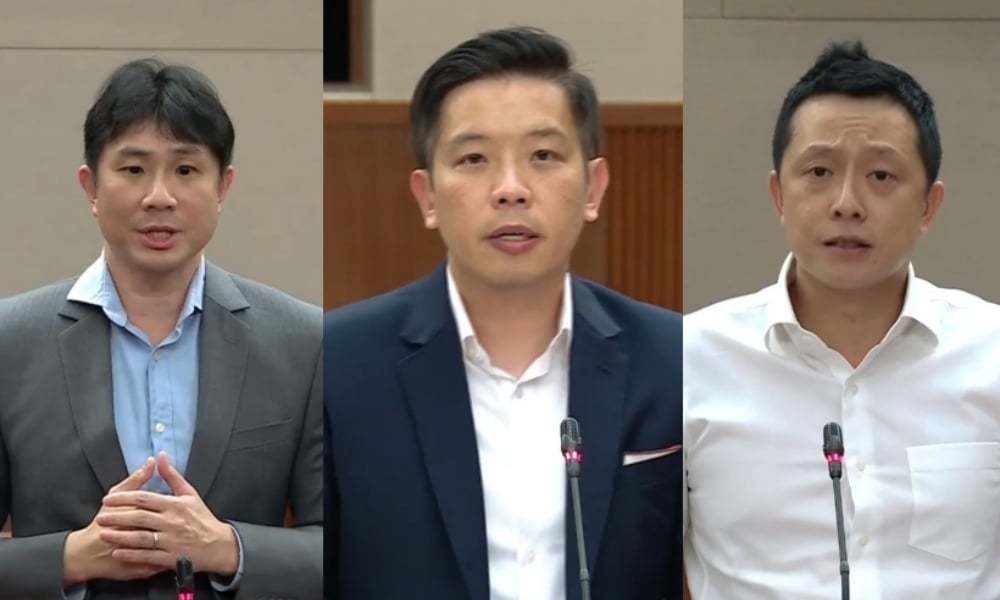
Tan was responding to a supplementary question from Workers' Party MP Associate Professor Jamus Lim, who sought further clarification regarding a parliamentary question (PQ) he had filed the previous day.
On 4 March, Lim asked the Prime Minister and Minister for Finance whether the Ministry considers cryptocurrency, such as Bitcoin, to have utility in Singapore’s sovereign wealth fund holdings.
In response, Second Minister for Finance Chee Hong Tat stated that Singapore’s investment entities make professional, long-term investment decisions based on assets with underlying economic fundamentals and growth potential.
He emphasised that cryptocurrencies do not fit this profile, describing them as highly speculative, prone to extreme price volatility, and lacking intrinsic value derived from cash flows, earnings, or tangible assets.
WP Jamus Lim Seeks Clarity on Cryptocurrency’s Role for Institutional Investors
On 5 March, Lim acknowledged the risks cryptocurrencies pose to retail investors but noted the evolving perception of crypto as a balancing asset, akin to gold.
He asked whether MAS has a view on the role of cryptocurrencies for institutional investors, including sovereign wealth funds and the broader Singapore financial ecosystem.
Tan referred to the 4 March written response by Chee, indicating that the Government’s position had already been addressed. He also questioned Lim on his and the Workers’ Party’s stance on cryptocurrencies.
Lim clarified that he holds no strong position on whether cryptocurrencies should be included in sovereign wealth fund portfolios.
He reiterated his interest in understanding the distinction between institutional and retail investors concerning cryptocurrency investments.
Tan reaffirmed the Government’s stance that sovereign wealth funds invest based on long-term fundamentals and reiterated that cryptocurrencies do not meet these criteria.
Alvin Tan: MAS Prohibits Credit and Leverage for Crypto Purchases Due to High Risks
Earlier, Tan also responded to a PQ filed by Yio Chu Kang SMC MP Yip Hon Weng, who asked about the Government’s rationale for tightening regulations on digital payment token (DPT) service providers, including banning locally issued credit card payments.
He also inquired about the anticipated impact on young consumers aged 18 to 25, who are increasingly adopting cryptocurrencies.
In response, Tan pointed out that cryptocurrencies are highly volatile, speculative, and often lack fundamental value.
He stated that MAS has repeatedly warned the public about the risks of crypto trading, deeming it unsuitable for the general public.
He warned that using credit cards to purchase cryptocurrencies means borrowing money at high interest rates, which could lead to compounded debt if the crypto value falls.
"More generally, using credit or leverage magnifies losses, and investors can lose more than the principal amount they put in," he cautioned.
Tan said MAS has therefore prohibited DPT service providers from offering credit or leverage for crypto purchases to all retail customers, regardless of age.
MAS Opts for Regulation Over Ban to Mitigate Crypto Trading Risks
Yip later highlighted the increasing adoption of cryptocurrencies among young consumers and asked how MAS considered this demographic when formulating regulations.
He also questioned whether MAS had considered banning cryptocurrencies altogether and whether such a move could push trading underground.
In response, Tan said MAS’s approach applies to all consumers, not just young investors, and that public education on crypto risks will be stepped up.
He clarified that MAS aims to foster an innovative and responsible digital asset ecosystem, but this is distinct from speculative cryptocurrency trading, which MAS discourages.
Acknowledging the cross-border nature of crypto trading, Tan stated that an outright ban would be ineffective and could drive consumers towards unlicensed platforms, increasing risks.
Instead of a ban, he said MAS focuses on ensuring proper business conduct, requiring adequate risk disclosures, and implementing consumer access and technology risk measures.
Temasek’s FTX Investment: Losses, Internal Review, and Accountability Measures
Temasek invested US$275 million in FTX across two funding rounds in 2021, believing in the exchange’s potential and its role in the digital asset ecosystem.
However, in November 2022, FTX collapsed due to liquidity issues and allegations of fraud, leading to its bankruptcy.
Following the collapse, Temasek wrote off its entire investment in FTX, acknowledging the loss.
In May 2023, Temasek announced that it had conducted an internal review of its due diligence process.
As a result, it cut the compensation of its senior management and investment team responsible for the failed investment.