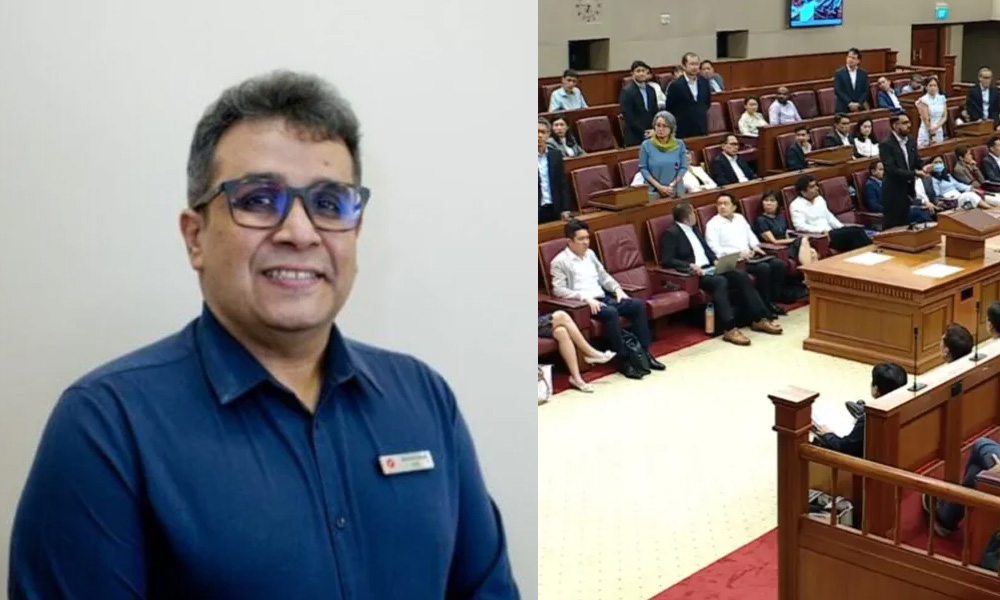
Jamus Lim urges wage hikes, CPF employer contribution boost, and minimum wage

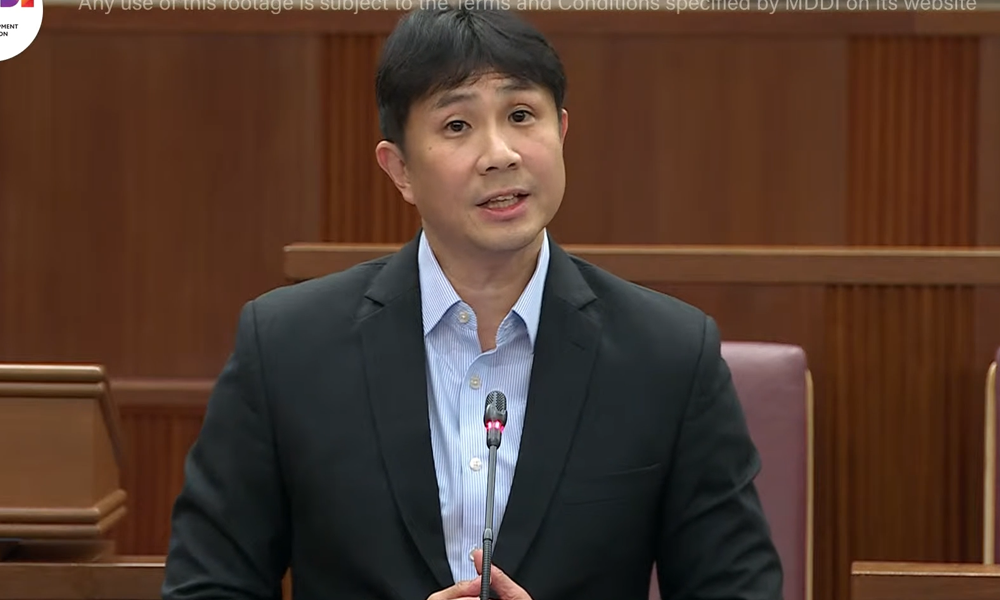
In the Budget 2025 debate, Associate Professor Jamus Lim of the Workers' Party called for decisive wage increases to address stagnant real incomes amid rising costs. He urged stronger National Wages Council guidelines, an increase in civil service wages, and a statutory minimum wage to restore workers’ purchasing power.
Featured Image
Comments
Google News

Associate Professor Jamus Lim, Member of Parliament for Sengkang GRC from the Workers' Party (WP), delivered a speech in Parliament on 26 February 2025 during the Budget 2025 debate, calling for decisive wage increases to address stagnant real incomes and rising costs of living. His speech highlighted how inflation, despite slowing in recent months, has significantly eroded the purchasing power of Singaporean workers. Assoc Prof Lim pointed out that while inflation had moderated from 3.7% at the start of 2024 to 1.6% by year-end—below the Monetary Authority of Singapore’s unofficial target of 2%—many Singaporeans still struggle with high costs. “We need not go again into comparisons of how much kopi-o or mee soto or biryani now command, compared to a few years ago. But suffice it to say that, especially for those reliant on fixed incomes, the cost of living has become ever-harder to bear,” he remarked.

Wage stagnation despite productivity gains

Assoc Prof Lim noted that real wages had not kept pace with inflation and productivity improvements. He noted that annual real wage growth, which averaged between 3% and 4% in the 2010s, fell sharply in recent years: to 2.3% in 2020, 0.9% in 2021, -1% in 2022, and only 0.2% in 2023. Although real wages rebounded in 2024, he argued that overall wage growth has been inadequate. “This was, perhaps most distressingly, against a backdrop where labor productivity actually increased—especially in 2021 and 2022—and remains at a level substantially higher today as compared to the pre-pandemic period,” he said. “It was not for the want of productivity improvements or a soft labor market that wages have been suppressed.” After adjusting for inflation, real wage growth from 2019 to 2024 was only 0.7%, a significant decline from the 3% growth seen in the previous decade.

Median income figures mask economic realities

A key argument in Assoc Prof Lim’s speech was that median income growth figures cited by the government do not fully reflect economic realities. While Singapore’s median household income reached S$11,297 in 2024, Assoc Prof Lim highlighted that this number applies to dual-income households, unlike in many other advanced economies where a single breadwinner can support a family. “More importantly, the dual-income household is not always the result of how both father and mother would like to work, but because they feel that they must, if they hope to make ends meet,” he said. This, he argued, distorts the perception of economic progress. While median earnings may show growth, they do not account for the increasing necessity of having two earners per household just to maintain financial stability. Unlike in many advanced economies where a single breadwinner can support a family, many Singaporean households rely on both spouses working to cope with high costs. This, he argued, distorts the perception of economic progress. Another factor that may be inflating wage growth figures is the increasing number of new citizens and Permanent Residents in Singapore. Assc Prof Lim pointed out that official income statistics include PRs and new citizens, who often earn higher wages as a requirement for their immigration status. “Since the criteria for those granted PR or citizenship explicitly require economic contributions, it is unsurprising if these new additions are higher-income,” he explained. This means that while wage growth data may show positive trends, these figures could be misleading as they reflect a changing population rather than actual improvements for long-time residents. He noted that the top 10% of income earners saw their wages grow three times faster than those in the middle-income bracket, further suggesting that wage growth has been uneven. “That’s why claims about rising standards of living—like what PM Wong articulated in his budget speech—ring hollow to many low- and middle-class families here,” he said.

Proposed solutions: Stronger wage policies

To address these challenges, Assoc Prof Lim proposed several measures to raise wages and restore Singaporeans’ purchasing power: Raising civil service wages: He suggested that the government set an example by increasing salaries in the civil service, which could have a broader impact on private-sector wage expectations. He estimated that real wages in the Ministry of Education grew by only 1.1% annually from 2019 to 2024—barely above the national average of 0.7%. “If we believe in the signal value of government action in nudging the private sector, then we must surely feel that this slow rate of wage progression, in the face of high inflation rates, falls short,” he argued. Strengthening National Wages Council (NWC) guidelines: Assoc Prof Lim called for broader adoption of NWC recommendations, noting that while the council has advocated 5.5% to 7.5% wage increases for lower-wage workers, there is no equivalent guidance for middle-income earners, despite their eroding purchasing power. He suggested a one-off wage hike of similar magnitude for all workers in profitable firms, backed by government monitoring of company compliance. Restoring CPF employer contributions: He proposed reinstating a more balanced employer-employee CPF contribution ratio. While the employer share was once equal to or higher than employees' contributions, it was reduced following the 1999 Asian Financial Crisis and never fully restored. “With costs of living so high, there is no better time than now to make workers’ gross incomes whole again,” he stated. Implementing a universal statutory minimum wage: Assoc Prof Lim urged the government to convert the existing Local Qualifying Salary framework into a full-fledged statutory minimum wage. He noted that the WP has long advocated for a $1,300 take-home minimum wage and argued that formalising this as a universal policy would benefit not only low-wage workers but also those further up the income scale. “Elevating the minimum wage isn’t just good for those on low salaries; they benefit all workers, by shaping everyone’s earnings expectations and improving their bargaining positions in the labor market,” he explained. Addressing concerns over inflation and job losses: Assoc Prof Lim countered concerns that wage increases could trigger inflation, lead to job losses, or harm productivity. He cited economic research suggesting that a “wage-price spiral” is unlikely under Singapore’s conditions and pointed out that unemployment rates have remained stable despite past wage hikes. “With our labour market unprecedentedly tight, it is difficult to envision mass redundancies triggered by a one-off wage increase,” he said. Furthermore, he argued that higher wages could improve productivity by reducing employee turnover, boosting morale, and incentivising better performance. “There are even many reasons why slightly higher wages may improve efficiency, by reducing shirking, improving morale, lowering turnover, and making hiring easier,” he added. Concluding his speech, Assoc Prof Lim reiterated that wage stagnation must be addressed decisively to help to work Singaporeans cope with rising costs. He called on the government to take the lead by ensuring NWC guidelines are more widely implemented, restoring CPF employer contributions, and enacting a statutory minimum wage. “Restoring the real purchasing power of wages is a sure-fire way to help working Singaporeans cope with sky-high costs of living,” he said. His proposals add to the broader debate on income growth and economic equity in Singapore, as policymakers seek ways to balance inflation, business competitiveness, and wage sustainability in the coming years.

Share This