Averted showdown or missed reckoning? What the Law Society’s leadership compromise reveals
Dinesh Singh Dhillon’s decision to step aside as Law Society president-elect ahead of the 22 Dec EGM has defused tensions — but not resolved the deeper concerns. The controversy over appointing a statutory council member to the presidency has revived long-standing questions about transparency, member control, and the legacy of the 1979 amendments that introduced ministerial appointments to the Council.
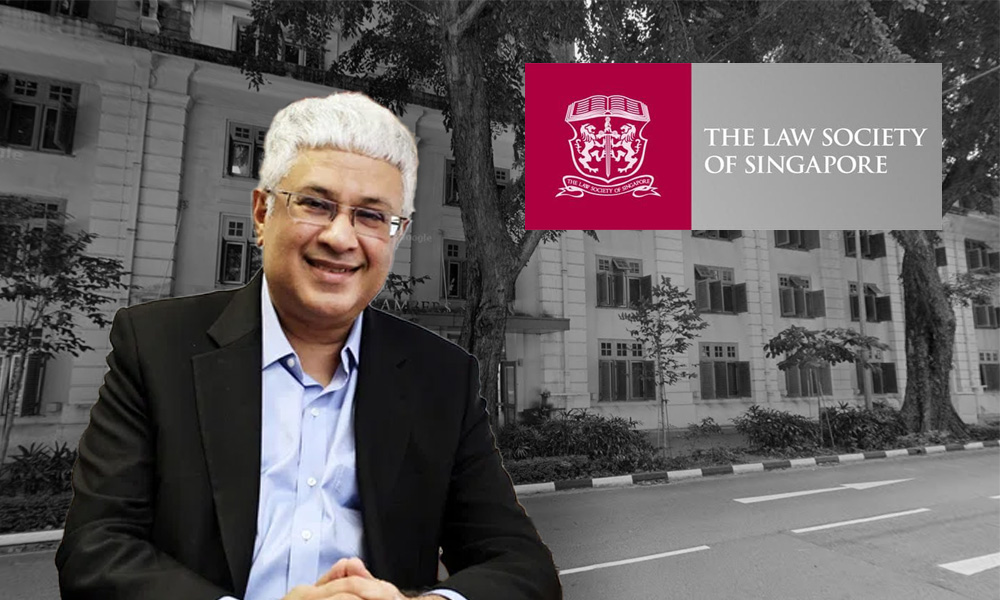

When Dinesh Singh Dhillon agreed to step aside as president-elect of the Law Society of Singapore ahead of the 22 December 2025 extraordinary general meeting (EGM), the move was framed as a compromise — a consensual outcome to preserve unity within the profession.
But beneath this carefully negotiated resolution lies a more uncomfortable truth: the Law Society avoided a public reckoning not by resolving the issues raised, but by deferring them — and possibly, by shielding its leadership from direct accountability.
What unfolded over the past month is more than a leadership reshuffle. It reveals persistent fault lines in the governance of the legal profession and prompts serious questions about transparency, legitimacy, and the independence of the Bar.
An appointment that broke historical precedent
The controversy began when Dhillon, a statutory member of the Law Society Council appointed under Section 48(1)(b) of the Legal Profession Act, was elected as president for the 2026 term. He won by a single vote in a 21-member Council, after an initial tie with fellow lawyer Samuel Chacko.
While his appointment was technically lawful, it was historically unprecedented in that no unelected council member had previously been elevated to the presidency in recent decades.
That fact alone unsettled many lawyers. Leadership of a self-regulating profession derives legitimacy not only from statute but from trust and member consent. A president who had not stood for election — and who owed his seat to ministerial appointment — raised alarm.
The Law Society has since pointed out that ministerial appointees have previously held office-bearer roles, including vice-president and treasurer. Former president Thio Shen Yi also noted that the Society’s first president, Tan Chye Cheng (C.C. Tan), was an appointed council member.
However, critics argue that these comparisons are inapposite. Earlier examples either predated the formalisation of member-elected councils or involved office-bearer roles below the presidency.
In Dhillon’s case, his elevation was the direct result of a tied internal vote, broken in favour of a statutory appointee — a scenario without precedent since the Law Society’s governance structure was amended in 1986.
How the Law Society’s autonomy was narrowed
To fully understand why this moment triggered such disquiet, one must look back to two earlier turning points — 1979 and 1986 — when the state reshaped the Law Society’s governance and operating space.
The first shift came in 1979, when Parliament amended the Legal Profession Act to reconstitute the Council and, for the first time, authorise the Minister for Law to nominate up to three advocates and solicitors to sit on the Council. Introducing that change, the Minister described it explicitly as “new” and justified it as a means to “spur the Council into action” amid heightened state concern over disciplinary control and professional conduct.
The second shift followed in 1986. That year, prominent criminal lawyer Francis Seow was elected president. Under his leadership, the Law Society took seriously its statutory duty to comment on proposed legislation. At the Opening of the Legal Year, Seow delivered a bold and critical address that catalysed a period of heightened professional engagement.
One of the most controversial issues of the day was the Newspaper and Printing Presses (Amendment) Bill 1986, which sought to restrict the circulation of foreign publications. The Law Society’s criticism of the Bill — and the broader surge of professional activism it represented — drew widespread public attention and government ire.
The response from the state was swift and far-reaching. In November 1986, Parliament passed amendments to the Legal Profession Act that:
- Restricted the Society’s ability to comment publicly on legislative matters, by narrowing its legislative role to matters “submitted to it” (i.e., effectively limiting commentary to legislation the Government chooses to refer).
- Introduced or tightened conditions affecting eligibility and disqualification from office, expanding the legal levers that could be applied to the Society’s leadership.
Crucially, these 1986 amendments did not create ministerial nominees on the Council — that structural mechanism had already been introduced in 1979. What 1986 did was deepen the state’s capacity to manage the Law Society’s public posture, by narrowing its formal remit to speak and tightening the rule-set that could determine who may remain in office.
Within weeks, Seow was disqualified under the amended provisions, and Giam Chin Toon was elected as caretaker president by the Council. Two years later, in 1988, Seow was detained under the Internal Security Act, without trial.
Taken together, the reforms from 1979 and 1986 permanently altered the Law Society’s governance. Ministerial nominees provided an early structural entry point into Council composition, while the later legislative constraints narrowed the Society’s scope for independent public intervention — and it is this combined architecture of influence and restraint that continues to surface whenever an unelected pathway to leadership becomes politically salient.
A familiar playbook
Viewed against that backdrop, the 2025 episode appears less isolated and more structural.
Based on a list released by one of the requisitioners, all three ministerial appointees on the 2026 Council voted for Dhillon. Along with selected internal support, this delivered him the presidency — albeit by the narrowest of margins.
The situation worsened when the Council declined to act on a valid requisition for an EGM filed on 24 November by over 25 members, as allowed under Section 68 of the Act. The 14-day statutory deadline passed without formal notice. Instead, the Council scheduled a tea session.
In the absence of action, two former Law Society presidents — Peter Cuthbert Low and Chandra Mohan Nair — issued the EGM notice on 9 December, setting a date of 22 December and tabling three key motions.
The three motions: reform, censure, and eligibility
The EGM agenda included:
- A resolution affirming that only elected council members should be eligible to serve as president
- A vote of no confidence in those Council members who had supported Dhillon’s appointment or declined to convene the EGM
- A motion calling for all executive roles — president, vice-president, and treasurer — to be restricted to elected members
These motions reflected member frustration over both Dhillon’s appointment and the Council’s conduct. Had they been debated and passed, the outcome could have led to resignations, structural reform, and a clear reset of norms around eligibility.
Consent — or concession?
On 17 December, a consent resolution was signed. Dhillon would step aside following the EGM. Professor Tan Cheng Han, the current vice-president, would be proposed as president, with Dhillon taking on the vice-president role instead.
All three motions were withdrawn.
While the outcome defused tensions, many lawyers viewed it as a strategic retreat by the Council. The resolution averted public censure, pre-empted member votes, and effectively protected Council members who had supported the original appointment. The leadership change was presented as consensual — but only after weeks of pressure, public scrutiny, and legal challenges to the Society’s decision-making.
Some have also questioned why the presidency passed to Tan Cheng Han, rather than to Samuel Chacko, who had tied with Dhillon in the original Council vote.
While this may appear unfair to Chacko, it is also true that Tan received a clear mandate in the Society’s October 2025 annual general meeting, securing 1,638 votes, well ahead of the next highest candidate at 1,222 votes.
However, there is no provision in the Legal Profession Act or the Society’s rules that assigns the presidency based on AGM vote share. Nor has the Council stated publicly that Tan’s appointment was made on that basis. The process, while perhaps reasonable in outcome, remains procedurally unclear.
A lesson half-learned
The Law Society has committed to reviewing eligibility rules within the first two months of the new Council’s term. This review must not be symbolic. It should directly address whether statutory appointees ought to hold voting rights for office-bearer positions — and whether safeguards should be introduced to preserve member control over leadership.
The Council’s initial handling of the controversy — ignoring a valid requisition, declining to explain its vote, and offering informal tea sessions in place of formal accountability — has left a credibility gap.
In the end, the 22 December EGM will proceed, but only to record Dhillon’s withdrawal and Tan’s appointment. The structural questions, and the precedent set by Dhillon’s brief presidency-elect, remain unresolved.
Precedent matters
The Law Society prides itself on defending the rule of law and upholding professional standards. But these principles must also be practised internally. Governance is not merely about lawfulness — it is about legitimacy.
This episode was not just about who serves as president. It was a test of how the Society chooses its leaders, and whether elected authority can be bypassed by structural shortcuts. It was also a test of whether the Council, when challenged, would respond with transparency or tactful delay.
The consent resolution may have avoided a showdown. But unless the Society confronts the unresolved issues it reveals — particularly the role of ministerial appointees in leadership selection — the same questions will return.
And next time, the profession may not be as patient.
Correction: An earlier version of this editorial stated that Parliament’s 1986 amendments to the Legal Profession Act created the mechanism for the Minister for Law to appoint up to three members to the Law Society Council. This was incorrect. The ministerial nomination provision was introduced earlier, through the 1979 amendments to the Act, where the Minister stated in Parliament that the power to nominate up to three advocates and solicitors to sit on the Council was “new”. The editorial has been updated to reflect the correct legislative history.