The Zulfikar case: Not false enough for POFMA, yet too disruptive to stay
Ministry of Home Affairs’ handling of Zulfikar Mohamad Shariff’s posts underscores how one ministry has come to dominate the Government’s enforcement of discourse. More than a legal choice, it reflects a tightening grip on speech framed as a threat to harmony.
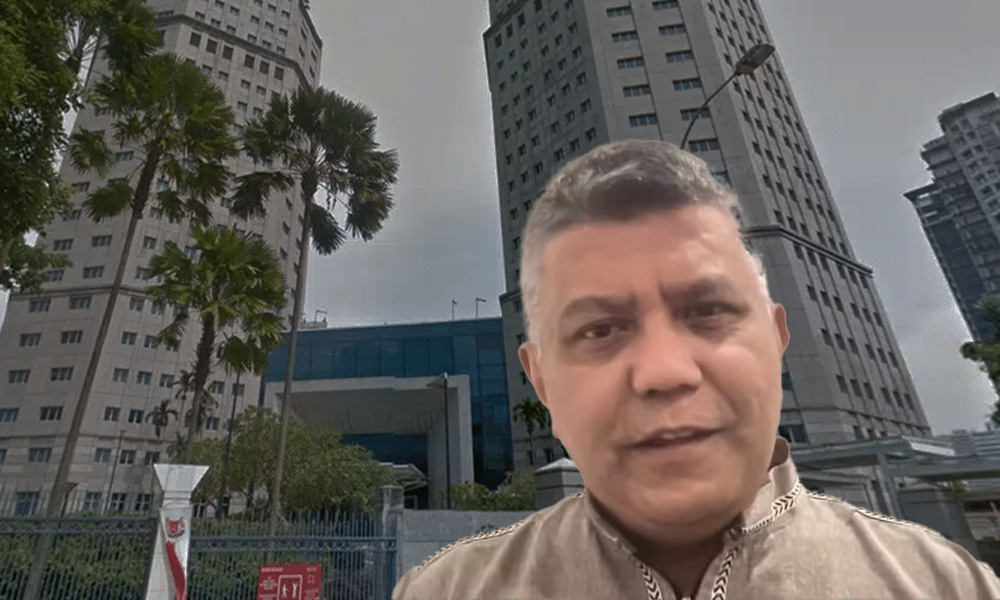

Singapore’s latest move to restrict access to social media accounts operated by Zulfikar Mohamad Shariff under the Online Criminal Harms Act (OCHA) highlights a troubling gap in how laws are selectively enforced to shape public discourse.
According to the Ministry of Home Affairs (MHA), Zulfikar incited racial and religious tensions by alleging, among other things, that Malay/Muslims were being compelled to abandon Islam and assimilate into the Chinese community. MHA labelled the 19 June 2025 TikTok video as ‘false’.
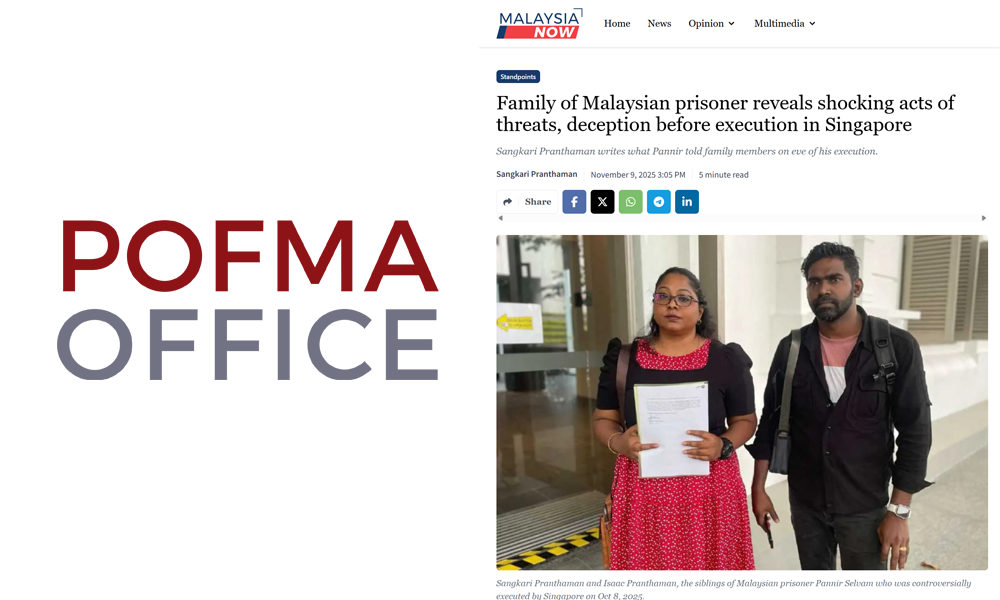
This would seem to fall squarely within the purview of the Protection from Online Falsehoods and Manipulation Act (POFMA)—a law passed in 2019 and positioned as the Government’s primary tool to counter online misinformation swiftly and transparently.
Yet in this case, POFMA was not invoked—even though the video had been online since June 2025 and OCHA had been in force since February 2024. Despite both laws being available at the time, no public corrective or enforcement action was taken until late November—nearly five months later.
The omission is significant. POFMA has often been deployed in cases involving not direct incitement or hate speech, but online reports or social media posts that criticised official policies or raised questions about ongoing matters.
While POFMA formally excludes opinions and questions from its scope, its practical application has blurred that line, with critics observing that what would ordinarily be understood as “opinion” or even a legitimate question is sometimes classified as a statement of fact—and therefore treated as a falsehood—by the deciding ministry.
To date, MHA has issued 23 POFMA correction directions—the highest among all ministries. The next highest is the Ministry of Law with 14 directions, previously also helmed by Minister K. Shanmugam. Other ministries have used the law far less frequently and usually in more narrowly defined circumstances.
The fact that no correction direction was issued in the June TikTok video points to a likely reason: the allegations, however provocative, may not have met POFMA’s legal threshold for falsehoods—or may have been too difficult to contest directly. As a result, the ministries more directly responsible for religious or community matters, such as the Ministry of Culture, Community and Youth (MCCY) or the Minister-in-charge of Muslim Affairs, remained publicly silent.
This prolonged inaction also reflected an institutional gap. The ministries best positioned to address the substance of Zulfikar’s claims chose not to engage publicly, whether through POFMA or other means.
That MHA—also the driving force behind OCHA—is once again the executing body here is worth noting. It reflects a broader consolidation of authority over narrative enforcement, particularly when speech challenges state institutions or national identity frameworks.
This dynamic was on full display in May 2025, when MHA acted to direct the Infocomm Media Development Authority (IMDA) to block Zulfikar’s Facebook posts ahead of the General Election, citing electoral interference.
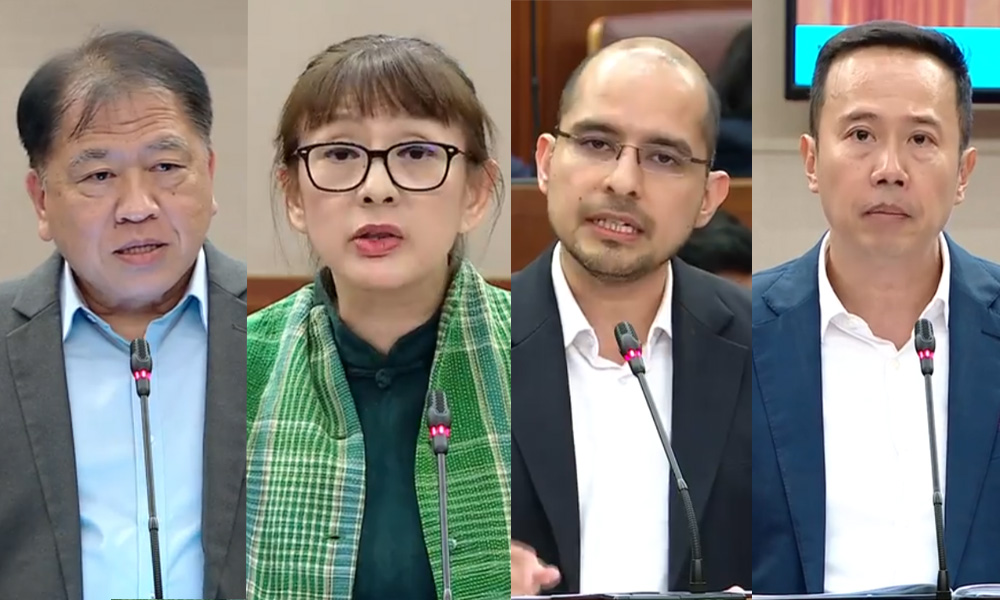
At the time, Zulfikar had criticised Malay-Muslim MPs for failing to represent the community’s interests. The ministry’s decision to identify him publicly and restrict access through IMDA illustrates how, when a matter touches on MHA’s core interests—such as national security or electoral integrity—it intervenes without hesitation.
In October, Minister Shanmugam unexpectedly returned to the matter in Parliament through a ministerial statement—well after the election had concluded. Citing the same incidents, he warned against the dangers of racial and religious campaigning and reiterated that Singapore’s politics must remain free from foreign influence.
What drew attention, however, was the context: the statement was delivered without a direct prompt from parliamentary debate and included pointed remarks about how opposition parties had failed to renounce such endorsements. This raised eyebrows both among opposition MPs and some within the ruling party, with questions emerging over the timing and political intent of reviving an issue that had, by then, seemingly passed.
MHA then purchased advertising space in the mainstream press to further publicise the Minister’s remarks—an unusual move that signalled its intent to frame the narrative and elevate the perceived threat of racial and religious divisiveness.
Taken together, these moves suggest that while the original content may not have fallen squarely within MHA’s domain, the ministry ultimately chose to bring it under its narrative umbrella—demonstrating once again that when MHA decides an issue matters, it mobilises all available levers, from Parliament to public messaging.
The fact that Zulfikar’s posts originate from Australia adds another layer of complexity—not merely in terms of reach, but in enforcement. While the disabling directions issued under OCHA only apply to local access within Singapore, they effectively cut off his speech from domestic audiences without directly engaging with the speaker himself.
But beyond content removal, questions arise about the limits of Singapore’s legal powers. Zulfikar, now an Australian citizen, renounced his Singapore citizenship in 2020 and has remained abroad since. While the police have initiated investigations and cited potential offences under the Maintenance of Religious Harmony Act, any further legal action appears largely symbolic.
Even if he were found guilty under domestic laws such as sedition or incitement, Singapore cannot compel his return. Extradition is highly unlikely, and given Zulfikar’s previous detention under the Internal Security Act (ISA), his voluntary return is implausible.
But this incident is not just about one individual. It reflects a deeper tension in how the state defines and limits expression. Laws like OCHA and the Maintenance of Religious Harmony Act are designed to prevent incitement and protect cohesion—but when used to suppress potentially genuine grievances, they risk silencing the very communities they claim to protect.
That tension has sharpened with recent legal developments. In February 2025, Minister Shanmugam introduced the Maintenance of Racial Harmony Bill—ostensibly a consolidation of race-related laws, but in effect, an expansion of the Ministry of Home Affairs’ authority over racial discourse.
While the government claimed most provisions were not new, the Bill formalised sweeping new tools, including restraining orders, enhanced oversight of foreign-linked race-based organisations, and extraterritorial powers over speech offences. It also introduced state-directed “remedial” programmes for alleged offenders.
At the centre of this framework sits MHA—a ministry already driving enforcement under OCHA and the ISA, and now increasingly positioned as the principal actor in policing how race is discussed in the public domain.
Minister Shanmugam’s repeated interventions—often delivered via statements unrelated to parliamentary debate—and MHA’s earlier decision to amplify those remarks through paid media placements reinforce the impression of a ministry not just enforcing harmony, but defining it unilaterally.
That centrality is also reflected in its resourcing. In the 2025 Budget, MHA allocated S$132.5 million to International and Public Relations and Public Communications—more than 34% of the total communications spending across all ministries. When one institution accumulates this much authority and financial power over the management of sensitive expression, it becomes increasingly difficult to distinguish between the protection of cohesion and the suppression of dissent.
It also raises a more fundamental and uncomfortable question: if government policy—deliberately or otherwise—results in unequal treatment of a racial or religious group, do those affected still have the space to speak up?
Under current conditions, even raising such concerns publicly could trigger enforcement under laws ostensibly designed to preserve harmony. In this framework, “harmony” risks becoming a shield for avoiding discomfort, rather than a foundation for meaningful dialogue or inclusion.
Ultimately, the use of OCHA instead of POFMA in this case shows that the issue is not simply about which law was used—but about the increasing consolidation of power to define what is acceptable speech, who gets to say it, and how quickly it is silenced.
This is not just about Singaporean access to information or discourse. It is about a tightening sphere in which freedom of expression—regardless of where it originates—is increasingly governed not by transparency and correction, but by erasure.