Bidadari dogs caregivers share timeline after multiple concerns lead to barrier rectification
Caregivers shared a timeline of concerns raised over the NParks barrier and subsequent rectification works. After repeated requests and the death of Pointy, one of the Bidadari dogs, NParks finally agreed to adjust the strut height at the hideout, while other sections of the barrier remain under construction.

SINGAPORE: Caregivers of the Bidadari community dogs have raised multiple concerns over a National Parks Board (NParks) barrier, highlighting potential safety issues and calling for urgent rectification.
A detailed timeline of the concerns and rectification works was shared via Bidadari Paws’ Instagram on 23 September.
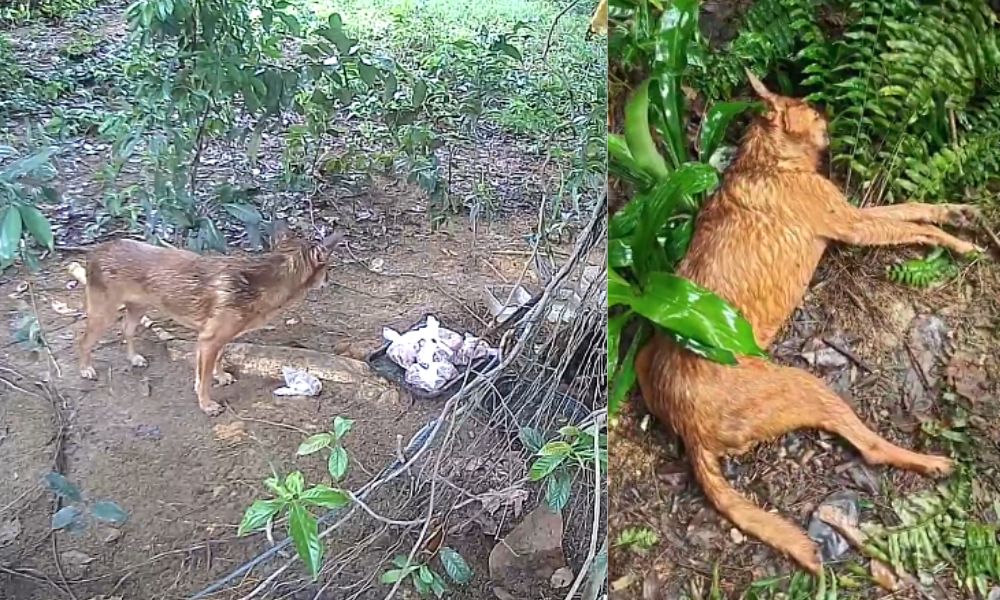
The post follows the death of one of the Bidadari dogs, Pointy, who was found dead on 5 September just outside the NParks barrier, at the spot where she had previously crawled under an older canvas to return to her hideout.
Barrier Replacement
On 21 August 2025, caregivers attended a site meeting with NParks to review the proposed barrier.
They submitted an alternative design and raised key suggestions, including removing the bottom strut near the hideout to allow dogs to crawl back if trapped outside, and creating a convenient entry and exit point for caregivers to access feeding spots.
NParks agreed to review these suggestions.
By 29 August, caregivers were informed that the canvas replacement had begun, but some of their earlier recommendations were not incorporated.
Pointy was last seen at her usual feeding spot on 1 September, the day before barrier works reached the hideout.
Footage suggested she was generally well, although caregivers noted a potential issue with one of her eyes.
NParks Maintains Strut Height Despite Caregiver Concerns
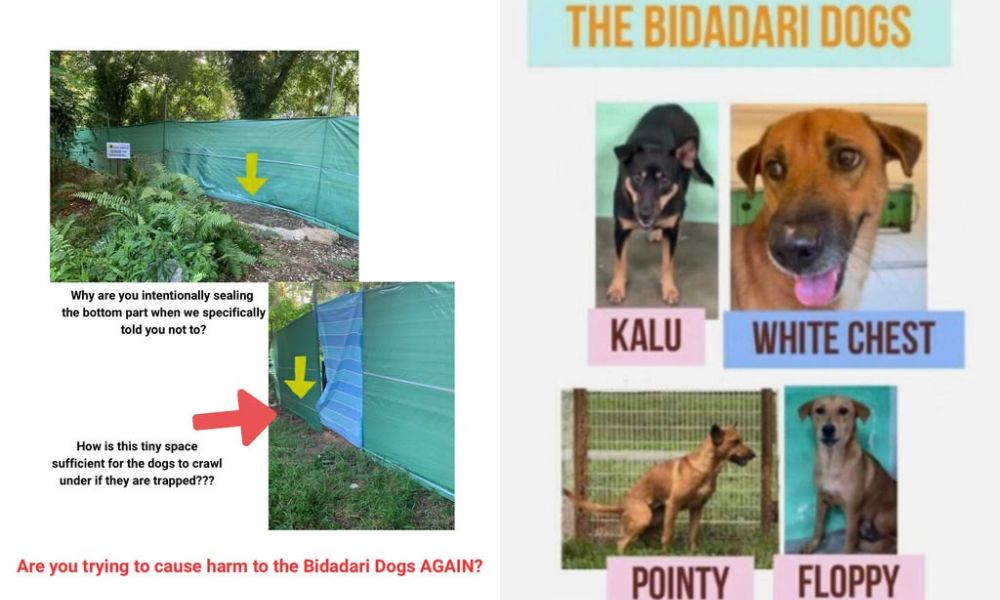
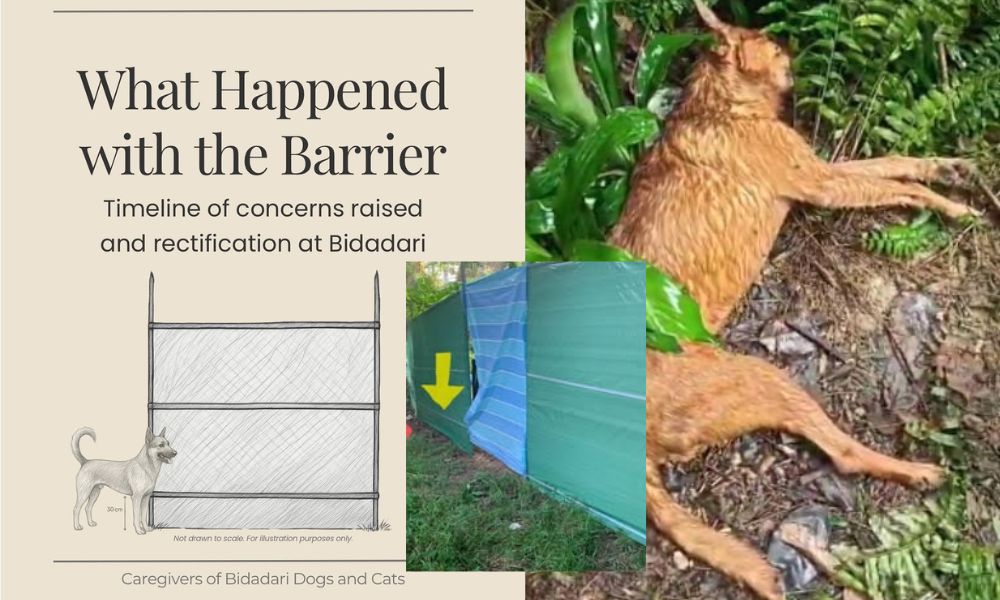
When the barrier work reached the hideout on 2 September, the bottom struts had been installed 300mm above the ground.
Caregivers immediately requested a higher clearance, warning that the space was insufficient for senior and skittish dogs.
The canvas had been glued tightly to the top and middle struts, making it difficult for the dogs to crawl under.
On the morning of 3 September, caregivers formally requested that the bottom struts be raised to at least 450mm, after noticing that Pointy had not taken food the previous evening.
That evening, NParks responded that the struts would remain at 300mm, citing structural stability, though the feedback would be considered in future works.
According to the post, NParks said: “Regarding your request on the lowest metal supporting structures, we will be keeping them at 300mm above ground in that area. We will not be increasing the gap as it would affect the stability and overall hoarding structure, but we have noted your feedback for future consideration.”
Caregivers stressed that 300mm was insufficient for medium to large, senior dogs.
They noted that Kalu, the smallest of the pack, stands about 50cm at the shoulder with a floor-to-elbow height of approximately 30cm, while the rest of the dogs are larger, making the 30cm clearance likely inadequate.
With no sighting of Pointy after the barrier reached the hideout and no immediate changes made, caregivers turned to social media to raise awareness and press for rectification.
Pointy’s Death and Rectification
On 5 September, Pointy was found deceased outside the new barrier, near the spot she used to crawl under.
That same day, during a chance meeting at the park, NParks agreed to rectify the section where the lower struts had been installed.
An on-site meeting was held on 8 September to discuss the rectification, and approval was granted the following day to raise the struts to 500mm.
Rectification work at the hideout was completed on 10 September, while other sections of the barrier remain under construction.
The caregivers noted that this was not the first time concerns had been raised.
When NParks first started putting up the canvas in late January, attempts by trappers to net the dogs left them extremely frightened.
According to the caregivers, although NParks stated that the dogs could still crawl under the canvas and were not trapped inside, they only emerged to take food after seven days, highlighting how skittish some community dogs, such as the Bidadari pack, can be.
With the barrier replacement works nearing completion, caregivers continue to monitor the Bidadari dogs closely.
View this post on Instagram
NParks’ plan to remove the dogs paused
The Bidadari dogs, which have lived in the area for nearly a decade, once faced the prospect of being trapped and removed following complaints from residents, including reports of barking and alleged “territorial behaviour” towards park visitors.
NParks said it had received more than 60 reports, including around 20 incidents where the dogs were said to have chased members of the public. While no direct attacks were reported, the agency noted that a young child was injured while running away from the dogs.
In response, NParks introduced mitigation measures, such as a U-shaped blue canvas hoarding to serve as a visual barrier between the dogs and parkgoers. At the time, the agency also indicated that humane trapping methods—similar to those used in its Trap-Neuter-Release-Manage (TNRM) programme—might be employed if necessary.
Since then, however, the situation has shifted.
According to an update from the dogs’ caretakers, the corral at Bidadari Park has been removed, and NParks has paused trapping efforts. Officials shared during a recent engagement session that the number of incident reports has dropped significantly since the canvas barrier was installed.
Although trapping has not been completely ruled out, advocates point out that despite more people visiting the park, the dogs have caused no harm. They argue this reinforces what has long been maintained: the Bidadari dogs are not aggressive and do not pose a threat to the public.