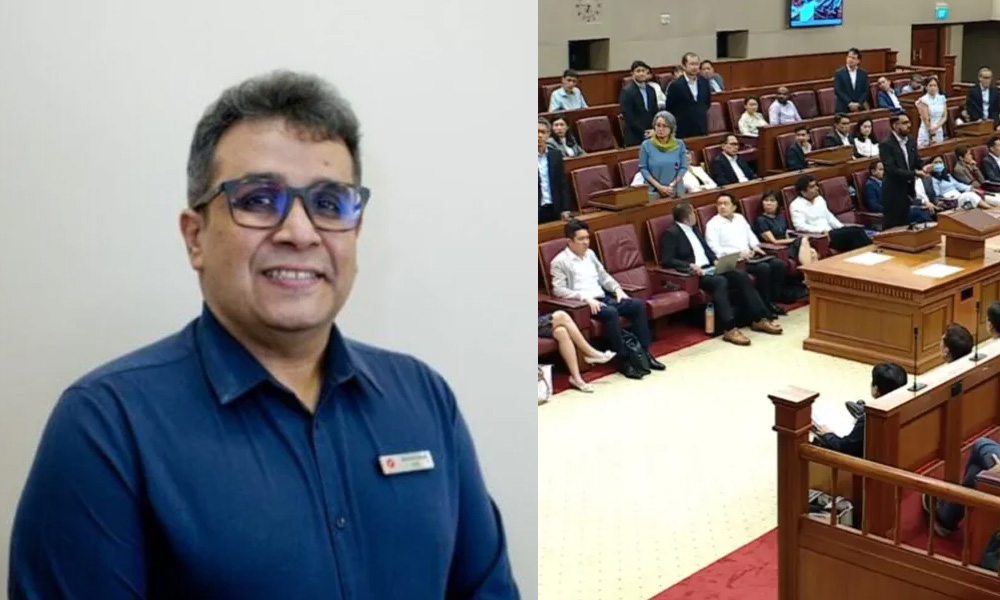
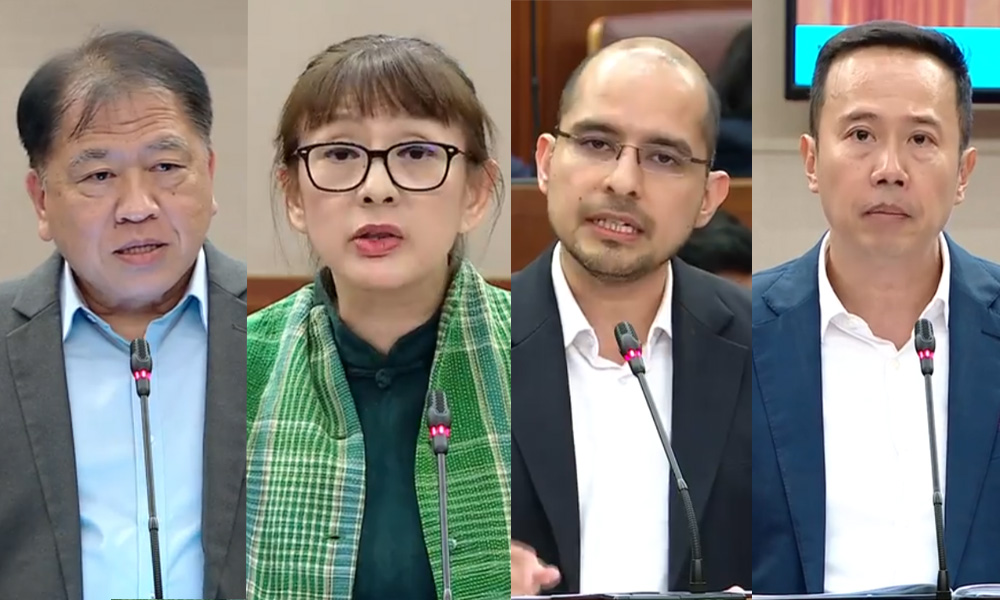
Former PAP branch chairman Marcus Loh called out after LinkedIn post on opposition leader’s remarks
Former PAP branch chairman Marcus Loh drew criticism on LinkedIn after posting a remark perceived as mischaracterising the Leader of the Opposition’s comments on economic growth.


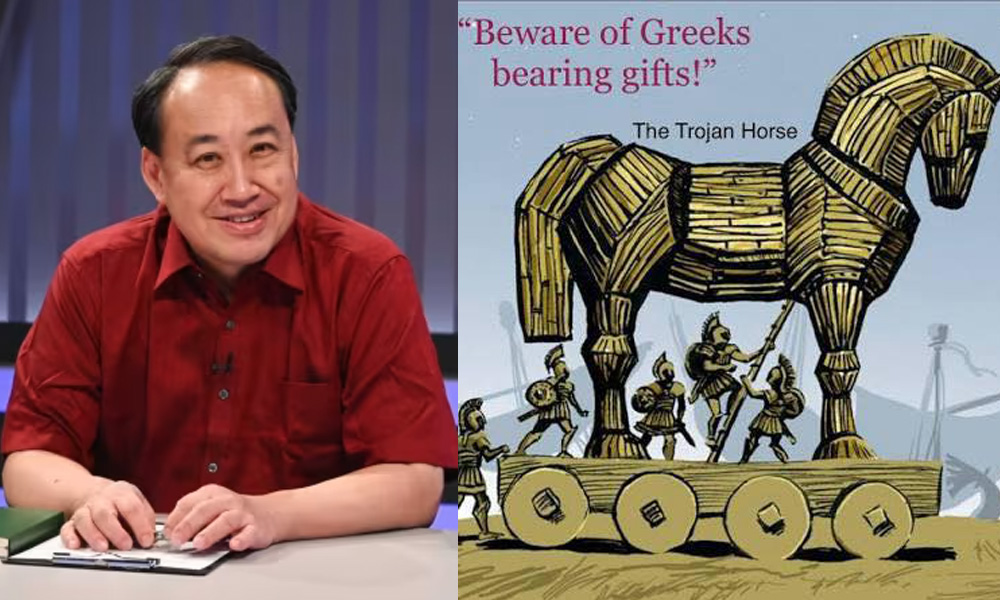
A LinkedIn post by Marcus Loh, a former People’s Action Party (PAP) branch chairman in Sengkang East who was withdrawn as a potential candidate ahead of the last general election, drew a pointed public response from lawyer Yeoh Lian Chuan.
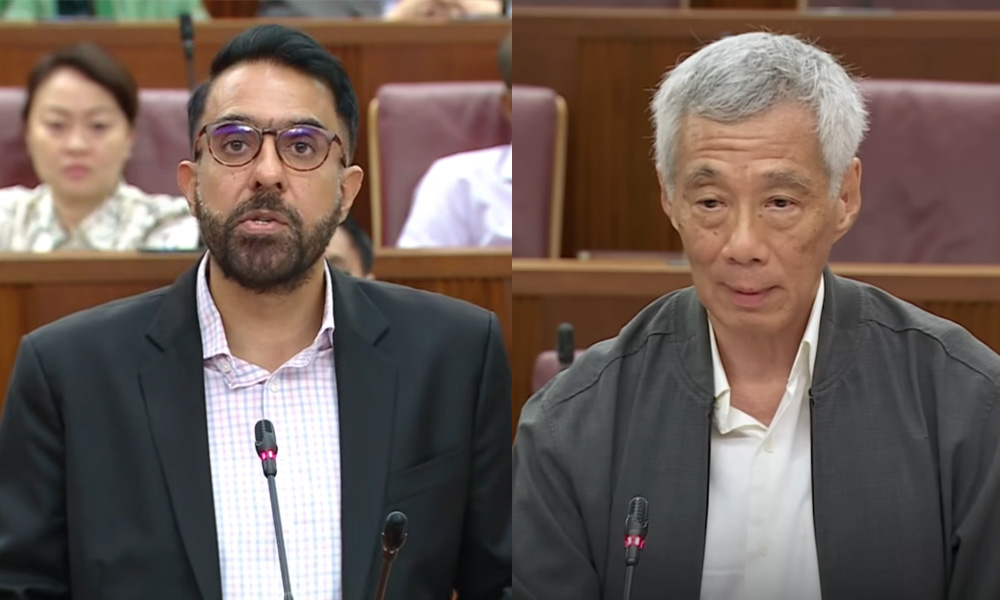
Loh, who is currently a Director at Temasek-backed digital transformation firm Temus, had commented on a Straits Times article summarising Leader of the Opposition Pritam Singh’s remarks in Parliament on 5 September.
In those remarks, Singh noted that Deputy Prime Minister Gan Kim Yong had set a target for Singapore to achieve annual economic growth of 2 to 3 percent, and even beyond 5 percent “in a very good year”.
Singh observed that this had prompted public questions on how such growth would be achieved — whether through productivity improvements or increased labour — especially given Singapore’s existing constraints in land, manpower, and carbon.
Singh also reiterated his earlier call for the formation of more select committees in Parliament, suggesting these could help the public better understand the trade-offs involved in policymaking.
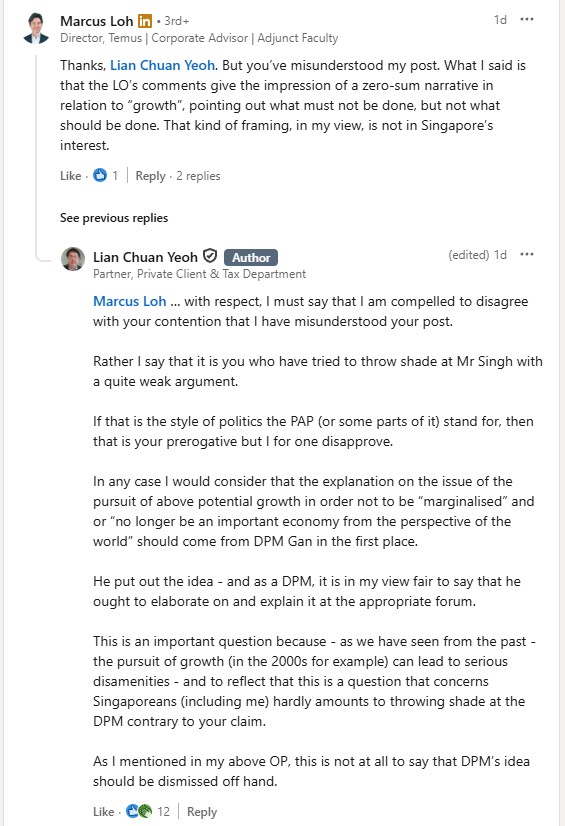
In his post, Loh claimed that Singh’s comments gave “the impression” of “zero-sum thinking”, accusing the Opposition leader of raising constraints without offering viable alternatives.
He further implied that Singh’s solution amounted to forming “more select committees”, which Loh criticised as process-heavy and lacking progress.
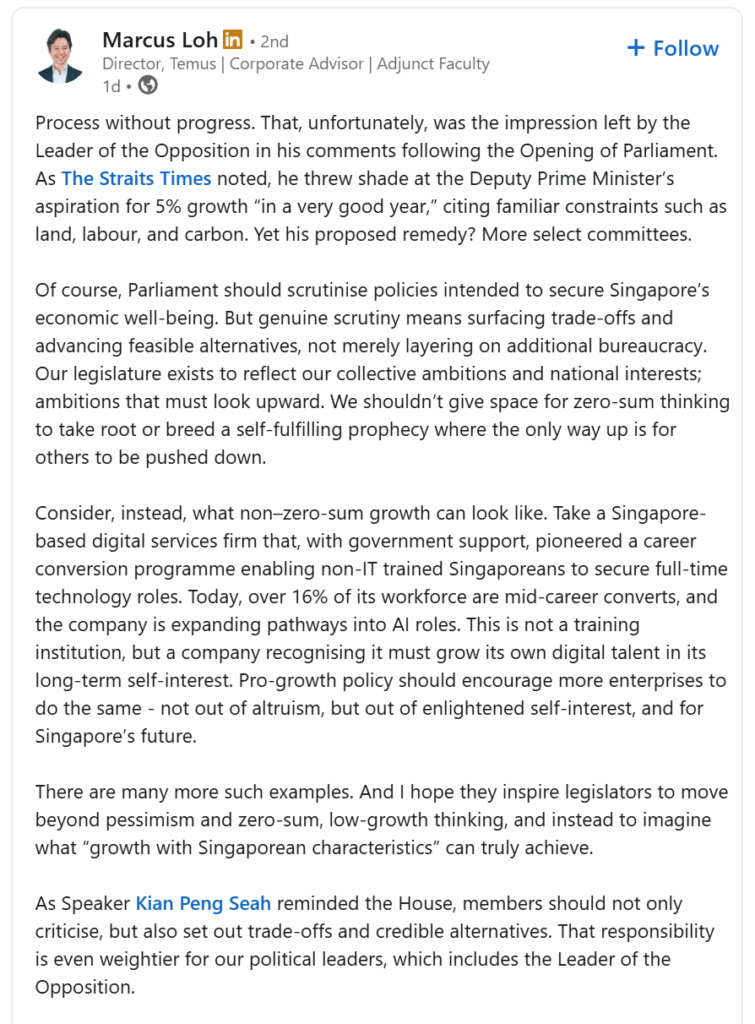
Yeoh publicly disagreed with this characterisation, responding on LinkedIn that Loh’s post reflected “a complete misunderstanding” of Singh’s remarks.
He noted that Singh’s concerns were legitimate and echoed by serious economic observers, such as former GIC economist Yeoh Lam Keong.
Yeoh wrote, “To say that the idea needs to be scrutinised carefully — including by the Opposition — is right,” and added that Singh’s mention of select committees was not presented as a direct solution to the growth challenge, but a separate point aimed at improving public understanding of policymaking trade-offs.
Loh doubled down in follow-up comments, reiterating that real scrutiny must include advancing feasible alternatives, not simply highlighting obstacles.
He cited examples of digital workforce transformation as evidence that growth could still be achieved through innovation and policy support.
Other LinkedIn users entered the discussion.
One challenged the idea that critiques must always be accompanied by solutions, asking, “So Singaporeans cannot say out loud what must not be done, without what must be done, in response?”
Another commenter asked Loh to disclose any political affiliations or past involvement in electoral activities, citing the need for transparency.