28 nations urge Israel to end Gaza war, condemn civilian deaths near aid sites
A coalition of 28 nations, including Japan, the UK, and France, has called for an immediate end to Israel’s military operations in Gaza, criticising the deaths of civilians near aid sites and the restricted flow of humanitarian relief.
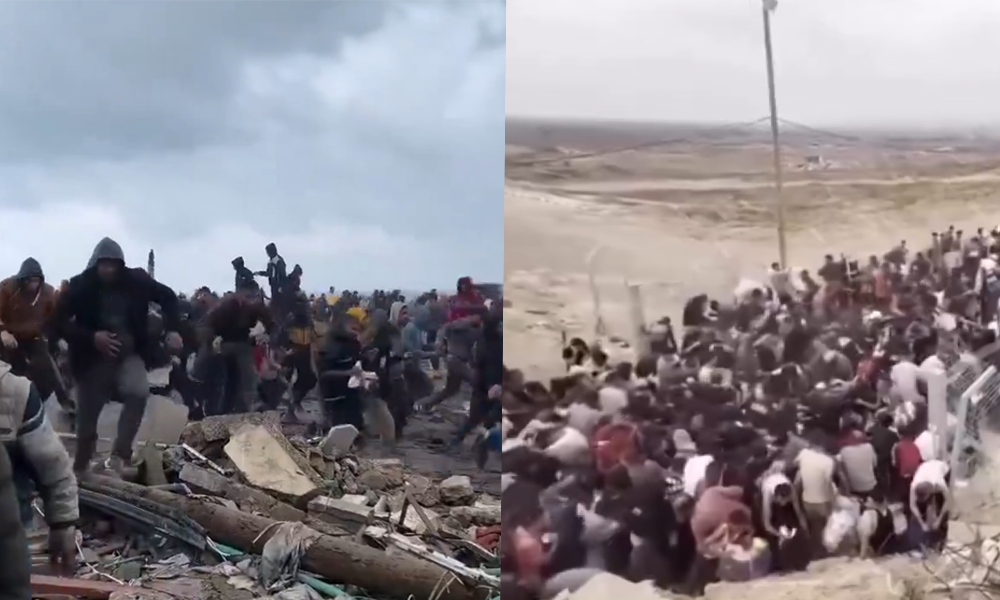

A coalition of 28 countries, along with the European Union Commissioner for Equality, Preparedness and Crisis Management, has jointly called for an immediate end to Israel’s military operations in Gaza.
The joint statement, issued on 21 July 2025, condemned what it termed the "inhumane killing" of Palestinian civilians, including over 800 individuals killed near food distribution points.
The foreign ministers from countries including Japan, France, the United Kingdom, Canada, and Australia, sharply criticised Israel’s aid delivery model, describing it as fuelling instability and depriving Gazans of dignity.
The statement singled out the Gaza Humanitarian Foundation (GHF), an aid delivery mechanism backed by the United States and Israel. According to the group of nations, the majority of the 800-plus civilians were killed in proximity to GHF sites.
They also rebuked what they called the "drip feeding of aid" into the territory and described the growing humanitarian crisis as “horrifying”.
“The Israeli government’s aid delivery model is dangerous, fuels instability and deprives Gazans of human dignity,” the ministers stated.
“The suffering of civilians in Gaza has reached new depths.”
Among the 28 nations issuing the joint declaration were four members of the Five Eyes intelligence-sharing alliance: the United Kingdom, Canada, Australia, and New Zealand.
The inclusion of close allies of Israel and the United States marks a significant shift in diplomatic messaging. The countries said they were “prepared to take further action to support an immediate ceasefire and a political pathway to security and peace”.
In response, Israel’s Ministry of Foreign Affairs rejected the statement, calling it “disconnected from reality” and claimed it would send the wrong message to Hamas.
“The statement fails to focus the pressure on Hamas and fails to recognise Hamas's role and responsibility for the situation,” the Israeli ministry said.
Israeli Foreign Minister Gideon Saar said he discussed Gaza with British Foreign Secretary David Lammy. Saar reaffirmed Israel's position, stating that Hamas bears full responsibility for the continuation of the war and civilian suffering.
US Ambassador to Israel Mike Huckabee labelled the joint statement as “disgusting” and “irrational”, saying that Hamas has repeatedly rejected ceasefire proposals.
Meanwhile, Israel expanded its ground operations in Gaza. On the same day as the joint statement, Israeli tanks entered southern and eastern parts of Deir al-Balah city in central Gaza, marking the first time they have pushed into that area.
The war, now in its 21st month, began on 7 October 2023 when Hamas-led militants attacked Israel, killing 1,200 people and capturing 251 hostages, according to Israeli government data.
Since then, more than 59,000 Palestinians have been killed, according to Gaza health authorities. The toll includes the latest casualties from the renewed offensive in Deir al-Balah.
The GHF operates by using private US security and logistics firms to deliver supplies, largely bypassing the traditional United Nations-led aid system. Israel and the US have promoted this model, alleging that UN-led networks were being infiltrated by Hamas fighters who looted aid.
However, the UN has raised serious concerns about the GHF model, calling it unsafe and in breach of standards requiring humanitarian neutrality. The GHF has denied these claims.
The coalition of nations urged Israel to comply with its obligations under international humanitarian law and to lift restrictions on aid deliveries. They demanded that humanitarian organisations and UN agencies be allowed to operate safely and without obstruction.
In October last year, Israel’s Knesset barred the United Nations Relief and Works Agency (UNRWA) from operating within Israeli-controlled territories.
As part of its broader response, the UK government announced a £60 million humanitarian aid package for Gaza.
The countries warned that continued obstruction of aid would necessitate stronger measures and reiterated their support for an immediate ceasefire and a long-term political solution—something that appears unlikely in the near future, given that the Knesset Plenum passed a resolution with a large majority in July last year stating its objection to unilateral international recognition of a Palestinian state.