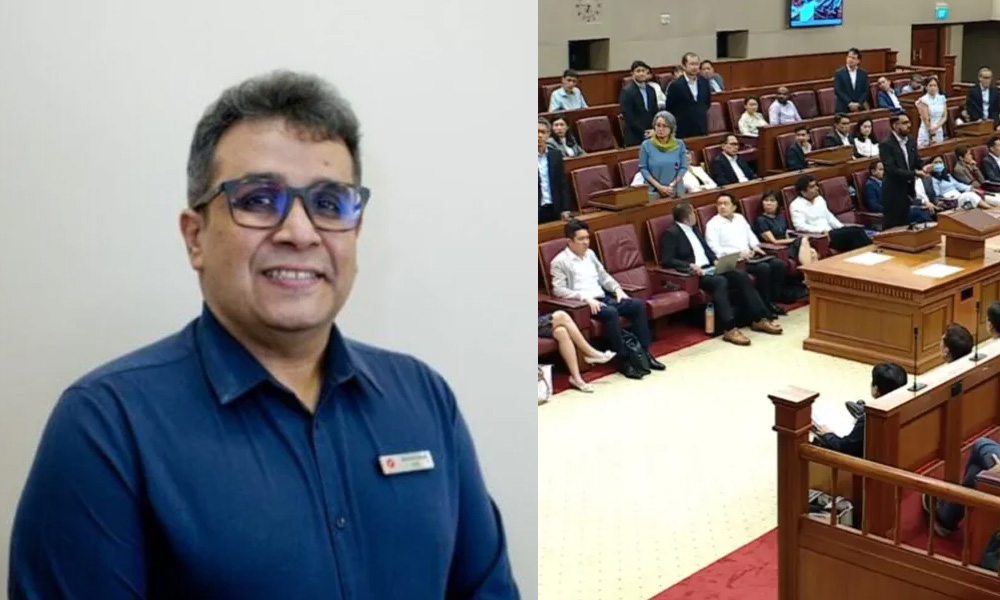
SDP forum urges community-driven and evidence-based reforms for animal welfare in Singapore
Experts at the Singapore Democratic Party's forum on 15 June 2025 revealed systemic gaps in protecting animals from cruelty, proposing legal, mental health, and grassroots strategies. Party Chairman Dr Paul Tambyah closed by urging evidence-driven advocacy and community participation to press for change.
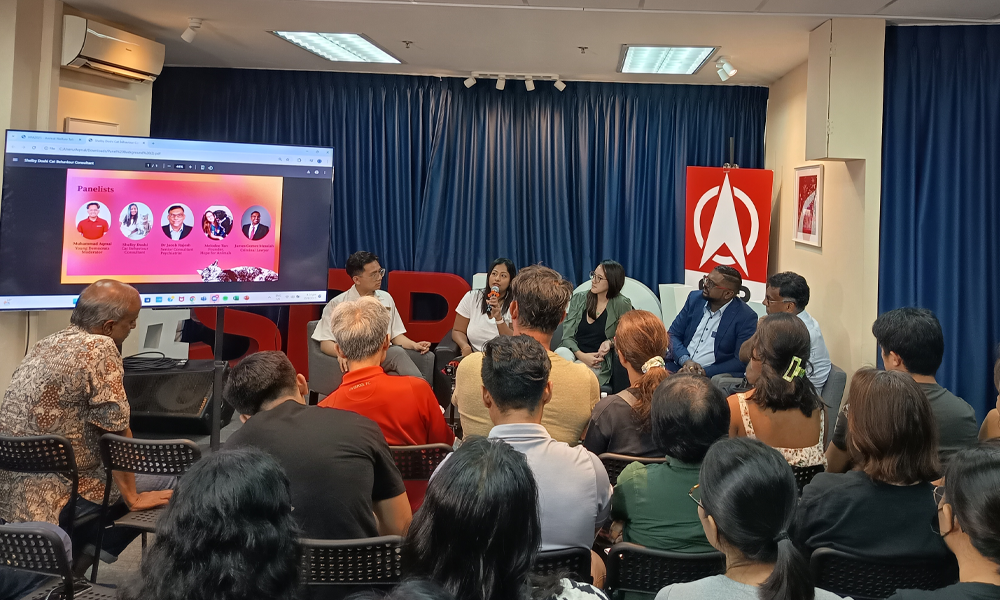

On 15 June 2025, the Singapore Democratic Party (SDP) held a landmark forum titled “Strengthening Animal Welfare in Singapore”, bringing together a panel of experts to examine the nation’s approach to animal welfare and offer community-driven solutions.
The forum, moderated by Young Democrats leader Muhammad Aqmal, tackled pressing issues such as enforcement failures, mental health triggers of abuse, legal shortcomings, and grassroots advocacy.
The event featured a diverse panel: forensic psychiatrist Dr Jacob Rajesh, cat behaviour consultant Shelby Doshi, criminal lawyer James Gomez Messiah, and Hope For Animals founder Melodee Tan.
Each speaker brought unique insights that illuminated the complex landscape of animal cruelty in Singapore.
Dr Rajesh opened with an overview of the psychological dimensions of abuse, warning that early acts of cruelty often reflect deeper psychological issues and can signal a trajectory towards more violent behaviours.
“There is evidence from global research that cruelty to animals, especially in childhood, is a red flag for future aggression,” he said.
He noted that these behaviours might stem from unaddressed trauma, unmanaged anger, or mood disorders. “Animal cruelty isn’t always driven by sadism; sometimes it is a misdirected cry for help,” he explained.
Dr Rajesh recommended that the authorities integrate mental health assessments into the investigative process and consider court-mandated therapy for certain offenders.
Behavioural consultant Shelby Doshi followed with a sobering look at the realities faced by community caregivers and rescuers.
Doshi shared her experiences investigating abuse cases, often without institutional support.
“We have mapped entire CCTV networks to trace incidents—only to find they were not working or inaccessible,” she lamented.
Stories of cats being poisoned or mutilated were shared in the forum, and how the lack of timely responses from enforcement agencies contributes to a culture of impunity.
Many of these deaths, she argued, are classified as traffic accidents or misadventures and thus not investigated further, which may distort the true scale of abuse.
“These animals die without dignity, and their suffering is often erased from the official record,” she said.
Lawyer James Gomez Messiah focused on legal frameworks. Despite amendments to the Animal and Birds Act in 2014 that increased penalties, he noted that sentencing remains light.
“There is no consistency. A person can get a fine for grievous cruelty, while another might be jailed for lesser acts,” he said.
Gomez advocated for sentencing parity, suggesting that animals should be treated as vulnerable entities in the eyes of the law, much like children or domestic workers.
He called for the introduction of a registry to ban known abusers with future pet ownership and mandatory reporting with pet platforms such as Carousell. “We have to close the anonymity loop in rehoming,” he asserted.
Melodee Tan, founder of Hope For Animals, delivered a heartfelt presentation, describing her transformation from grieving pet owner to animal welfare advocate.
“After the deaths of three of my pets, I couldn’t stay idle. I had to channel the grief into action,” she recounted. Her organisation now conducts outreach in schools, markets, and void decks, fostering empathy through education and social events.
Tan stressed the importance of reaching digitally excluded populations, including the elderly and low-income families. “Advocacy must move beyond hashtags. It must be tactile, local, and multilingual,” she said.
She highlighted the role of children in cultivating empathy, noting that young people often become informal protectors of animals in their neighbourhoods. She shared stories of children who volunteered to feed community cats daily and elderly residents who donated their food rations to buy pet supplies.
These acts, she explained, reflect how consistent, community-based engagement can inspire compassion across generations.

Throughout the forum, speakers shared distressing cases of abuse and abandonment. Doshi recounted an incident involving the abandonment of 19 cats under an HDB block, a case that received minimal investigation.
Dr Rajesh referenced psychiatric literature documenting how unchecked cruelty can evolve into domestic violence.
The event culminated in closing remarks by SDP Chairman Dr Paul Tambyah, who offered both a pragmatic and passionate appeal for long-term change.
“That's what citizens need to do, is you need to make your voice heard and eventually you will be heard,” he began.
Drawing on his academic background, Dr Tambyah encouraged participants to support evidence-based advocacy.
“Get a graduate student to do a thesis on this and get data, because, frankly, the Singapore government is very data-driven,” he said. He emphasised that formal research, documenting abuse cases, enforcement patterns, and public sentiment, could create the necessary pressure for legislative reform.
Dr Tambyah further reflected on his medical training and experiences in civil society, noting that systems only change when citizens engage persistently.
“You write to your MP. They may not reply the first time. But you write again. And you bring evidence. Eventually, they will have to respond,” he said.
He underscored that the issue of animal welfare is not niche or fringe. “The way we treat animals reflects on the kind of society we want to be. If we claim to be a developed, compassionate nation, our policies must reflect that,” he added.
To that end, Dr Tambyah pledged that the SDP would continue to partner with civil society, caregivers, and experts to propose concrete reforms. These would include legislative amendments, enhanced enforcement protocols, and community-based education campaigns.
“The law, science, and the heart must come together,” he concluded. “Only then can Singapore truly be a place where every life—human and animal—matters.”
The forum closed with an open invitation for attendees to stay connected, volunteer, and participate in future policy working groups.
The SDP confirmed it would compile insights from the event into a policy white paper for public release later this year.
Correction: The article has been edited on various citations from the speakers