Ronald Ong to retire from Income Insurance board amid governance scrutiny following Allianz deal saga
Ronald Ong will step down from Income Insurance’s board on 24 June 2025, while retaining his role at NTUC Enterprise. His departure follows a contentious period marked by public criticism and governance concerns surrounding a failed deal with Allianz.
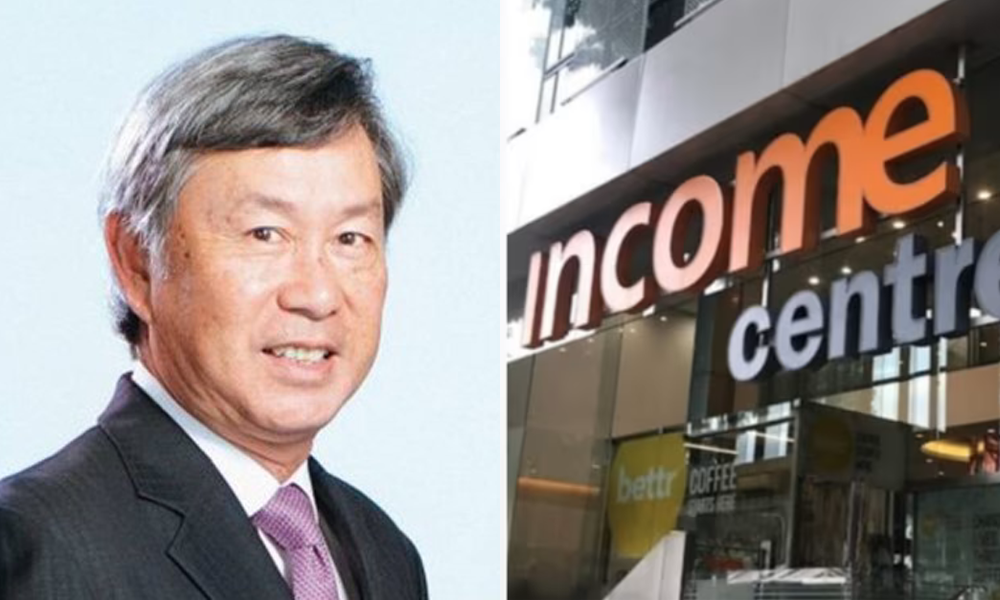

Ronald Ong, Chairman of Income Insurance Limited, will retire from the company's board on 24 June, the company announced in a media statement on 9 June. Ong will remain on the board of NTUC Enterprise, the parent entity of Income Insurance. He has served on the board of Income Insurance since 2018 and was appointed chairman in 2019. The company credited him with guiding it through a major structural shift — its corporatisation from NTUC Income Insurance Co-operative to Income Insurance Limited. The company also noted his leadership during the COVID-19 pandemic and in enhancing its digital capabilities. In a statement, Lim Boon Heng, Chairman of NTUC Enterprise, thanked Ong for his leadership, adding that he would now focus on managing the private investment portfolio within NTUC Enterprise. Income Insurance said its board has begun a succession process, with further details expected at the upcoming annual general meeting. However, Ong’s retirement coincides with ongoing public scrutiny over his role in a failed transaction involving German insurance giant Allianz. In July 2024, Allianz offered to acquire a 51 per cent stake in Income Insurance for approximately S$2.2 billion (US$1.6 billion). Morgan Stanley acted as the exclusive financial advisor for Income Insurance. The deal sparked public backlash and was ultimately blocked by the Singapore government in October 2024, when then Minister for Culture, Community and Youth, Edwin Tong, announced the government’s opposition to the deal and revealed a planned S$1.85 billion capital extraction over three years. Allianz withdrew its offer in December, and the matter was raised by various members of alternative political parties during the recently concluded general election. The controversy surrounding the proposed transaction was heightened by concerns over Ong’s dual positions as chairman of Income Insurance and CEO for Southeast Asia at Morgan Stanley. These overlapping roles raised potential conflict-of-interest questions, especially regarding the appointment of Morgan Stanley as the exclusive advisor for the sale. Income Insurance has previously addressed these concerns, stating that Ong had recused himself from the board’s decision to appoint Morgan Stanley. The company clarified that the appointment was first reviewed by the audit committee before being approved by the full board. Nonetheless, authoritative voices in corporate governance questioned whether the recusal was sufficient to eliminate perceptions of conflict. Professor Mak Yuen Teen, a corporate governance expert at the National University of Singapore, noted on LinkedIn that Ong’s multiple roles may breach the Monetary Authority of Singapore’s guidelines, which advise directors to recuse themselves in conflict situations. Retired banker Chris Kuan also criticised the arrangement, pointing to the overlapping leadership between NTUC Enterprise and Income Insurance. He noted that several key executives held roles across both organisations and questioned whether the decisions made served the best interests of Income Insurance or NTUC Enterprise. Adding to the controversy was the corporatisation process itself. Income Insurance was founded in 1970 as Singapore’s first insurance co-operative, with a mission to provide affordable insurance for workers. Its transition into a corporate entity in 2022 was met with internal resistance and public concern over the dilution of its social mission. Tan Suee Chieh, former CEO of both NTUC Income and NTUC Enterprise, raised issues regarding equity distribution post-corporatisation. He claimed that NTUC Enterprise’s move to sell a majority stake contradicted earlier commitments to remain the majority shareholder and that gains from any sale should be fairly distributed to earlier investors. Tan’s concerns were brought to the Monetary Authority of Singapore, which relayed them to the Registrar of Cooperatives. However, the Registrar declined to intervene. Meeting minutes from 2022 show that Income’s board was informed that NTUC Enterprise would retain majority control post-corporatisation and would continue supporting Income’s financial stability. The subsequent attempt to divest a majority stake to Allianz was thus perceived by critics as a reversal of those commitments, intensifying scepticism about the motivations behind the corporatisation and the failed deal. As Ong steps down, the incoming chairperson will face not only the task of steering the company through a period of reputational repair but also restoring stakeholder confidence in its governance structures. Income Insurance has not indicated who will succeed Ong, but is expected to address succession and governance issues at its AGM later this month.