Political parties debate economy, immigration, and cost of living in televised Singapore GE2025 forum
At a televised forum on 27 April 2025, Singapore’s five main political parties debated economic resilience, immigration, and the rising cost of living, with the ruling PAP and opposition parties laying out divergent plans to address voters’ concerns ahead of GE2025.
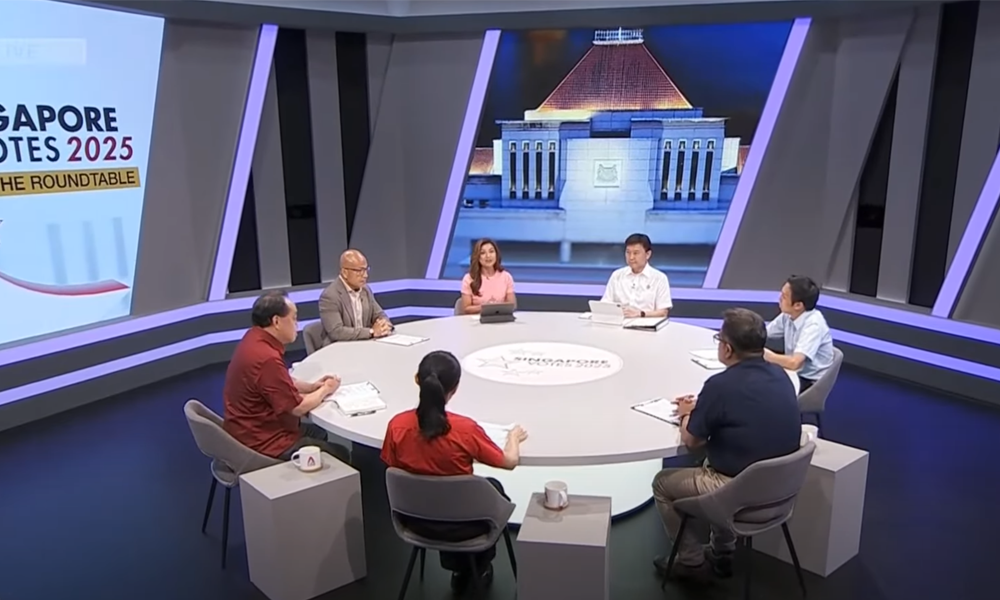

Candidates from five political parties contesting in Singapore’s General Election participated in a live televised roundtable on 27 April 2025, discussing critical topics including immigration, jobs, the economy, and cost of living.
This year, five parties were invited to participate, instead of the usual four, due to a tie for the fourth-most candidates fielded.
The 90-minute session, titled Singapore Votes 2025: The Roundtable, was broadcast live by Mediacorp and moderated by CNA presenter Otelli Edwards.
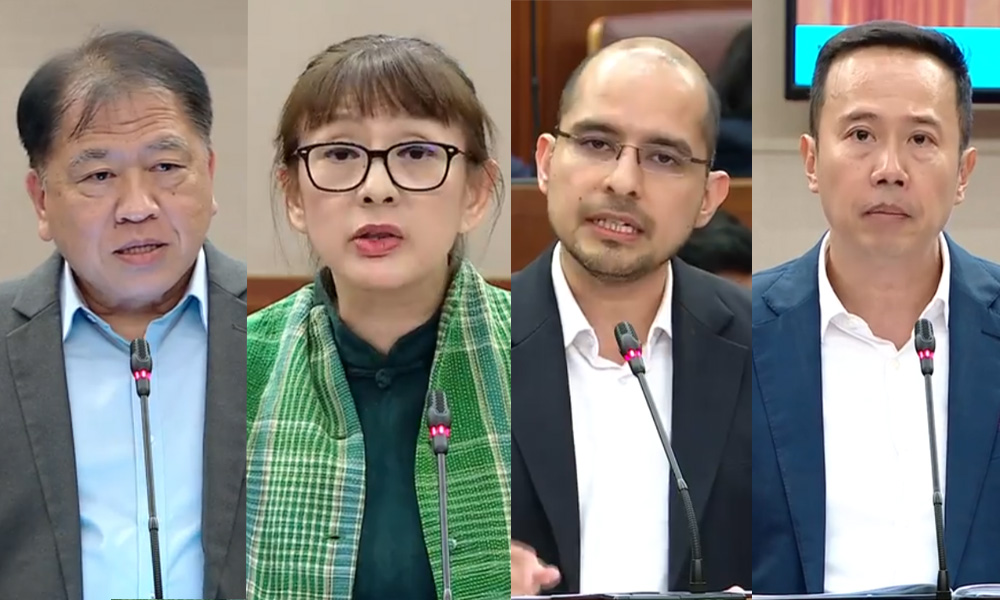
Participating were Chee Hong Tat (PAP), Michael Thng (WP), Ravi Philemon (RDU), Lim Tean (PAR), and Stephanie Tan (PSP).
Academics Professor Joseph Liow, Professor Jessica Pan, and Associate Professor Terence Ho also joined as panelists.
Speaking time was divided equally: the PAP received half the time, and the four opposition parties shared the other half.
People's Action Party (PAP) – Chee Hong Tat
Chee emphasised that the PAP government had laid strong foundations to help Singapore navigate global uncertainty. He stressed Singapore’s strategy of staying connected internationally, leveraging its reputation, and managing economic risks from a position of fiscal strength.
In tackling foreign relations, particularly with the US and China, Chee outlined Singapore’s principles of neutrality, encouraging US engagement in Asia, and ensuring Singapore retains strategic agency backed by national unity.
On immigration, Chee said Singaporeans remain central to policymaking. He rejected protectionism, preferring to enhance competitiveness through tripartite collaboration and upskilling. He defended the Progressive Wage Model as more sustainable than a blanket minimum wage.
Chee argued that rising costs are best addressed through economic growth, maintaining a strong Singapore dollar, and disciplined government spending. Support schemes like CDC vouchers and the Assurance Package have been expanded.
In closing, Chee warned against divisive politics and urged voters to uphold Singapore’s exceptional governance standards, stressing the importance of balancing scrutiny with constructive engagement.
Workers' Party (WP) – Michael Thng
Thng emphasised the need for Singapore to deepen ties with friendly nations while safeguarding workers through redundancy insurance and mandatory retrenchment benefits. He identified strategic opportunities, particularly for industries like semiconductors and the growth of local SMEs, supported by proposals for an export-import bank.
On immigration, Thng called for structured skills transfer from foreign workers to locals to strengthen domestic capabilities. Mentorship programmes and mandatory training were suggested to measure and incentivise this process.
On the cost of living, Thng criticised the GST hike during high inflation, proposing instead tweaks to the Net Investment Returns Contribution formula and the introduction of a minimum corporate tax rate.
In closing, Thng stressed the importance of multiple perspectives in Parliament to avoid blind spots, arguing for more opposition voices to ensure effective governance.
Red Dot United (RDU) – Ravi Philemon
Philemon warned that Singapore may be misreading geopolitical signals, urging a recalibration of trade and economic policies. To strengthen domestic resilience, he advocated reducing GST from 9 to 7 per cent to stimulate local spending.
On immigration, Philemon stressed the need to accentuate the privilege of citizenship, including more favourable pathways for foreign spouses of Singaporeans. He criticised the SkillsFuture Jobseeker Support scheme as inadequate and called for a more substantial safety net.
Regarding the cost of living, Philemon proposed financing a Citizens’ Dividend using existing budget surpluses. He argued that wealth taxes should be strengthened to ensure fairness in revenue collection.
In his closing remarks, Philemon urged Singaporeans to vote for policies that prioritise citizen welfare and collective prosperity, positioning RDU as the vehicle for meaningful change.
People’s Alliance for Reform (PAR) – Lim Tean
Lim criticised the PAP’s faith in globalisation despite early warning signs and advocated "glocalisation" – stronger ties with trustworthy regional partners like Indonesia, Thailand, and Malaysia. He proposed creating a dedicated bank for SMEs to enhance regional expansion.
On immigration, Lim reiterated that Singaporeans must be prioritised for jobs, opposing treaties like CECA, which he argued unfairly tilted the employment balance in favour of foreigners.
Lim rejected the GST hike as unnecessary, citing significant budget surpluses over the years. He advocated for removing GST on essential goods and preventing permanent residents from purchasing public housing to curb price inflation.
In his closing remarks, Lim urged voters to demand accountability and promised to challenge senior PAP leaders in Parliament if elected, criticising PAP MPs for lacking the passion to fight for Singaporeans.
Progress Singapore Party (PSP) – Stephanie Tan
Tan called for reduced dependence on multinational corporations and the strengthening of local enterprises to hedge against external risks. She advocated issuing national guidelines on commercial rent increases to lower business costs and support entrepreneurship.
On immigration, Tan proposed quotas and levies on Employment Pass holders to align their contributions with those of S Pass and Work Permit holders. She stressed that PSP's approach complements existing government policies like Compass but would apply more rigorous standards.
On cost of living, Tan outlined PSP’s Affordable Homes Scheme, suggesting deferred land cost payments to reduce upfront housing costs. Revenue measures such as amortising commercial land sales and introducing a levy on Employment Pass holders were proposed to boost government finances.
In her closing remarks, Tan urged voters to send more alternative voices into Parliament to ensure accountability and better policy debate, positioning PSP as a responsible and constructive opposition party.
The 27 April forum provided Singaporeans a clearer picture of the contrasting approaches each party is offering ahead of Polling Day on 3 May 2025.
A second broadcast of Singapore Votes 2025: The Roundtable will air on 1 May 2025, giving voters another opportunity to hear from the political parties.