Singapore files fresh charges against two men in server fraud case linked to Nvidia chips
Singapore prosecutors filed new fraud charges against two men linked to servers exported to Malaysia, potentially containing Nvidia chips. Authorities are investigating if the servers violated US export controls, amid wider concerns about AI chip smuggling to China. A third suspect's case has been adjourned.
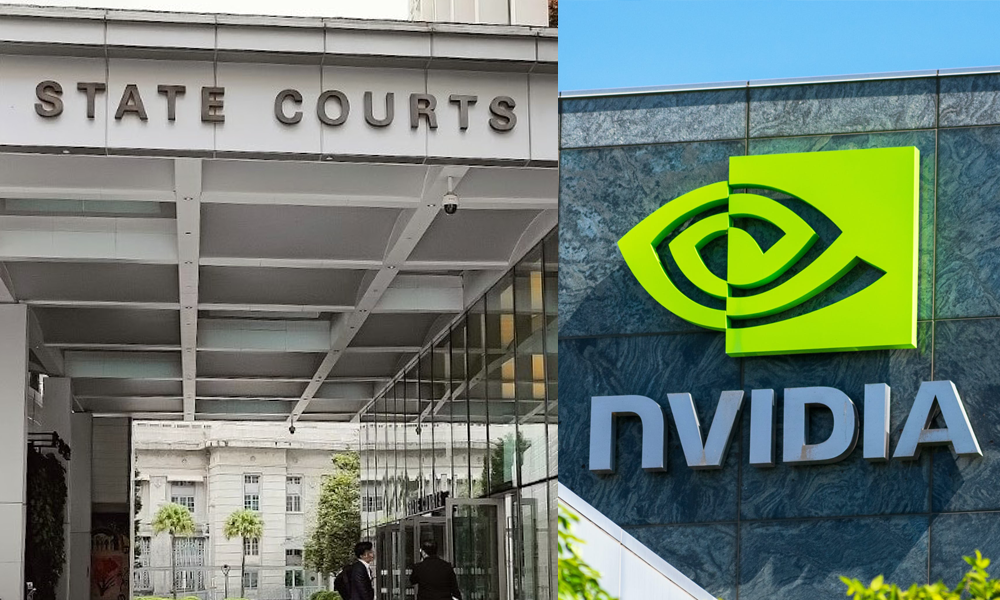

Singaporean prosecutors have laid additional fraud charges against two men allegedly involved in the export of computer servers to Malaysia, which may contain Nvidia artificial intelligence (AI) chips.
The charges were filed on 6 March 2025, following further investigations by the Commercial Affairs Department (CAD).
Singaporeans Aaron Woon Guo Jie, 40, and Alan Wei Zhaolun, 48, now each face a second charge of fraud.
They are accused of making false representations to US-based server supplier Supermicro, claiming the items would not be transferred to anyone other than the authorised end users.
Investigators believe the servers were later exported to Malaysia, potentially in violation of US export controls.
The case has drawn international attention as it unfolds against the backdrop of stricter US export regulations aimed at preventing advanced AI chips from reaching China.
The United States is separately probing whether Chinese AI start-up DeepSeek used restricted Nvidia chips to develop its platform, which launched in January 2025 and significantly impacted US tech stocks.
Ongoing investigations and potential links to other parties
Authorities in Singapore revealed that investigations are still in the early stages. Prosecutors stated that CAD is recording statements from other individuals potentially linked to the case.
They also confirmed that 42 devices, including phones and computers, have been seized and are currently undergoing forensic examination.
To trace the movement of funds, CAD has requested bank statements from various financial institutions. Prosecutors have not ruled out the involvement of additional suspects.
The third individual charged in the case, Chinese national Li Ming, 51, had his court hearing adjourned to an afternoon session on 6 March.
Li was previously charged with fraud in 2023, when he allegedly made false representations about the end-user of certain servers.
International concerns and enforcement efforts
The investigation into the Singapore-based operation began after an anonymous tip-off suggested that computer servers with Nvidia AI chips were being exported to Malaysia, with the possibility of a different, unknown final destination.
Home Affairs and Law Minister K. Shanmugam stated on 3 March that some of the servers likely contained components subject to US export controls.
Since 2022, the US government has imposed strict regulations on the sale of high-performance AI chips to China, seeking to limit Beijing’s access to cutting-edge technology.
Singapore has since engaged with both Malaysian and US authorities to exchange relevant information and support investigations.
Officials in Malaysia are determining whether their laws were breached by the shipments, while US authorities are probing whether Nvidia’s chips have been unlawfully diverted from Singapore to China.
Nvidia has issued a statement asserting that there is no evidence to suggest DeepSeek obtained any export-controlled products from Singapore.
Singapore’s legal stance on export controls
The case has sparked discussions in Singapore’s Parliament regarding the country’s obligations under international export control regimes.
Second Minister for Trade and Industry Tan See Leng told Parliament on 18 February that less than 1% of Nvidia’s total revenue comes from products physically delivered to Singapore.
He added that major enterprises and government agencies mainly use Nvidia’s products in Singapore.
Foreign Minister Vivian Balakrishnan stated during the same parliamentary session that Singapore is not legally required to enforce unilateral export measures imposed by other countries.
However, he emphasised that Singapore fully adheres to multilateral export control agreements.
Minister Shanmugam highlighted the complexity of enforcing export laws in a global supply chain. He reaffirmed Singapore’s commitment to upholding its domestic laws and supporting international investigations where necessary.
“As you can see, the issue is not with the law. We have the laws. It’s with enforcement, and we are enforcing,” he said.
“But where you have an international chain of events, it will not be possible for any one country to deal with this by itself.”