Tan See Leng: Singapore will investigate companies bypassing export controls
Nvidia's physical deliveries to Singapore represent less than 1% of its overall revenue, mostly used in major enterprises and government operations, said Second Minister for Trade and Industry Dr Tan See Leng. He assured Parliament that Singapore would investigate and take appropriate action if any company in the country engages in deceptive practices to bypass export controls.
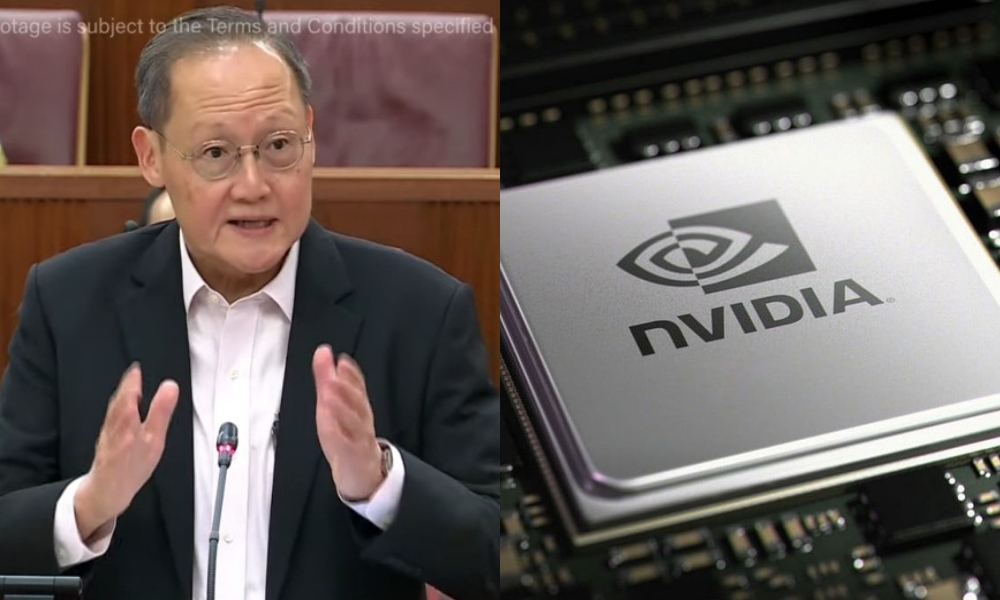

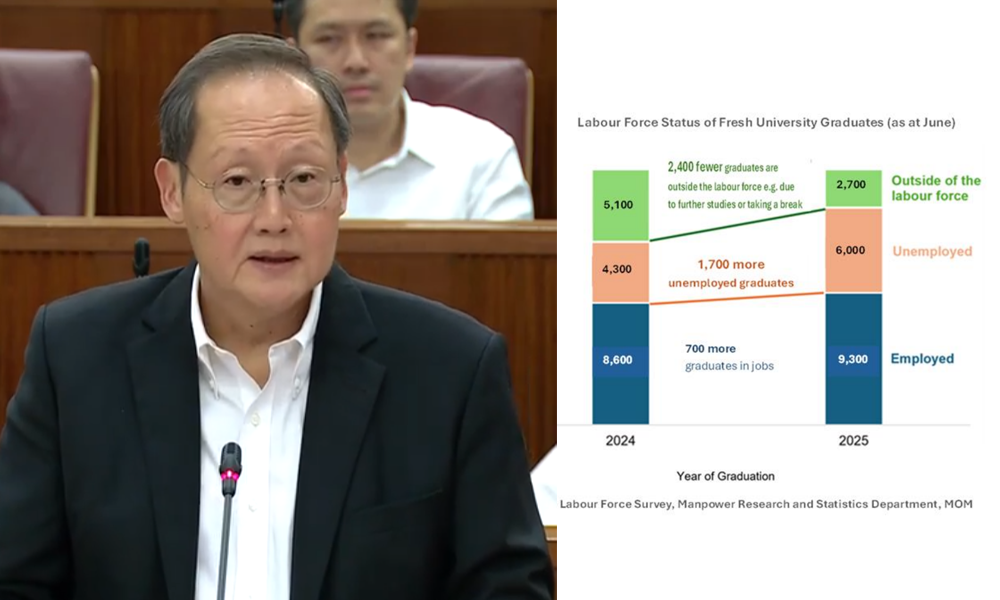
SINGAPORE: Dr Tan See Leng, Minister for Manpower and Second Minister for Trade and Industry assured to the Parliament that Singapore will investigate and take appropriate action if any company in Singapore engages in deceptive practices to bypass export controls.
Dr Tan highlighted that the Ministry is closely monitoring concerns related to Nvidia chips, which are subject to US export controls.
"We are scrutinising this issue carefullyand we will continue to do so," he said, adding that so far authorities check indicate that Nvidia's physical deliveries to Singapore represent less than 1% of its overall revenue, mostly deployed in major enterprises and the government.
On 18 February Parliamentary sitting, Dr Tan addressed several key issues raised in the Parliamentary Questions regarding US export controls and Singapore's approach to such measures.
MPs question safeguards against bypassing US trade restrictions
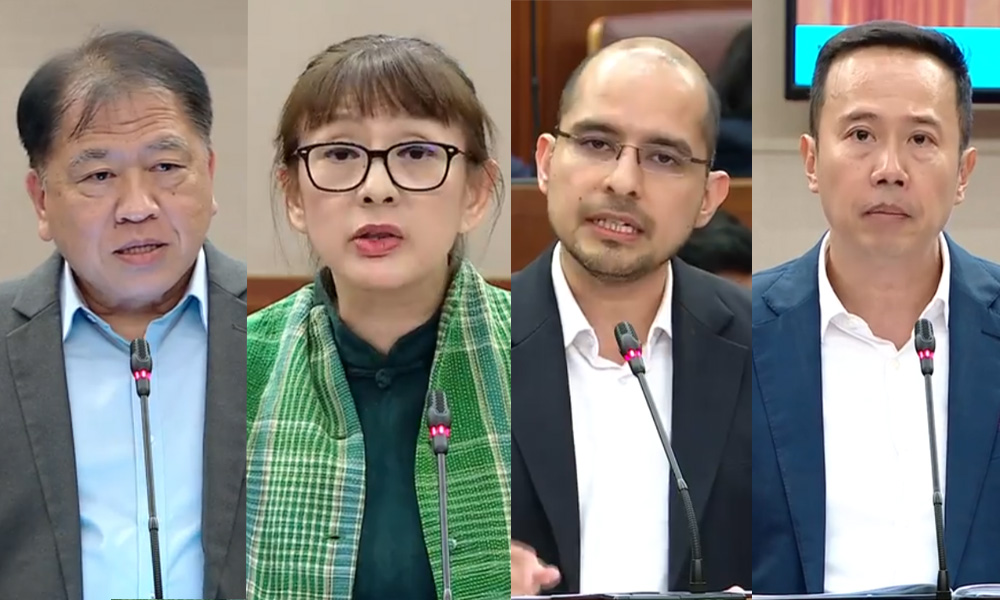
Several MPs, including PAP MP for Yio Chu Kang SMC Yip Hon Weng, Tanjong Pagar GRC MP Joan Pereira and Workers' Party MP for Sengkang GRC Associate Professor Jamus Lim, questioned Singapore's measures to prevent companies in Singapore from bypassing US trade restrictions and for an update on the impact of US chip export controls on the semiconductor industry.
They also inquired about safeguards to ensure compliance with export controls and international laws to protect Singapore’s reputation as a business hub.
In response, Dr Tan emphasised Singapore’s commitment to being a stable, trusted, and reliable business hub, built on the foundation of the rule of law, transparency, and zero tolerance for corruption.
He said Singapore's business environment is open and inclusive, and the government takes firm action against individuals or companies that violate laws.
Dr Tan: Companies in Singapore must conduct business transparently and comply with regulations
Dr Tan pointed out that The Strategic Goods Control Act governs the transfer and brokering of strategic goods and technology in Singapore, aligning with major multilateral export control regimes, including those imposed by the United Nations Security Council.
Although Singapore does not have legal obligations to enforce unilateral export controls of other countries, Dr Tan reminded that companies operating in Singapore are expected to conduct their international business activities transparently and comply with relevant regulations.
"We certainly do not condone businesses deliberately using the association with Singapore to circumvent or violate the export controls of other countries at the operational level. "
"Singapore Customs works closely with its foreign counterparts including those from the US to address their concerns and to facilitate their investigations where appropriate and to the extent where our law permits, " he said.
Dr Tan reassured members that the impact of US controls on advanced semiconductor chips on Singapore’s semiconductor industry is limited.
Singapore's industry mainly focuses on producing mature chips used in various global applications, such as appliances, automotive, and industrial equipment.
Regarding advanced AI compute, such as Nvidia’s H100 GPUs, Singapore has been classified as Tier II under the US AI diffusion rules, which are aimed at managing access to AI technology on a country basis.
He noted that the specifics of the AI diffusion rule have not been finalised by the US administration, but Singapore aims to ensure access to AI compute for both local and international companies.
TSMC cuts ties with Singapore’s S$1 firm over potential Huawei-linked export control breach
Last month, it was reported that Taiwan Semiconductor Manufacturing Company (TSMC), the world’s leading contract chipmaker, has reportedly ended its partnership with PowerAIR, a Singapore-based firm, after identifying a potential breach of United States export controls.
TOC’s investigation revealed that PowerAIR lacks a public website, operates from One Raffles Place with a paid-up capital of just S$1, and lists Powerair (BVI) Limited, a British Virgin Islands-registered entity, as its shareholder.
Lim questions MFA's role in trade decisions and whether foreign policy should address commercial imbalances
In a supplementary quesiton, Assoc Prof Lim raised concerns about Singapore's role in global trade, particularly its involvement with Nvidia's revenue and its potential for facilitating transshipment practices.
He questioned whether Singapore's foreign policy approach should consider these commercial imbalances and whether the Ministry of Foreign Affairs (MFA) had input into trade decisions.
"If I may inquire, if MFA was aware of these imbalances and if so, is it in assessment that facilitating trans shipmentary is positive or negative for the national interest from a foreign policy angle, " Lim asked, he also inquired whether there a formal mechanism for MFA to review or provide input to MTI's trade decisions that have inevitable foreign policy implications.
Lim also inquired about the steps the government planned to take in light of Singapore's Tier 2 status under new US AI export controls.
Vivian Balakrishnan highlights Singapore’s trade volume and clarifies Nvidia’s sales figures
Foreign Minister Dr Vivian Balakrishnan weighed in to response, emphasised Singapore's unique role as a regional and global headquarters for many international companies, highlighting that trade volume in Singapore is three times the country's GDP.
He addressed concerns raised by Lim regarding "imbalances" in the context of Nvidia’s sales, reiterated that although Nvidia reported that 22% of its sales were booked to entities in Singapore, only 1% of those sales physically came to Singapore.
Balakrishnan further explained that Singapore's laws, particularly the Strategic Goods Control Act, ensure compliance with multilateral export control regimes like the Wassenaar Arrangement and the Australia Group.
He emphasised that Singapore does not enforce unilateral export measures imposed by individual countries but enforces multilateral agreements.
Additionally, he stressed that it is not in Singapore's national interest to allow companies to use its reputation to evade export controls.
The Minister also mentioned Singapore’s need for advanced semiconductor chips for its own purposes, which are different from the high-end chips used in artificial intelligence.
He reassured the House that Singapore will continue engaging with major exporting countries to ensure adequate supplies of these chips while safeguarding its strategic interests.
Tan clarifies that Nvidia’s 22% revenue attributed to Singapore reflects billing location, not shipments
Minister Tan further clarified the specific case of Nvidia, explaining that while 22% of Nvidia's quarterly revenue for Q3 2024 was attributed to Singapore, this percentage reflects where Nvidia’s customers received the bills for their purchases, not where the products were physically shipped.
"This reflects the location where Nvidia's customers received the bill, doesn't mean that it shipped here (Singapore), receive the bill of their purchases from Nvidia."
"It's independent from the physical location that Nvidia and its customers deliver the goods to."
Instead, it reflects the location where Nvidia's customers received their billing, which is common practice for global companies that centralise billing in certain hubs.
"So far from our checks that, the data that we have on hand revealed that, in that quarter less than 1% of Nvidia's overall revenue is physically shipped into Singapore. "
"The remainder of Nvidia revenue built to business entities here did not involve physical shipments into Singapore, " Dr Tan told the House.