European leaders and allies pledge continued military support for Ukraine amid US rift
At a summit in London, European leaders, Canada, and Turkey reaffirmed military support for Ukraine, days after a tense meeting between Ukrainian President Zelenskyy and US President Trump. UK Prime Minister Starmer emphasised Europe's role in defence efforts but stressed US backing remains essential.
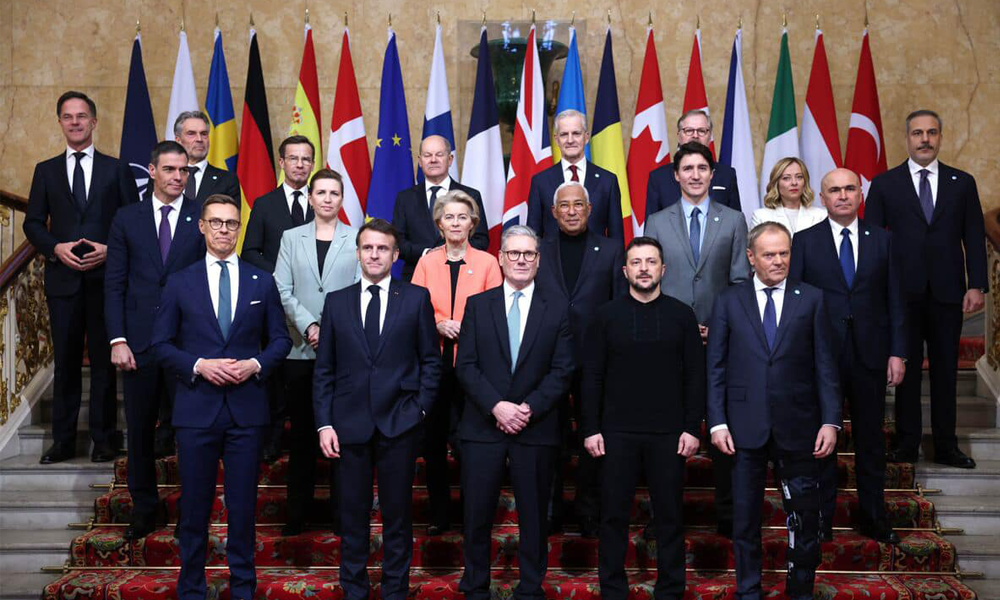

Two days after a tense meeting between Ukrainian President Volodymyr Zelenskyy and US President Donald Trump in Washington, European leaders, Canada, and Turkey gathered in London to pledge continued military support for Ukraine.
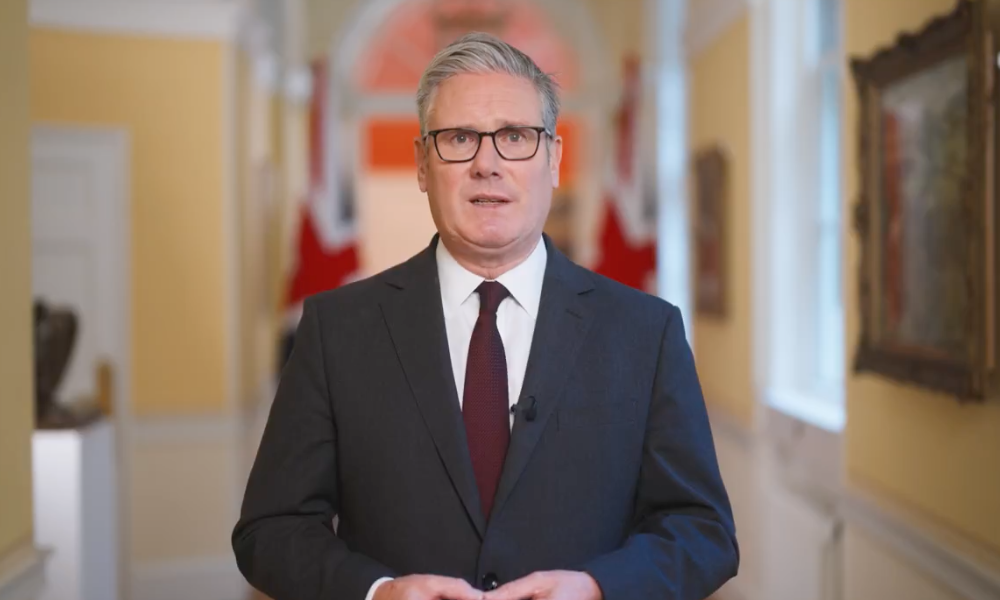
UK Prime Minister Keir Starmer hosted the summit, stressing that while Europe must lead in defence efforts, US backing remains essential.
The summit, titled "Securing Our Future," took place at Lancaster House in central London.
It brought together leaders from Ukraine, France, Germany, Denmark, Italy, the Netherlands, Norway, Poland, Spain, Canada, Finland, Sweden, the Czech Republic, and Romania.
Turkey was represented by its foreign minister, alongside European Commission President Ursula von der Leyen, European Council President Antonio Costa, and NATO Secretary-General Mark Rutte.
Starmer, speaking at a press conference after the meeting, reaffirmed the commitment of Ukraine’s Western allies to maintaining military aid.
He declared that the UK was prepared to "put boots on the ground and planes in the air" if necessary and suggested forming a "coalition of the willing" to defend Ukraine.
However, he acknowledged that for any strategy to be effective, strong US support was required.
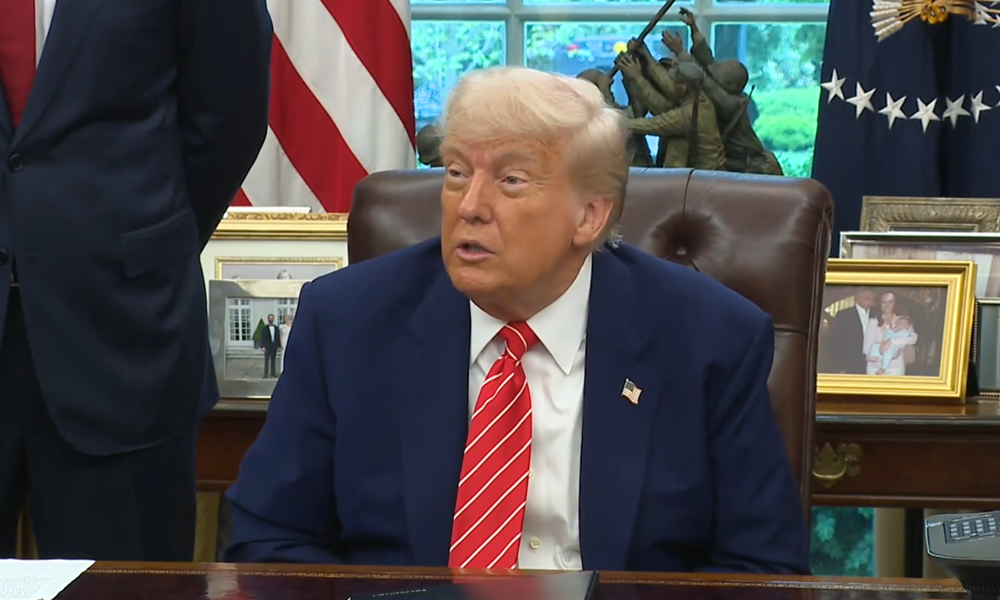
The summit followed a controversial Oval Office meeting in which Trump and Vice President JD Vance accused Zelenskyy of lacking gratitude toward the United States.
Trump pushed for a diplomatic resolution with Russia and did not sign a Ukrainian proposal regarding mineral resource development, which Kyiv had hoped would secure continued US support.
The meeting was widely seen as a signal of a shift in US foreign policy, with a diminished commitment to Ukraine’s war effort.
European Commission President Ursula von der Leyen underlined the need to bolster Ukraine’s military, economic, and energy resilience.
She called for security guarantees that would transform Ukraine into a "steel porcupine"—a deterrent to any potential aggressor. Von der Leyen also urged the European Union to increase defence spending and announced that she would present a "comprehensive" defence plan at an emergency EU summit in Brussels on 6 March.
Ahead of the summit, Starmer met with Italian Prime Minister Giorgia Meloni at 10 Downing Street. Meloni, considered to have the closest relationship with Trump among Western European leaders, reiterated Italy’s support for Ukraine.
She suggested that the UK and Italy could act as intermediaries to mend growing tensions between the US and European allies.
Meloni emphasised the importance of maintaining Western unity, warning that division would weaken collective security. She proposed a high-level meeting between US and European leaders to address differences and enhance cooperation on defence, security, energy, and migration policy.
Earlier in the day, Starmer also held a virtual meeting with Estonian President Alar Karis, Latvian Prime Minister Evika Siliņa, and Lithuanian President Gitanas Nausėda.
The leaders discussed regional security concerns and NATO commitments. Siliņa stressed the importance of Baltic state involvement in diplomatic efforts and confirmed NATO’s Article 5 security guarantees remained in force.
Nausėda called for a return to negotiations between Ukraine, the US, and Europe, endorsing the potential deployment of a European peacekeeping force as part of security guarantees for Ukraine. He stressed the need to preserve a strong transatlantic alliance despite recent tensions.
The London summit showcased Europe’s determination to support Ukraine amid uncertainty over US foreign policy.
However, the leaders also acknowledged that the success of their efforts hinges on continued American involvement.
The coming weeks, including the emergency EU summit in March, will be crucial in shaping the next phase of Western support for Ukraine.