Eric Chua: Each SSO assisted 1,000 SG & PR households with ComCare SMTA or LTA in 2024
In 2024, each Social Service Office (SSO) town assisted about 1,000 Singaporean and PR households with ComCare Short-to-Medium Term Assistance (SMTA) or Long-Term Assistance (LTA), with an average of 61,000 households per SSO town, said Senior Parliamentary Secretary Eric Chua. Responding to Leader of Opposition Pritam Singh’s PQ on 3 March, Chua provided figures but did not disclose SSO-specific data.
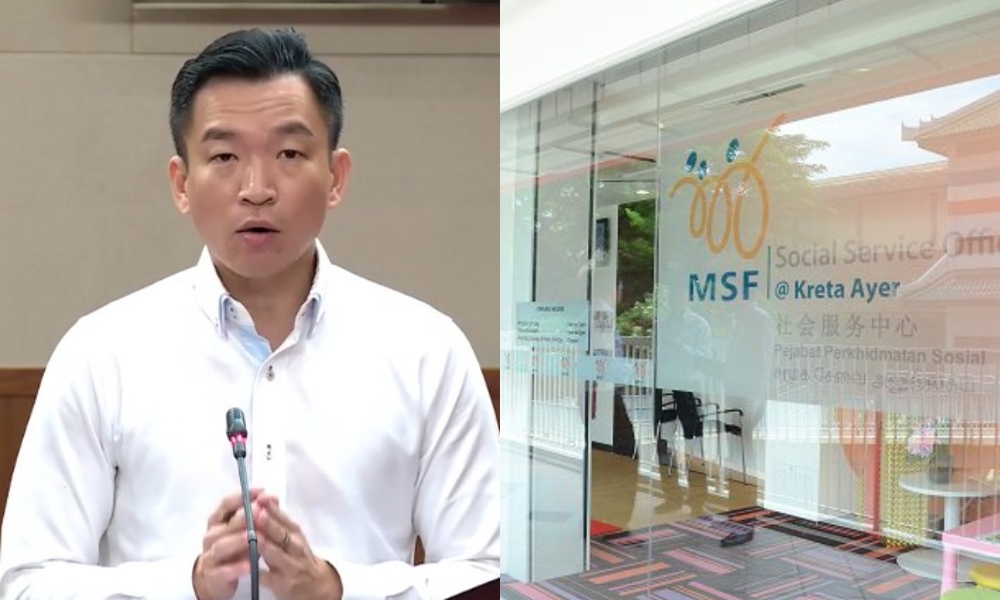

SINGAPORE: In 2024, each Social Service Office (SSO) town assisted an average of around 1,000 Singaporean and permanent resident households with either ComCare Short-to-Medium Term Assistance (SMTA) or Long-Term Assistance (LTA).
Each SSO town has an average of around 61,000 households, according to Senior Parliamentary Secretary for Social and Family Development Eric Chua.
Chua was responding to a parliamentary question (PQ) filed by Leader of Opposition Pritam Singh on Monday (3 March).
Singh asked how many Singaporeans and PRs under each Social Service Office (SSO) received ComCare SMTA and LTA as of 31 December 2024.
He also inquired about the total population of Singaporeans and PRs each SSO oversees in its geographical area.
Singh Questions SSO-Specific Data Transparency and Flexibility of SMTA Income Criteria
In a supplementary questions, Singh asked whether MSF publishes SSO-specific data on areas with the highest number of households receiving SMTA and LTA, and if not, why.
He also inquired about the flexibility of the S$800 per capita income guideline, asking for the percentage of successful SMTA applicants who exceeded this threshold.
Singh sought confirmation on how many households received assistance despite surpassing the income requirement.
In response, Chua explained that MSF does not publish SSO town-specific data, as assistance is tracked at the national level, and variations across towns are minimal despite demographic differences.
He stated that while some towns may have different proportions of SMTA and LTA recipients, there is no significant deviation overall. Regarding the percentage of SMTA applicants who exceeded the S$800 per capita income guideline but still received assistance, he did not have the data on hand and suggested filing another PQ for the information.
Singh further pointed out discrepancies in MSF's reports on ComCare SMTA, noting that the 2022 annual report cited S$119 million in disbursements, while the trends report listed S$112 million, despite an increase in recipient households.
He requested clarification on these figures, suggesting that the issue be addressed in future discussions.
In response, Eric Chua acknowledged the question and stated that further clarification would be provided during the Committee of Supply (COS) debates.
MSF 2024 Report: Fewer Families Dependent on ComCare SMTA Amid Economic Recovery
ComCare serves as Singapore’s primary social safety net for lower-income families, with the SMTA scheme providing temporary financial assistance to help cover income shortfalls for basic living expenses.
A household is deemed to have exited the scheme if it goes at least one month without receiving aid.
In November 2024, the Ministry of Social and Family Development (MSF) released its Supporting Lower-Income Households Trends Report, providing insights into ComCare assistance trends.
The report revealed that 54% of families who exited ComCare Short-to-Medium-Term Assistance (SMTA) in 2020 returned for aid within three years, a decline from 63% for those who left in 2019.
In 2023, fewer families received SMTA, with total disbursements falling from $112.5 million in 2022 to $105.1 million, reflecting post-Covid-19 economic recovery and alternative government support.
Households returning for assistance were more likely to have multiple dependents, medically unfit family members, or reside in one- and two-room HDB rental flats.
The 41-page report also covered ComLink+, a newer initiative supporting over 9,000 families, and highlighted a steady decline in SMTA recipients, reaching the lowest number in five years.
Each SSO town has an average of around 61,000 households.Each SSO town has an average of around 61,000 households.Each SSO town has an average of around 61,000 households.Each SSO town has an average of around 61,000 households.Each SSO town has an average of around 61,000 households.Each SSO town has an average of around 61,000 households. of around 61,000 households.