Three men charged with fraud in connection to illegal Nvidia chip transfers to China
Three men were charged with fraud in Singapore following a raid on 22 locations linked to the illegal movement of Nvidia chips to China’s DeepSeek. Authorities are investigating whether the shipments violated export regulations. Singapore has reaffirmed its stance on compliance with international trade laws.


Three men were charged with fraud on Thursday, 27 February, following a multi-agency raid involving Singapore Police Force and Singapore Customs across 22 locations the previous day. Authorities seized documentary and electronic records as part of ongoing investigations.
According to CNA, the cases are linked to the unauthorised movement of Nvidia chips from Singapore to Chinese artificial intelligence firm DeepSeek, allegedly bypassing US export controls.
Among the accused are two Singaporeans – Aaron Woon Guo Jie, 41, and Alan Wei Zhaolun, 49 – who face charges of criminal conspiracy to commit fraud on a server supplier.
According to charge sheets, they allegedly misrepresented in 2024 that the servers would not be transferred to unauthorised recipients.
A third individual, Chinese national Li Ming, 51, was charged separately with fraud by false representation. In 2023, he allegedly claimed that the end user of the servers would be a company named Luxuriate Your Life.
The offence of fraud by false representation carries a potential jail term of up to 20 years, a fine, or both.
Investigations are ongoing against six other arrested individuals, as well as the companies involved.
Singapore Customs is also probing potential violations of the Customs Act and the Regulation of Imports and Exports Act.Singapore authorities are continuing investigations into the fraud charges and potential breaches of export regulations.
Nvidia chips and US export controls
The Singapore raids follow international reports indicating that intermediaries in the country played a role in circumventing US restrictions on the export of Nvidia chips to China.
The US Commerce Department is reportedly investigating whether DeepSeek, a Chinese AI firm that has gained global attention, has been using Nvidia chips that were not authorised for shipment to China.
On 1 February, Singapore’s Ministry of Trade and Industry (MTI) reiterated that US firms operating in Singapore must comply with both US and Singaporean laws.
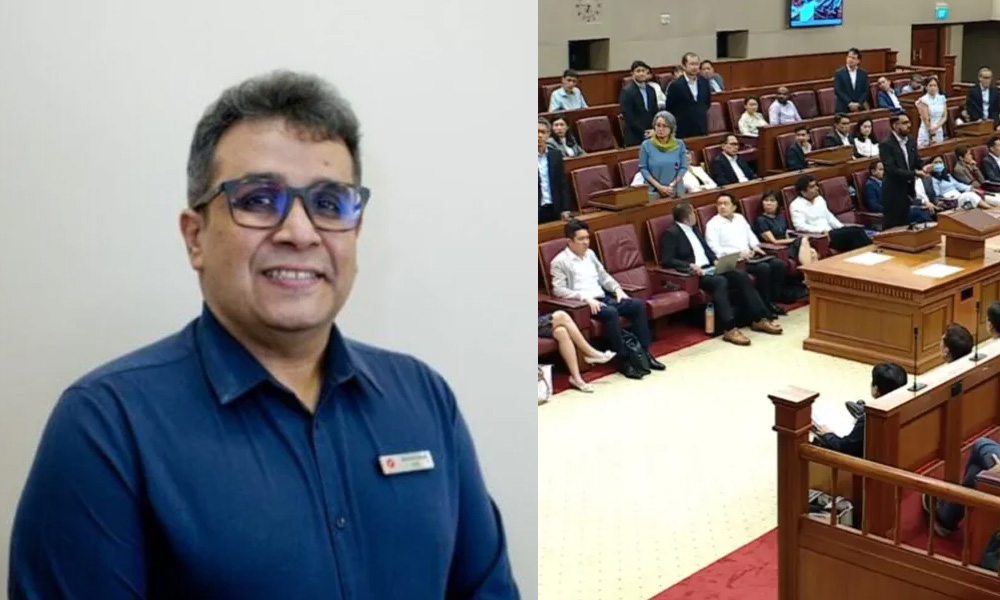
Second Minister for Trade and Industry Tan See Leng stated in Parliament on 18 February that while Singapore is not legally obligated to enforce other nations’ unilateral export restrictions, it expects businesses within its jurisdiction to consider such regulations.
“Singapore does not condone businesses deliberately using their association with our country to circumvent or violate export controls of other nations,” said Dr Tan.
Parliamentary scrutiny on Nvidia shipments
During the 18 February parliamentary sitting, several Members of Parliament (MPs) raised concerns over Singapore’s role in global semiconductor trade and its potential involvement in transshipments that bypass US trade controls.
Yio Chu Kang SMC MP Yip Hon Weng, Tanjong Pagar GRC MP Joan Pereira, and Sengkang GRC MP Jamus Lim questioned Singapore’s safeguards against violations of US export controls.
They sought updates on the impact of these restrictions on Singapore’s semiconductor industry and its reputation as a business hub.
In response, Dr Tan reaffirmed Singapore’s stance as a transparent and law-abiding business environment. He cited the Strategic Goods Control Act, which governs the transfer and brokering of strategic goods, aligning with multilateral export control agreements, including those set by the United Nations Security Council.
He also clarified that Singapore’s semiconductor industry primarily produces mature chips for sectors such as automotive and industrial applications, rather than high-end artificial intelligence processors like Nvidia’s H100 GPUs.
“Singapore has been classified as Tier II under US AI diffusion rules, which govern access to advanced AI technology,” he said, adding that the specifics of these rules remain under US review.
Foreign policy considerations in trade decisions
Assoc Prof Jamus Lim further questioned the role of the Ministry of Foreign Affairs (MFA) in trade-related decisions, particularly regarding commercial imbalances linked to Nvidia’s revenue in Singapore. He inquired whether MFA had input in such trade matters and if there was a mechanism for it to assess national interests in transshipment concerns.
Responding to these concerns, Foreign Minister Vivian Balakrishnan clarified that while 22% of Nvidia’s global revenue was billed to Singapore-based entities, only 1% of those shipments physically arrived in the country. He emphasised that Singapore adheres strictly to multilateral export control frameworks but does not enforce unilateral restrictions imposed by other nations.
“It is not in Singapore’s national interest to allow its reputation to be used to circumvent export controls,” he stated.
Dr Tan also reiterated that Nvidia’s revenue attribution to Singapore primarily reflects billing locations rather than actual shipments.
“The fact that 22% of Nvidia’s sales were billed here does not mean the products were physically shipped into Singapore,” he explained, adding that Singapore Customs is working closely with foreign counterparts, including US agencies, to facilitate investigations where permissible under local laws.
While Singapore is not obligated to enforce US unilateral controls, it maintains stringent compliance with multilateral trade regulations and expects companies operating within its jurisdiction to adhere to relevant laws.