TOC's Response to POFMA Order: Misusing State Powers to Silence Public Inquiry
On 25 Feb 2025, TOC was issued a POFMA Correction Direction over its report on Minister Shanmugam’s Ridout Road tenancy. Despite months of inquiries, he never responded. Instead of addressing key concerns, the govt compels TOC to label its reporting false—silencing scrutiny, not ensuring transparency.
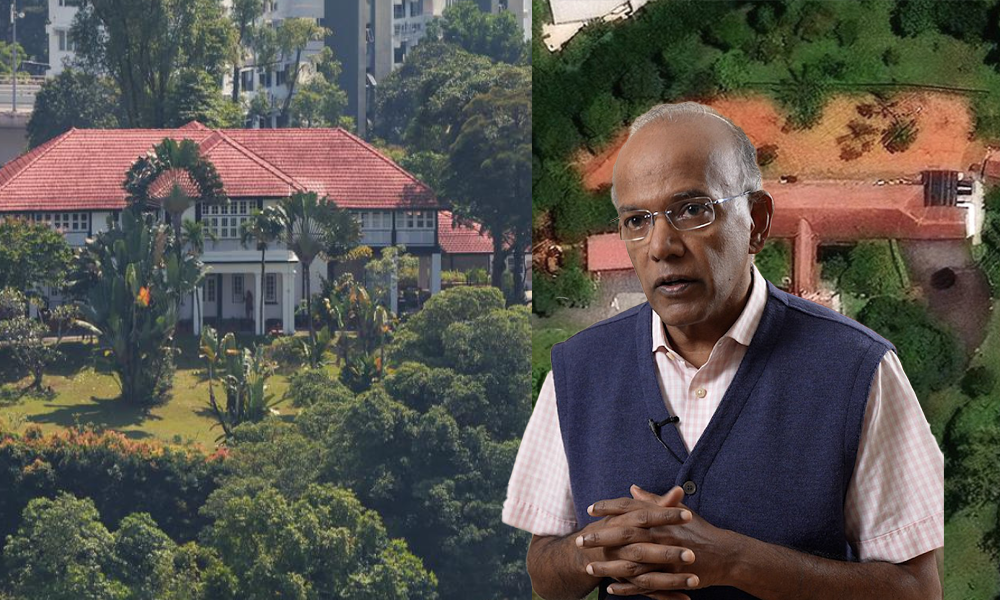

On 25 February 2025, The Online Citizen (TOC) was issued a Correction Direction under the Protection from Online Falsehoods and Manipulation Act (POFMA) by Second Minister for Law Edwin Tong regarding our reporting on Minister for Home Affairs and Law K Shanmugam’s tenancy at 26 Ridout Road.
This directive was imposed two weeks after our article was published, despite months of TOC reaching out to Shanmugam for clarification, to which he never responded.
Instead of addressing the substance of the concerns raised, the government has compelled TOC to label its reporting as false without providing a meaningful explanation that addresses the core issues of transparency, policy inconsistencies, and accountability.
Can POFMA Be Used to Protect a Minister from Scrutiny?
Shanmugam introduced POFMA in 2019, and today, his own Ministry of Law is using it to defend his personal affairs.
Though the order was formally issued by Tong as the Second Minister for Law, this does not change the fact that the Ministry of Law is intervening in a matter directly concerning its own Minister.
This raises serious ethical concerns about whether POFMA is being used to stifle legitimate public interest inquiries rather than correct falsehoods.
Edwin Tong’s Clarification Reinforces, Not Refutes, the Issue
In his response, Minister Edwin Tong claimed that no assurance was given to Minister Shanmugam regarding a lease extension beyond 2027.
However, his own explanation of SLA’s policy contradicts this claim.
Under SLA’s guidelines, tenants typically receive lease renewals unless the government has alternative plans for the site or the tenant has a poor track record.
Since neither condition applies to Minister Shanmugam, his lease is highly likely to be extended. Therefore, whether an explicit assurance was given is irrelevant—the existing policy itself functions as an implicit guarantee of renewal.
This leads to a fundamental question:
If the lease renewal is uncertain, why would Minister Shanmugam invest in costly and extensive modifications to state property with just two years left on his lease?
No ordinary tenant would do so without confidence that their lease would be renewed.
Key Issues That Remain Unanswered
Rather than addressing the actual concerns raised, the government’s response focuses on technical denials while ignoring the broader implications. The following questions remain unanswered:
1. SLA’s Policy and the Lack of Open Bidding
- If SLA typically grants lease extensions, does this mean Minister Shanmugam can expect an automatic renewal beyond 2027 without public bidding?
- If the government intends to put 26 Ridout Road up for open bidding in 2027, why has there been no public mention of this?
- If the lease renewal is truly uncertain, why would a rational tenant spend significant sums on modifications with only two years left?
- Would an ordinary tenant be permitted to make such extensive modifications on state-owned property under similar circumstances?
2. Missing Approvals and Lack of Transparency
- If the Qualified Person (QP) sought approval from URA, why is there no public record of this approval? Shouldn’t regulatory approvals be transparent and publicly documented rather than handled privately between individuals and agencies?
- If URA determined that its approval was unnecessary, why was this not formally documented instead of communicated informally?
3. The Scale of Construction and Lease Duration
- What exactly is being built at 26 Ridout Road, given the significant scale of earthworks and alterations?
- Why approve modifications of such scale if the lease is set to expire in 2027?
- If Minister Shanmugam is required to restore the property to its original state upon lease expiry, why approve modifications of such scale in the first place?
POFMA: A Tool for Censorship, Not Transparency
Rather than providing clear and direct answers, the government has used POFMA to force TOC to issue a correction while avoiding accountability. This raises serious concerns about the true purpose of POFMA—is it meant to correct actual falsehoods, or is it being wielded to suppress legitimate questions about those in power?
If the government is truly committed to transparency and accountability, it should disclose the full lease agreements and financial details related to modifications at 26 Ridout Road, given that it is state-owned property.Explain why Minister Shanmugam refused to answer TOC’s inquiries for months and only responded through POFMA.
Silencing Journalists Will Not Make These Questions Go Away
Instead of engaging in open and honest dialogue, the government has resorted to legal instruments to silence TOC. However, the public deserves full transparency, not intimidation.
TOC stands by its reporting and will continue to ask the difficult questions that those in power seek to avoid. Singaporeans deserve answers—not censorship.