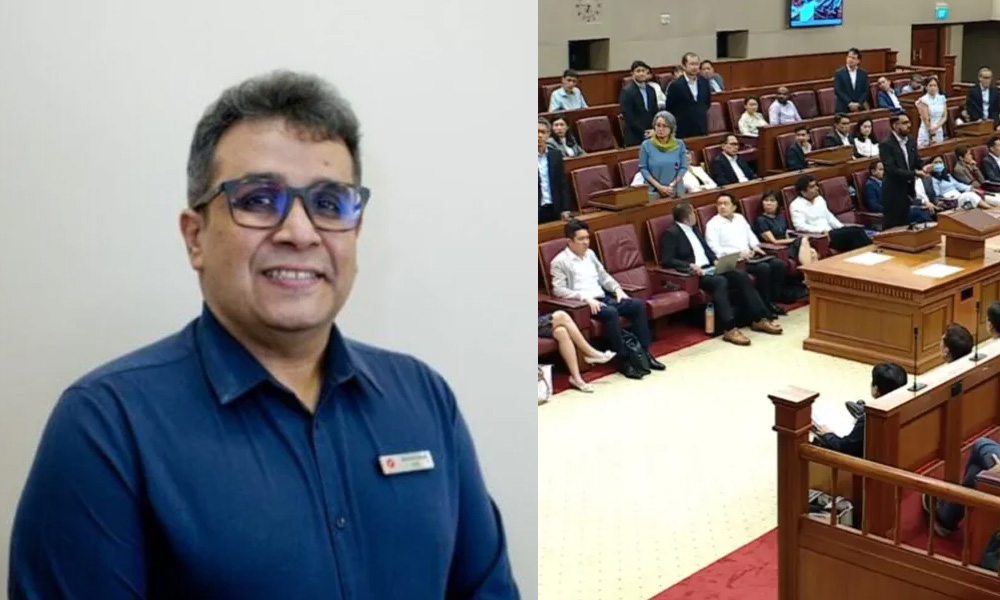
Pritam Singh convicted of lying to Committee of Privileges in Raeesah Khan case
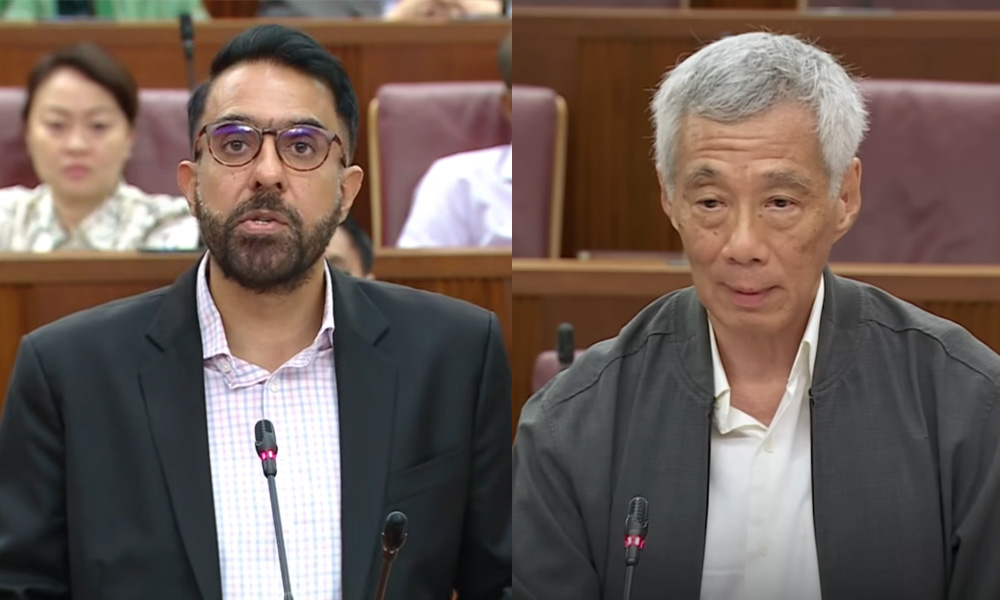
Workers’ Party chief Pritam Singh has been convicted of two charges under the Parliament (Privileges, Immunities and Powers) Act for lying to the Committee of Privileges in December 2021. The court found that Singh sought to conceal Raeesah Khan’s falsehood in Parliament. The judge deemed Singh’s testimony “uncorroborated and unbelievable.” Sentencing is pending.
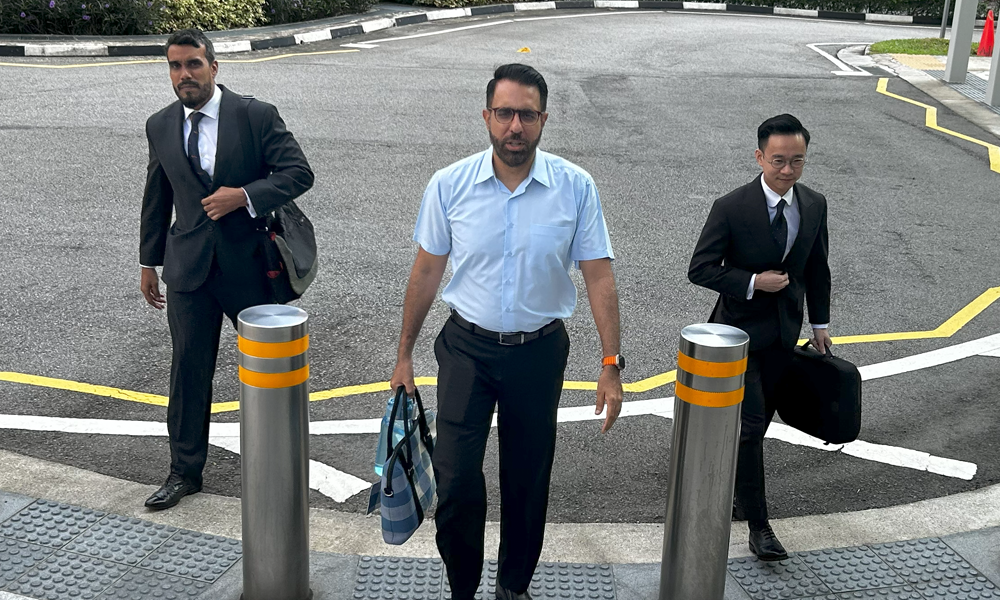

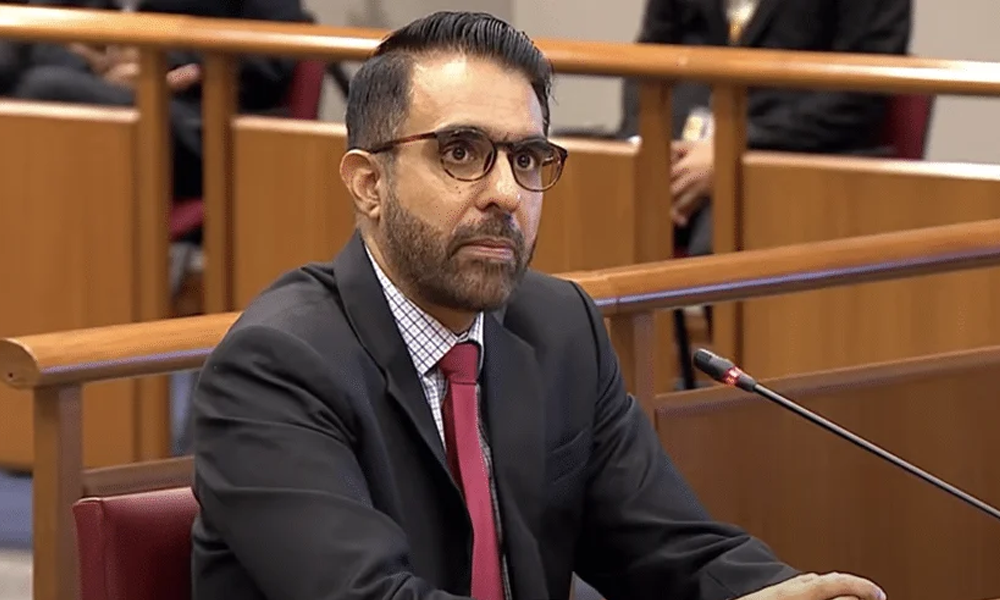
Workers’ Party (WP) chief and Aljunied GRC MP Pritam Singh has been found guilty of two charges under the Parliament (Privileges, Immunities and Powers) Act for providing false testimony to the Committee of Privileges (COP) in December 2021.
The COP had been convened to investigate the false anecdote shared in Parliament by former WP MP Raeesah Khan on 3 August 2021.
Singh, 48, was convicted of lying about two key events.
The first charge related to an 8 August 2021 meeting with WP leaders, during which he falsely stated that he had wanted Khan to clarify her lie in Parliament.
The second charge concerned his claim that on 3 October 2021, he told Khan to correct her statement if the issue arose in Parliament the next day. The court found both statements to be untrue.
The 13-day trial, held from 14 October to 8 November 2024, was overseen by Deputy Principal District Judge Luke Tan.
The prosecution was led by Deputy Attorney-General Ang Cheng Hock, while Singh was represented by lawyer Andre Jumabhoy.
Key findings from the judge’s verdict
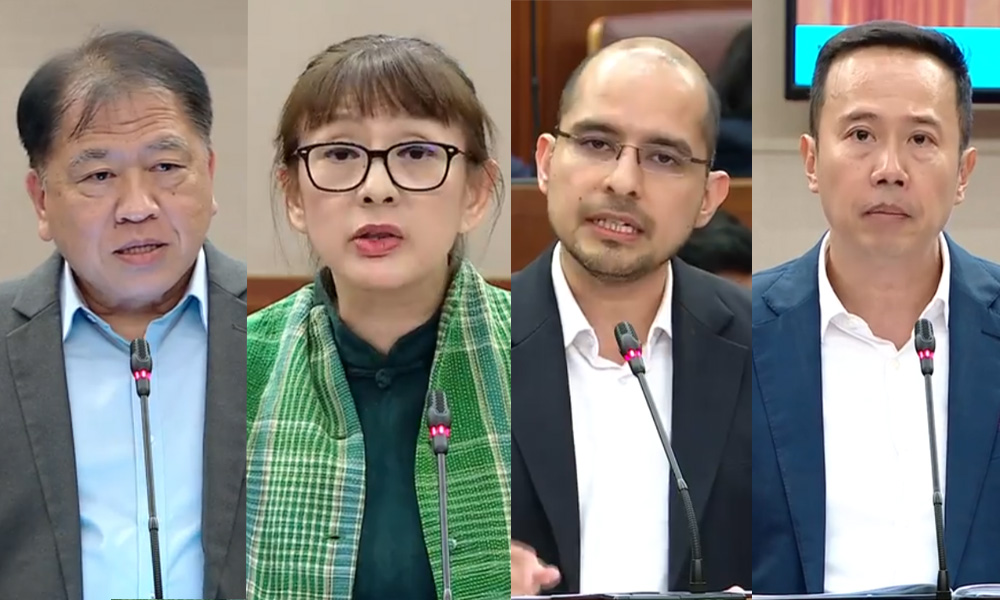
In his oral judgment delivered on Monday (17 Feb), Judge Tan ruled that Singh did not intend for Khan to correct her false statement in Parliament. Instead, he accepted Khan’s version of events, including her claim that Singh had advised her to “take it to the grave” during the 8 August 2021 meeting with WP chair Sylvia Lim and vice-chair Faisal Manap.
The judge noted that Singh initially displayed anxiety upon discovering Khan’s lie but did not follow up on clarifying it after the 8 August meeting. This prolonged inaction for almost two months suggested that Singh had decided against having the falsehood corrected.
Judge Tan also pointed to a text message Khan sent to her aides Loh Pei Ying and Yudhishtrava Nathan at 12:41 pm on 8 August 2021—immediately after leaving Singh’s house.
In the message, Khan stated that WP leaders had agreed the best course of action was to take the lie “to the grave.” The judge ruled that there was no reason for Khan to fabricate this message and that it provided strong evidence of what was actually said at the meeting.
Circumstantial evidence and inconsistencies in Singh’s testimony, says judge
The judge highlighted several inconsistencies in Singh’s statements and actions:
- Singh had shown strong concern immediately after learning about Khan’s lie on 3 August 2021, even hanging up the phone on her in frustration. However, after the 8 August meeting, he took no steps to ensure she clarified the falsehood.
- Singh claimed he told Khan to speak to her parents about her sexual assault before addressing the untruth. The judge found this “unbelievable,” stating that Khan’s personal interactions with her family had no bearing on how WP should handle a political scandal.
- The judge rejected Singh’s assertion that a 1 October 2021 email to WP MPs was an instruction for Khan to clarify her falsehood. He ruled that the email was general in nature and not specifically directed at Khan regarding her lie. Singh’s shifting explanations about the email further undermined his credibility.
- Singh argued that he expected Khan to take steps before admitting the lie, such as speaking to her parents. However, the judge noted that Singh never actually communicated these expectations to Khan, concluding that “the laundry list of actions for Khan to carry out was only in his mind, but never out of his mouth.”
The judge further noted that Singh’s actions following the 8 August meeting suggested that he had no real intention of pushing for the truth to be revealed.
Khan’s claim that Singh told her to “take it to the grave” was supported by WP cadre Loh Pei Ying’s testimony, as well as Singh’s own police statement, where he indicated he believed the matter had been settled.
The court rejected Singh’s claim that a 1 October 2021 email to WP MPs was an instruction for Raeesah Khan to clarify her falsehood. The judge noted that the email was general, not specifically addressed to Khan, and that Singh had given conflicting explanations about its intent.
The judge found that Singh never explicitly instructed Khan to take steps before admitting the lie, despite claiming he expected her to speak to her parents first. Singh’s failure to follow up for nearly two months suggested he never intended for the falsehood to be corrected.
Judge Tan ruled that Singh had deliberately misled the Committee of Privileges, stating that his claims of wanting Khan to come clean were “a lie he wilfully told.”
A 4 August 2021 text from Singh to Khan, warning of the political damage caused by her statement, further supported this conclusion.
The judge addressed Singh’s claim that he told Khan to take “ownership and responsibility” if the issue arose in Parliament on 4 October 2021. However, Khan testified that Singh had assured her he “would not judge” her if she continued with the falsehood.
The judge noted that this was supported by WP cadres Loh Pei Ying and Yudhishthra Nathan, who recalled Singh saying the same in an 12 October meeting. WP chair Sylvia Lim’s disciplinary panel notes also recorded Singh stating it was “her call” and that he “will not judge her,” a point the defence did not dispute.
Based on this, the judge concluded that Singh’s remark indicated he would not judge Khan regardless of her decision in Parliament.
Singh testified that Khan needed to inform her parents about her sexual assault before admitting her falsehood in Parliament. However, the judge pointed out that Singh never asked Khan at the 3 October 2021 meeting whether she had done so, contradicting his stated condition.
The judge also found this claim less credible, noting that Khan’s parents were present at the time, making it unlikely that Singh would have overlooked the matter if it was truly a prerequisite.
The judge found that Singh’s actions in Parliament contradicted his claim that he wanted Raeesah Khan to clarify her falsehood. He noted that Singh did not respond to Khan’s WhatsApp message, question her for failing to come clean, or confront her when she doubled down on the lie—even as police investigations began.
According to the judge, Singh’s lack of action on 4 and 5 October 2021 was consistent with Khan’s account that he had told her he would not judge her if she continued the narrative.
Judge finds Singh’s actions in Parliament inconsistent
The judge noted that Singh’s behaviour in Parliament was in “sharp contrast” to his earlier actions, suggesting he never truly wanted Raeesah Khan to clarify her falsehood. Singh only wanted her to admit the lie if the issue was raised but did not follow up when she failed to do so.
Singh did not respond to Khan’s WhatsApp message, question her decision to double down on the lie, or confront her even when police began investigating. “He did not show any anger or castigate Ms Khan for not telling the truth, despite her clearly acting in defiance of what he told her the day before,” said the judge.
The judge found that Singh only instructed Khan to come clean on 11 October 2021—after consulting former WP leader Low Thia Khiang. Low reportedly reassured Singh that “the Workers’ Party will survive the fallout that follows.”
By telling Khan he “would not judge her,” Singh effectively left it to her to decide whether to tell the truth in Parliament on 4 October, the judge said. The prosecution argued, and the judge agreed, that in the given context, Singh knew it was “practically impossible” for Khan to clarify the lie, leaving her no choice but to continue with it.
Unlike his initial response on 3 August, Singh provided no guidance or support on how Khan should admit to the lie, despite the serious implications for the party.
The judge pointed out that WP leaders thoroughly prepared Khan’s eventual 1 November 2021 admission, reviewing multiple drafts and convening a Central Executive Committee meeting. In contrast, no such preparation was made before 4 October.
It therefore “beggars belief” that Singh had “seriously entertained” the idea of Khan admitting her lie on 4 October without any groundwork.
Judge: Disciplinary proceedings distanced Singh from responsibility
The WP’s disciplinary proceedings, launched on 2 November—just one day after Khan admitted her lie—were an attempt to distance Singh from his role in guiding her to maintain the falsehood, the judge said.
He noted that WP leaders had known about the untruth for months, creating a conflict of interest. “This would not have been lost on the accused or Ms Lim, who are both qualified lawyers,” the judge remarked.
Judge rejects ‘he said, she said’ defence
The judge dismissed the idea that the trial was a case of one person’s word against another. He highlighted corroborating evidence from WP cadres Loh Pei Ying and Yudhishthra Nathan, former leader Low Thia Khiang, and WhatsApp messages, which supported Khan’s account and built a “compelling case” against Singh.
The judge ruled that the defence’s attempt to impeach Khan as a witness had failed. While there were discrepancies between her police statement and trial testimony, they did not undermine her account of the 3 October 2021 meeting.
Rejection of the defence’s arguments
Judge Tan dismissed the defence’s attempt to discredit Khan’s testimony by arguing that she had given three different versions of the 8 August 2021 meeting. He found that all versions consistently indicated that WP leaders did not instruct Khan to clarify her falsehood.
The defence also suggested that even if Singh had said “take it to the grave,” it was unclear what he was referring to. The judge ruled that, given the context—immediately after Khan admitted to lying—this statement could only have referred to the falsehood in Parliament.
The judge further rejected Singh’s claim that he privately advised Khan to consult her parents while walking her to the gate of his house. He found it implausible that Singh would give such an instruction in private when the purpose of the meeting was to discuss the matter with senior party leaders.
Potential sentencing and political implications
For each charge, Singh faces a potential jail term of up to three years, a fine of up to S$7,000, or both. While the prosecution has yet to make formal sentencing submissions, it has previously indicated that it will seek only a fine.
Under Singaporean law, an MP is disqualified from Parliament if sentenced to at least a one-year jail term or fined at least S$10,000 for a single offence. Mainstream media reports that constitutional law experts suggest disqualification likely applies to individual charges rather than cumulative fines. However, the judge is not bound by the prosecution’s recommendations.
Beyond the legal consequences, the case could impact WP’s standing ahead of the next general election. While some voters may view the conviction as politically damaging, others may perceive it as an example of bullying tactics by the ruling party.
Sentencing is pending, with the prosecution calling for a fine of S$7,000 per charge, while the defence has requested a fine of S$4,000 per charge.
The verdict will be read at 3.15pm today.