NMP resignations ignite debate on political neutrality and credibility of the scheme
The resignations of NMPs Raj Joshua Thomas and Syed Harun Alhabsyi have triggered intense debate over the credibility of Singapore’s NMP scheme. Politicians, academics, and commentators have weighed in, with some arguing that their departure, amid speculation of an election bid, undermines the system’s non-partisan role. Others suggest reforms, such as a cooling-off period, to safeguard its neutrality.


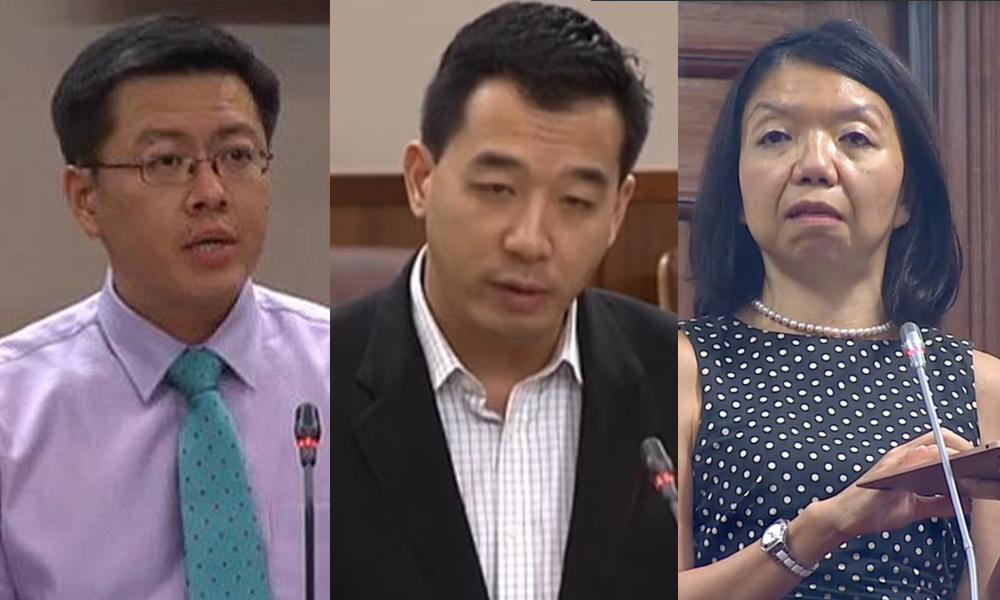
The resignations of Nominated Members of Parliament (NMPs) Raj Joshua Thomas and Syed Harun Alhabsyi have sparked intense debate over the credibility of the NMP scheme.
Their departure, just before the Budget debate, has led to widespread speculation that they may contest the upcoming general election, which is widely expected to take place in May.
While there are no rules preventing NMPs who resign from joining a political party and running in elections, the move has drawn sharp criticism from various quarters, who argue that it could undermine the non-partisan nature of the system.
Concerns about politicisation of the NMP scheme
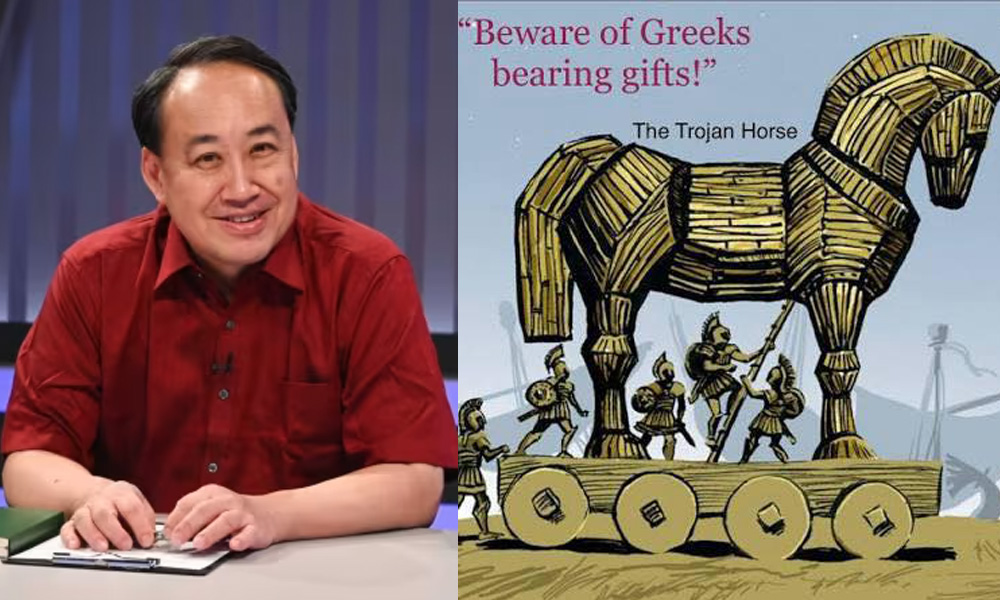
Assistant Professor Walid J. Abdullah of Nanyang Technological University, who runs the show Teh Tarik with Walid, expressed his concerns in a Facebook post on 16 February.
While he praised both Thomas and Harun as capable individuals, he argued that former NMPs contesting elections could erode public trust in the scheme.
“The institution of the NMP is an important facet of our political system,” Walid wrote.
“It allows for non-partisan, independent voices to contribute, and often, their voices hold weight since they do not have an electoral agenda. It is vital to protect the credibility of this non-partisan institution, which could come in especially handy if society becomes more polarised.”
He cautioned that if former NMPs transition into elected politics, future NMPs might be viewed with suspicion.
“People would—rightly—doubt whether they are serving as NMPs with one eye on being future MPs,” he said, adding that the resignations risked setting a precedent that could erode trust in the system.
His concerns were echoed by former Workers' Party MP Leon Perera, who served on the parliamentary committee that reviewed NMP applications between 2020 and 2023.
Perera suggested a mandatory “cooling-off period” between serving as an NMP and joining a political party. He also proposed a similar restriction for party members applying to become NMPs.
“If the institution of NMPs is justified by reason of establishing non-partisan voices in Parliament, in my opinion, more thought should be given as to how that non-partisan standing can be bolstered,” Perera wrote on Facebook.
He likened his proposal to his past call for civil servants to undergo a waiting period before entering politics, arguing that it would prevent undue political influence and ensure public trust in the institution.
Stronger criticisms: “A mockery of the system”
Opposition politician Lim Tean, leader of People’s Voice, took a much harsher stance, calling the NMP scheme “useless” and accusing Thomas and Harun of undermining its legitimacy.
“Did these two NMPs who resigned yesterday, with one year of their term left, speak up for you in Parliament? Did they make any impact on your cost of living, cost of housing, jobs?” he wrote on Facebook.
Lim further alleged that the resignations exposed the NMP system as a “big hogwash” designed by the People’s Action Party (PAP) to “fool” Singaporeans into believing there was no need for genuine opposition.
“Now it appears that they are joining the PAP to contest in GE2025. I thought NMPs are appointed to provide an ‘independent’ viewpoint, shorn of any partisanship? When did their ‘independent’ gene change to that of a ‘PAP’ gene?” he wrote, sarcastically likening their transition to the biblical story of Saul’s conversion on the road to Damascus.
The page Singapore Advocacy for Electoral Reform also questioned Thomas' appointment history, noting that he was the only NMP from the 2023 batch to be reappointed for a second term.
“No NMP has subsequently gone on to contest an election under the PAP ticket, let alone two at a go,” it wrote. The post pointed out that while some former NMPs had ties to the PAP, no opposition-aligned individuals had ever been appointed as NMPs or joined an opposition party after completing their term.
“If there is a silver lining in this episode, it is the possibility that the PAP government may intend to phase out the NMP scheme anyway eventually,” the page speculated.
Broader implications for the NMP scheme
Veteran journalist and former Straits Times editor Bertha Henson also weighed in, describing the resignations as “unprecedented.”
“I hope they are standing for elections as ‘independents’. hahaha,” she wrote.
She agreed with other commentators that the resignations could damage the NMP scheme’s credibility. “This is supposed to be the non-partisan voice in Parliament. It calls into question their political allegiance when serving as NMPs, even whether their votes in Parliament were ‘non-partisan’ or whether they can be so easily ‘co-opted’,” she said.
Henson also questioned their rationale for resigning. “They already have as much voting rights as MPs. So they now want to ‘represent’ constituents and do town council work? Or have their sights on front bench seats?” she asked.
She further pointed out that while political parties may use the NMP field for recruitment, the PAP, which strongly advocated for the NMP system, must take a position on the matter. “What if they move to an opposition party? The same should happen,” she said, calling for political parties of all stripes to clarify their stance.
The future of the NMP scheme
The NMP scheme was introduced in 1990 to bring diverse perspectives into Parliament without the influence of party politics. It was framed as a way to encourage broader debate while ensuring that independent voices could contribute without contesting elections.
However, critics argue that the scheme primarily served to curb growing opposition support by offering a controlled alternative to elected opposition voices.
As Brigadier-General (Res) Lee Hsien Loong noted in 1989—before becoming Prime Minister in 2004—in response to questions about the NMP scheme, NMPs provided an "extra choice" for those seeking alternative viewpoints, but not in a way that would "drive them to take a vote and change the government."
This suggests that while NMPs allowed for broader discussions, their presence ultimately reinforced the dominance of the ruling party by limiting the need for a stronger elected opposition.
Recent developments have placed the scheme under renewed scrutiny.
With speculation that the next general election may be held as early as May 2025, the resignations of Thomas and Harun have raised concerns about whether the scheme is being used as a stepping stone for political careers.
If the two former NMPs contest in the election, it could intensify calls for reforms, such as a mandatory cooling-off period, to prevent the perception that NMPs are strategically positioned for future electoral runs.
For now, political observers remain divided on whether these resignations are isolated incidents or signal a shift toward a more politicized use of the NMP scheme. Either way, the debate over its role in Singapore’s political landscape is unlikely to subside.
During the same response in 1989, Lee stated, "It was not the Government's intention to select people to add to the number of PAP MPs, and whether or not they were seen as government ‘stooges’ would depend on whether they acted like 'stooges'."
However, if two NMPs are indeed resigning to join the PAP for the upcoming election, it would undoubtedly challenge the original justification for the scheme and cast doubt on its neutrality.