Hamas halts hostage releases, citing Israeli ceasefire violations
Hamas announced on 10 February that it would suspend further releases of Israeli hostages, accusing Israel of violating the ceasefire agreement. The decision adds strain to the fragile truce, as US President Donald Trump warned of severe consequences if all Israeli hostages are not freed by 15 February.


Hamas announced on 10 February that it would halt the release of Israeli hostages until further notice, citing alleged Israeli violations of the ceasefire agreement.
The decision threatens to unravel the fragile truce, which has been in effect since 19 January and has so far resulted in the exchange of five groups of Israeli hostages for hundreds of Palestinian detainees.
The Palestinian militant group had been scheduled to release another group of Israeli hostages on 15 February in exchange for Palestinian prisoners, but Hamas’ armed wing, the Ezzedine al-Qassam Brigades, said this would not proceed unless Israel fulfilled its obligations under the agreement.
Abu Ubaida, a spokesman for the group, stated that the decision was made in response to Israel’s failure to adhere to ceasefire commitments, including facilitating humanitarian aid and addressing recent casualties in Gaza.
“The resumption of hostage-prisoner exchanges is pending the [Israeli] occupation’s compliance and retroactive fulfilment of the past weeks’ obligations,” he said.
Israel responded with strong condemnation, with Defence Minister Israel Katz calling Hamas' move a "complete violation" of the ceasefire deal.
Katz ordered the Israel Defense Forces (IDF) to be on high alert for potential military action in Gaza, with the IDF stating it had reinforced its presence in the area.
Trump threatens end to ceasefire
US President Donald Trump issued a warning on 10 February, stating that “all hell” would break loose if all Israeli hostages were not released by 15 February. He signalled that he would push for an end to the ceasefire if Hamas did not comply.
"If all of the hostages aren't returned by Saturday 12 o'clock – I think it's an appropriate time – I would say cancel it and all bets are off, and let hell break out," Trump told reporters at the White House.
The ceasefire agreement, which initially outlined a 42-day phased release process, had already faced obstacles.
Negotiators are expected to meet in Qatar in the coming days to discuss implementation of the agreement’s first phase and potentially finalise additional terms.
However, Israel has previously refused to send representatives to Doha, delaying talks on the next phase of the agreement.
Meanwhile, the Hostage and Missing Families Forum, a campaign group advocating for the return of Israeli captives, urged mediating countries to intervene to keep the deal intact.
Controversy over Gaza displacement plan
The situation is further complicated by Trump’s controversial proposal to relocate Gaza’s more than two million residents. The plan has drawn widespread criticism, including from the United Nations, which says it would violate international law.
Trump suggested that Palestinian civilians should not be allowed to return to Gaza, telling Fox News that he envisions a "permanent place" for them elsewhere. "If they have to return now, it'll be years before it's habitable," he said.
When asked directly if Palestinians would have the right to return, he replied, "No, they wouldn't, because they're going to have much better housing."
The proposal has been met with sharp opposition from regional allies.
Egypt's foreign ministry rejected any attempt to compromise Palestinian rights, stating that Palestinians must remain on their land.
Jordan’s King Abdullah II is set to meet Trump in Washington this week, with discussions expected to include the controversial plan.
Trump also hinted at potential repercussions for allies who oppose his initiative, suggesting he could withhold US aid to Egypt and Jordan if they refuse to accept displaced Palestinians.
Gaza conflict and humanitarian toll
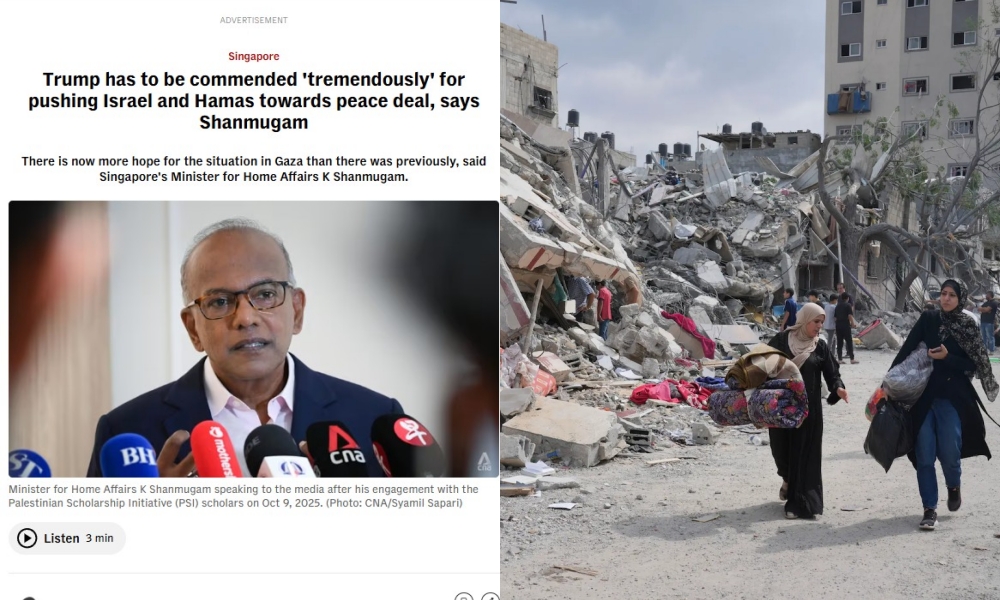
Hamas’ 7 October 2023 attack on Israel resulted 251 people were taken hostage. The war has had a devastating humanitarian toll, with the Gaza Government Information Office reporting a death toll of 61,709 as of 3 February.
This includes thousands previously listed as missing and presumed dead.
The United Nations has deemed the figures credible, with estimates indicating that 76 percent of the deceased have been recovered.
However, more than 14,000 individuals are still believed to be trapped under rubble or in inaccessible areas.
Despite Trump’s statements, displaced Gazans have continued to return home following Israel’s withdrawal from the Netzarim Corridor, a strategic route that had divided the territory.
Reports indicate that US and Egyptian security personnel are now present at the corridor, inspecting vehicles entering the area.