International
Trump administration backtracks on Gaza takeover plan amid global backlash
Facing international backlash, the Trump administration softened its stance on Gaza, clarifying that relocating Palestinians would be temporary and that US troops are not planned for the area. Global leaders and rights groups condemned the proposal as a violation of international law.
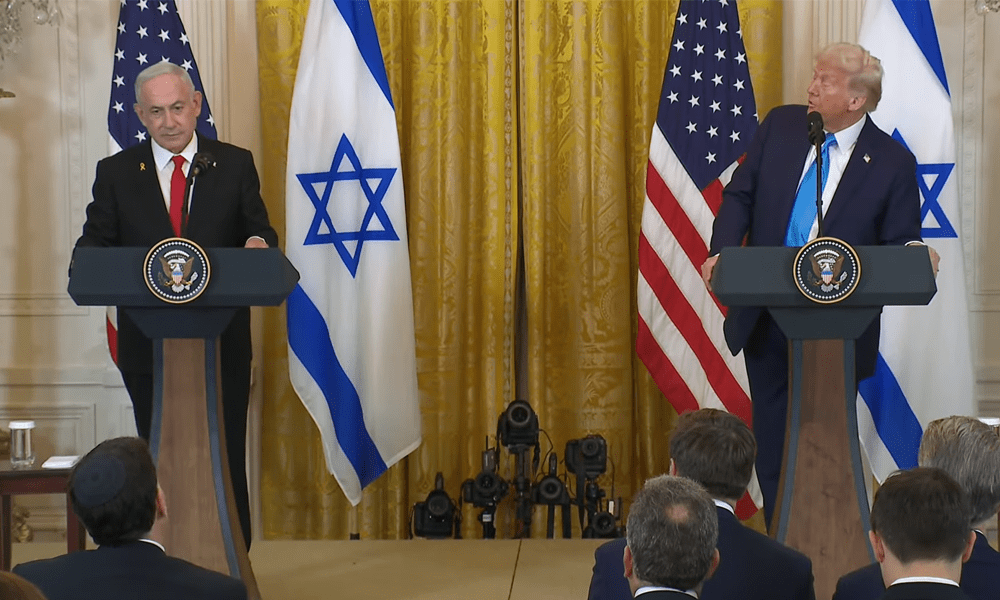
President Donald Trump’s push to have the US take control of Gaza and relocate its Palestinian population has triggered swift international condemnation, forcing key US officials to walk back or soften parts of the proposal.
After President Trump’s extraordinary announcement alongside Israeli Prime Minister Benjamin Netanyahu that the US would “take over” the Gaza Strip and move Palestinians to neighbouring countries, White House officials scrambled to clarify the plan.
The proposal, which Trump hailed as an economic opportunity to redevelop Gaza, was immediately condemned by global leaders, rights groups, and the United Nations as a violation of international law.
Officials soften rhetoric on relocation and military presence
In a Wednesday briefing, White House press secretary Karoline Leavitt described the proposal as “bold and innovative” but insisted that the US had no firm plans to deploy troops in Gaza. However, she declined to rule out the possibility entirely.
Leavitt also walked back Trump’s earlier claim that Gazans should be permanently resettled in neighbouring countries, instead emphasising that any relocation would be “temporary” to allow for reconstruction and safety efforts.
This shift was echoed by US Secretary of State Marco Rubio, who clarified that Trump’s idea involved an “interim” period for Palestinians to be moved out of the strip while the US cleared debris and rebuilt basic infrastructure.
“The idea was not meant as hostile,” Rubio explained during a press conference in Guatemala City, adding that the US sought only to stabilise the region temporarily.
Steve Witkoff, Trump’s Middle East envoy, was also dispatched to Capitol Hill to provide additional clarification.
Witkoff reiterated that Trump did not intend to deploy American troops or allocate US taxpayer funds for Gaza’s reconstruction, despite the president’s earlier remarks suggesting a long-term US involvement in the area.
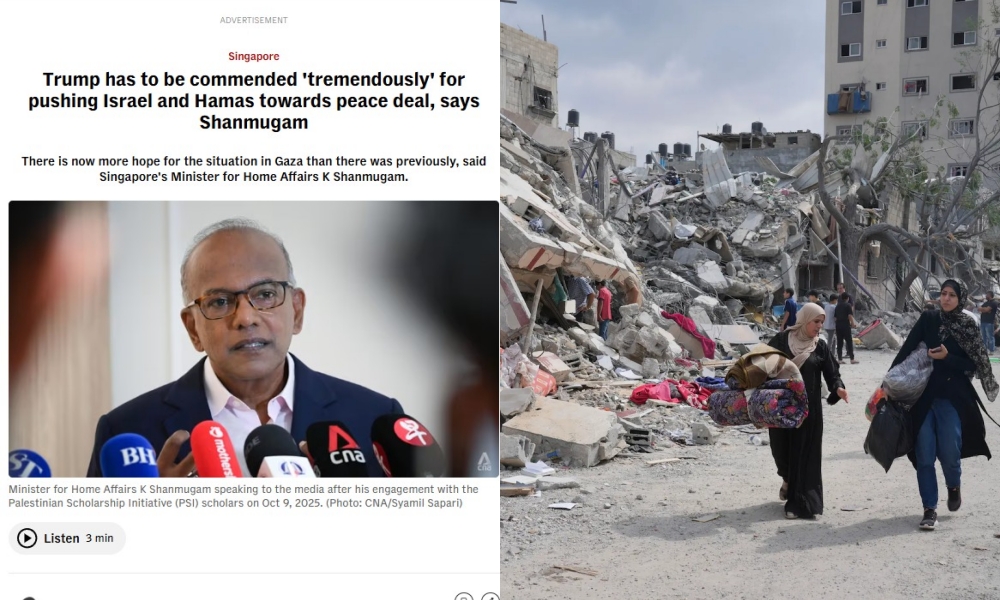
Witkoff also hinted that the devastation in Gaza—described as a “wasteland of rubble”—would make the rebuilding process long and difficult, with many displaced families unable to return quickly.
Still, Witkoff did not distance the administration from the core of Trump’s plan: relocating 2.2 million Palestinians from Gaza and potentially keeping them out for an extended period.
According to The Washington Post, Witkoff painted a bleak picture of the post-conflict landscape, suggesting that many Palestinians would be unable to return to permanent housing for years.
International outcry mounts
Global leaders and rights organisations were quick to denounce the plan as a violation of international law and human rights.
The UN secretary general, António Guterres, warned against “any form of ethnic cleansing,” emphasising that Gaza is an integral part of any future Palestinian state. Guterres called for adherence to international law and the establishment of a permanent ceasefire, reiterating that a two-state solution remains the only viable path to peace.
Amnesty International described Trump’s proposal as “inflammatory” and a “flagrant violation” of international law.
Agnès Callamard, Amnesty’s secretary general, said the plan dehumanised Palestinians and amounted to a form of forced expulsion, which could be classified as a war crime.
Human Rights Watch echoed these concerns, warning that forcibly relocating Palestinians under the guise of reconstruction would constitute a “moral abomination.”
Middle Eastern leaders also voiced their opposition. Egypt’s President Abdel Fattah al-Sisi, in a call with French President Emmanuel Macron, rejected any forced displacement of Palestinians, calling it a violation of international law.
Saudi Arabia’s foreign ministry similarly rejected the plan, while Palestinian President Mahmoud Abbas vowed to resist any efforts to remove Palestinians from their homeland. “We will not allow the rights of our people to be infringed upon,” Abbas declared.
A pattern of extreme proposals or negotiating tactics?
Trump’s critics argue that his proposal fits a broader pattern of extreme or provocative foreign policy announcements that are often walked back or left unfulfilled.
Throughout his first term, Trump made bold statements—such as threats to withdraw from NATO or impose tariffs on major allies—that were later downplayed or modified as part of his perceived negotiating strategy.
Some observers speculate that Trump’s Gaza proposal may be another such manoeuvre.
Jared Kushner, Trump’s son-in-law and former senior adviser, has previously described Gaza as valuable real estate, comparing it to waterfront property with economic potential.
Trump echoed this sentiment in his remarks on Tuesday, suggesting that the territory could be redeveloped into a hub of opportunity once Palestinians were relocated.
However, the vagueness of the proposal and the administration’s conflicting statements have raised concerns about its viability.
Republican reactions have been mixed, with House Speaker Mike Johnson praising Trump’s approach as a potential solution for “lasting peace” in Gaza, while Senator Rand Paul dismissed the idea as a costly and dangerous intervention.
“The US has no business contemplating yet another occupation,” Paul warned.
Pentagon and diplomatic implications
Further complicating matters, Pete Hegseth, a key Pentagon figure, indicated that the US military is reviewing “all options” for dealing with Gaza.
Hegseth acknowledged the challenges of stabilising the region and suggested that Trump’s unconventional approach may have been intended to break the stalemate of past efforts. “The president is willing to think outside the box,” Hegseth said, noting that decades of failed negotiations have required fresh ideas.
Despite this, international condemnation continues to mount, and the administration faces significant obstacles to securing any support for its plan.
With the EU and key allies such as the UK and Germany reaffirming their commitment to a two-state solution, Trump’s proposal risks further isolating the US on the global stage.