Edwin Tong praises Singapore's cohesion but stays silent on claims govt views civil groups as threats
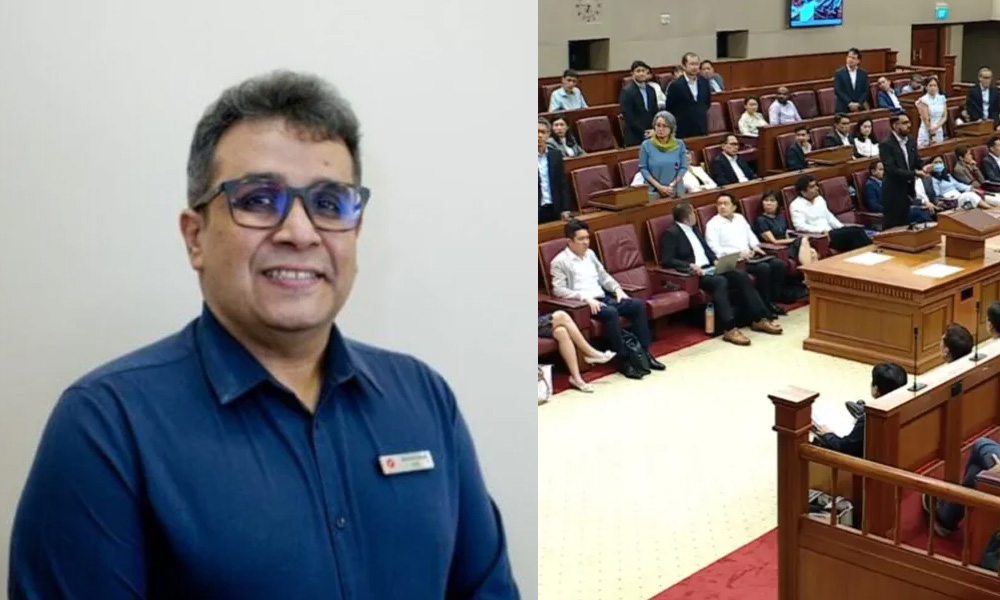
At the IPS Singapore Perspectives 2025 conference, Minister Edwin Tong warned that maintaining social cohesion in Singapore is growing more challenging due to evolving global and domestic dynamics, while emphasising the importance of a "we-first" mindset and unity. However, he did not address Prof. Cherian George's earlier criticism that the government unfairly views civil society groups as threats.


SINGAPORE: Minister for Culture, Community and Youth Edwin Tong said maintaining social cohesion in Singapore is likely to become more challenging than building it, despite the nation’s success in forging a cohesive and progressive society.
Speaking at the IPS Singapore Perspectives 2025 conference on 20 January, he reflected on Singapore's achievements in developing a strong national identity and cohesive community, while highlighting the evolving global and domestic dynamics that could threaten this progress.
"[Singapore's success] arises from the ability of our people to come together, to collectively want to build a strong social compact, but still creating space for people who are different from us, who may have a different belief, different practice and different views."
He highlighted Singapore’s success in building a strong national identity and cohesive community, attributing it to fostering interaction, mutual appreciation of diverse cultures, and impartiality to all races and religions.
He emphasised that Singapore's national identity was founded upon cultural and ethnic diversity, rather than at the expense of it.
Despite this progress, Tong warned that maintaining social cohesion is becoming more difficult due to evolving global and domestic dynamics, climate change, and divisive forces.
He attributed global instability—such as the Russia-Ukraine war, the Israel-Hamas conflict, and U.S.-China tensions—to countries adopting inward-looking policies that undermine globalisation.
He cautioned that these developments could disrupt the balance between ethnic and cultural ties and Singapore's shared national identity.
Tong Emphasises “We-First” Mindset to Balance Cultural Diversity and National Unity
Tong stressed the importance of fostering a collective “we-first” mindset, encouraging diverse skills, perspectives, and aspirations for Singapore’s continued success.
He also called for a pragmatic and purposeful approach to social integration, highlighting the need for space to allow diverse cultures to flourish while maintaining a strong sense of national unity.
Quoting former Prime Minister Lee Hsien Loong, Tong reiterated that Singapore aims for integration, not assimilation, where no race or culture is forced to conform to others.
"Our aim is integration, not assimilation, no race or culture in Singapore is coerced into conforming with other cultures or identities, let alone that of the majority."
Criticisms from Professor Cherian George Left Unaddressed by Tong
However, despite highlighting the country’s success in social cohesion, Tong did not address criticisms raised by Professor Cherian George of Hong Kong Baptist University earlier in the “Community and the State” panel discussion.
George had called for the Singapore government to reconsider its approach to managing differing views, advocating for more collaborative, trust-building engagement with social issues rather than top-down authority.
He argued that civil society groups, including those advocating for causes such as Palestinian rights, migrant worker welfare, the abolition of the death penalty, and stronger climate action, do not pose threats to national security or parliamentary authority.
“They are just trying to persuade their fellow citizens and shift public attitudes and values in ways that policymakers cannot ignore,” said George.
George further criticised the government’s overregulation of the arts and academia, where even discussions on environmental or political issues are flagged as potential risks.
This, he argued, has led to increased self-censorship in media and universities, stifling open dialogue and diverse perspectives.
Geroge warned the indirect cost of the government’s approach to managing differing views, oting that it has led to a perception among Singaporeans that minority opinions and controversial views are dangerous and should be excluded.
He argued that the state has fostered a culture of vertical trust in leaders but horizontal distrust among citizens, creating a societal divide where the people are viewed as self-centered and untrustworthy.