Lim Boon Heng’s misleading claims & omission in July ST interview on Income-Allianz deal
In a July 2024 interview, Lim Boon Heng praised the proposed Allianz acquisition of Income Insurance, but subsequent revelations from Minister Edwin Tong raised concerns about misleading claims and non-disclosure, particularly regarding the planned capital reduction and its impact on Income's social mission.


In a July 2024 interview with The Straits Times, Lim Boon Heng, chairman of NTUC Enterprise, framed the proposed acquisition of Income Insurance by German insurer Allianz as a positive development.
The former People's Action Party minister, who is also the chairman of Temasek Holdings, emphasised the deal’s potential to strengthen Income’s competitiveness and enable it to fulfil its social mission more effectively.
However, Culture, Community, and Youth Minister Edwin Tong’s 14 October 2024 ministerial speech uncovered inconsistencies in Mr Lim’s statements, particularly regarding the planned capital extraction, casting doubt on the broader implications of the transaction.
While Mr Lim's remarks focused on the benefits of Allianz’s majority stake, Mr Tong’s detailed disclosure in Parliament revealed significant concerns over the deal's financial and social impacts, leading to the government’s intervention to block the transaction in its current form.
Misrepresentation of Income’s Social Mission
In the July interview, Mr Lim assured the public that Income’s social mission, which has historically supported low-income and vulnerable communities, would remain intact even after Allianz’s acquisition.
Lim noted that commercial companies worldwide had adopted similar values, suggesting that Allianz would likely uphold Income’s mission of “doing well to do good.”
He also reassured Singaporeans that the partnership would not compromise Income’s involvement in national insurance programmes.
However, Mr Tong’s ministerial statement revealed that the deal involved a significant capital reduction of S$1.85 billion within three years of the acquisition.
This planned extraction, which had not been disclosed publicly by Mr Lim or NTUC Enterprise, cast serious doubt on Income’s ability to continue fulfilling its social responsibilities.
During its corporatisation in 2022, Income had emphasised that the shift from a cooperative to a corporate entity was necessary to build a stronger capital base and ensure long-term sustainability.
Furthermore, NTUC Income, Singapore’s only insurance cooperative, was corporatised in 2022 into Income Insurance Limited “to achieve operational flexibility and gain access to strategic growth options to compete on an equal footing with other insurers locally and regionally.”
Shareholders were assured at the 2022 annual general meeting that NTUC Enterprise would remain the majority shareholder of the new company post-corporatisation, a promise that was not honoured in the proposed deal.
The proposed capital reduction directly contradicted these earlier justifications, raising concerns about the deal’s real motivations.
Lack of Transparency on Capital Optimisation Plans
In Mr Lim’s interview, there was no mention of Allianz’s post-transaction capital optimisation plans, which Mr Tong later disclosed.
These plans included freeing up capital for shareholder returns, which fundamentally altered the nature of the deal.
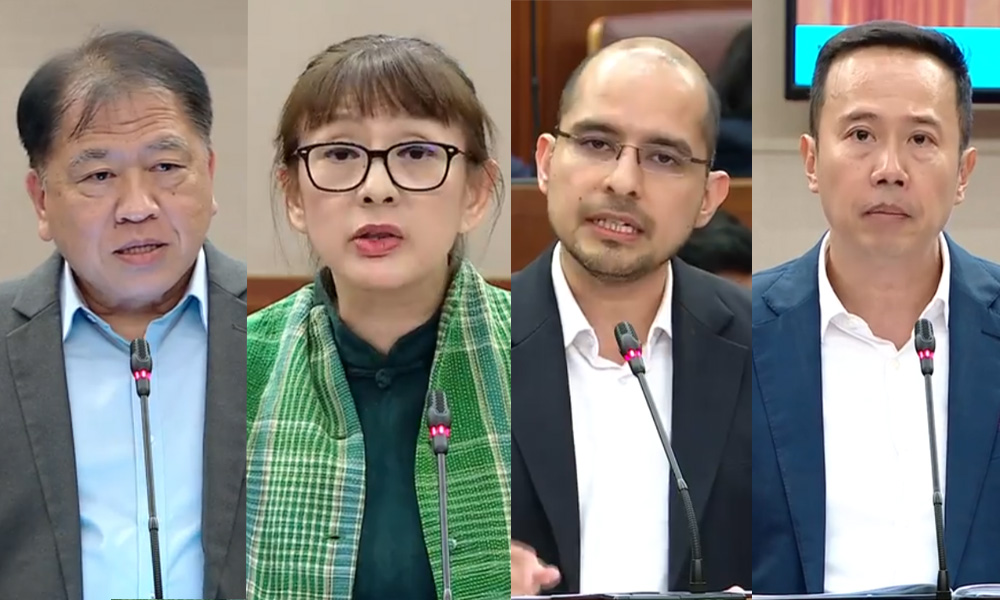
Workers’ Party MP for Sengkang GRC, He Ting Ru, questioned why NTUC Enterprise decided to proceed with the sale despite knowing about the capital extraction. She highlighted the difficulty of reconciling the withdrawal of capital with the goal of strengthening Income’s financial base, especially given its social mission.
Mr Tong responded by stating that the capital withdrawal needed to be seen within a broader context. He explained that even with the capital reduction, NTUC Income would still meet regulatory capital adequacy requirements.
Nevertheless, Mr Tong emphasised in his speech that the government's decision to block the deal was not based solely on financial factors but also on concerns about governance and the lack of structural protections to ensure that Income could continue to pursue its social mission under Allianz’s majority ownership.
Second Minister for Finance Chee Hong Tat also clarified that the Monetary Authority of Singapore (MAS) had not approved the proposed capital reduction plan, leaving key questions about the deal unresolved.
Contradictions on Income’s Financial Needs
Mr Lim’s portrayal of the Allianz-Income deal as essential for shoring up Income’s finances was contradicted by Mr Tong’s revelations.
He had pointed to Income’s struggles with its capital adequacy ratio (CAR) during past economic downturns as justification for seeking a majority shareholder.
However, Mr Tong noted that the planned capital extraction undermined Income’s long-term financial sustainability.
The lack of transparency over the capital reduction drew sharp criticism from Non-Constituency Member of Parliament (NCMP) Leong Mun Wai of the Progress Singapore Party (PSP).
During the 14 October parliamentary session, Leong expressed shock over the revelation of the planned capital extraction, which had not been disclosed to the public during discussions about the deal.
He argued that this critical financial condition should have been made public from the outset.
“This information should be available to all Singaporeans,” Leong said. “For the last few months, we were under the impression that the information provided was complete. Now, we learn about capital extraction, which is a very important condition of any financial deal.”
Leong expressed his dissatisfaction with how the deal had been communicated to the public, stating, “I’m surprised, I’m shocked, and I’m very unhappy today that this important condition was not disclosed to Singaporeans when we were all discussing this deal.”
He pressed the government for accountability, asking, “Who is responsible for not disclosing this information? Can the government give a commitment that it will pursue responsibility in this matter?”
Despite the various misleading or non-disclosed elements in NTUC Enterprise’s and Income Insurance’s communications, Mr Tong is of the view that no one deliberately misled the public.
PSP NCMP had questioned whether action would be taken against those responsible for misleading the public and government. In her speech, Poa highlighted that the deal contradicted earlier representations made during Income’s corporatisation and called for greater transparency.
Mr Tong, however, rejected the suggestion of deliberate misinformation but acknowledged that the government had concerns about whether Income could continue to serve its social mission after the capital reduction.
Was Lim Boon Heng Misleading?
While Mr Lim’s statements in the July interview painted a positive picture of the Allianz-Income deal, subsequent revelations by Mr Tong and MPs He Ting Ru, Hazel Poa, and Leong Mun Wai have raised significant concerns about the financial and social impacts of the transaction.
The planned capital extraction and lack of transparency over key financial conditions suggest that important details were withheld from the public.
This leaves an important question: Did Lim Boon Heng’s statements mislead the public, or was it a matter of differing interpretations of the deal’s long-term impact?
As more details emerge, the public will have to decide whether NTUC Enterprise’s leadership was fully transparent or whether key aspects of the deal were deliberately downplayed. What do you think?