Court of Appeal rules AGC, SPS acted unlawfully in handling prisoner correspondence
The Singapore Court of Appeal declared that the Attorney-General's Chambers (AGC) and the Singapore Prison Service (SPS) acted unlawfully in requesting and disclosing prisoner correspondence. The court found breaches of confidence but upheld only nominal damages of S$10 each for copyright infringement claims.


The Singapore Court of Appeal has declared that the Attorney-General's Chambers (AGC) and the Singapore Prison Service (SPS) acted unlawfully by requesting and disclosing prisoner correspondence.
The judgment, issued on 11 October 2024, stated, "We, therefore, grant declarations that the AGC and the SPS had acted unlawfully by, respectively, requesting and disclosing the Appellants’ correspondence pursuant to the Practice."
It also ruled that both the AGC and SPS committed breaches of confidence through the disclosure and retention of these communications.
However, the court declined to award further damages, maintaining the earlier decision that nominal damages of S$10 should be paid for copyright infringement claims.
This judgment, issued on 11 October 2024, follows a protracted legal battle involving 13 appellants who had been prisoners in Changi Prison.
AGC should have sought consent or obtained a court order, says court
The case, Civil Appeal No. 30 of 2022, centred on the handling of correspondence by the SPS and the AGC, with the appellants arguing that their rights to confidentiality had been violated. The appellants sought broader remedies, including substantial damages and more extensive declarations against the AGC and SPS.
The dispute dates back to 2020 when one of the appellants, Mr Datchinamurthy a/l Kataiah, first raised allegations that the SPS had forwarded his correspondence to the AGC without consent.
Subsequent investigations revealed that the AGC had received over 68 documents from the SPS, including private letters between prisoners and their legal representatives. The appellants argued that these actions breached their rights to privacy and confidentiality.
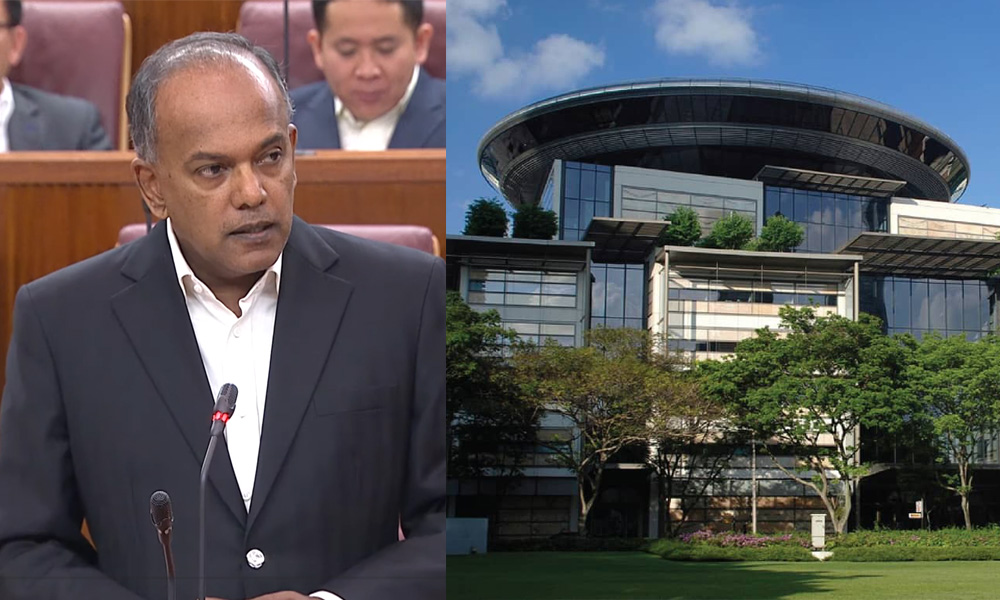
The Court of Appeal, presided over by Chief Justice Sundaresh Menon, Justice of Appeal Steven Chong, and Senior Judge Judith Prakash, concluded that both the AGC’s requests for correspondence and the SPS’s disclosures were conducted unlawfully under the prevailing legal framework.
The court stressed that the AGC should have sought consent or obtained a court order before requesting confidential prisoner communications. Similarly, the SPS was found to have overstepped its authority by sharing this information without the proper legal basis.
"The SPS’s authority under reg 127A to read and copy letters does not extend to sharing such correspondence with third parties, including the AGC, without the prisoner’s consent or a court order," said the court.
The court's judgment highlighted that while the SPS has the power to read and copy prisoner letters under the Prisons Regulations, this power does not extend to sharing such information with third parties like the AGC.
In particular, the court noted the importance of maintaining the confidentiality of legal correspondence, which is critical to ensuring the due process rights of prisoners.
S$10 for minor copyright infringements
The court further determined that the SPS's actions in disclosing, and the AGC's actions in retaining, the confidential correspondence constituted a breach of confidence.
This decision builds on earlier findings from the Gobi case, which similarly addressed the limits of the SPS’s authority regarding prisoner communications. The breaches, however, were not deemed to have caused specific harm that would justify substantial compensation.
Thus, the court upheld the nominal damages awarded by the lower court, amounting to S$10 each for three of the appellants—Syed Suhail bin Syed Zin, Mr Iskandar bin Rahmat, and Mr Rosman bin Abdullah—for minor copyright infringements related to their correspondence.
The court emphasised that prisoners retain certain rights over their personal communications and that these should not be infringed without clear legal justification.