From protection to restriction: How Singapore’s contempt law moved beyond its 2016 promises
Once promised as a safeguard for justice, Singapore’s contempt law has become a tool of restriction. Assurances that only egregious cases would be caught have given way to a legal regime where intent is irrelevant, risk is broadly defined, and even political speech made in good faith can trigger liability. The shift from protection to deterrence raises troubling questions about the space for public discourse and democratic accountability.
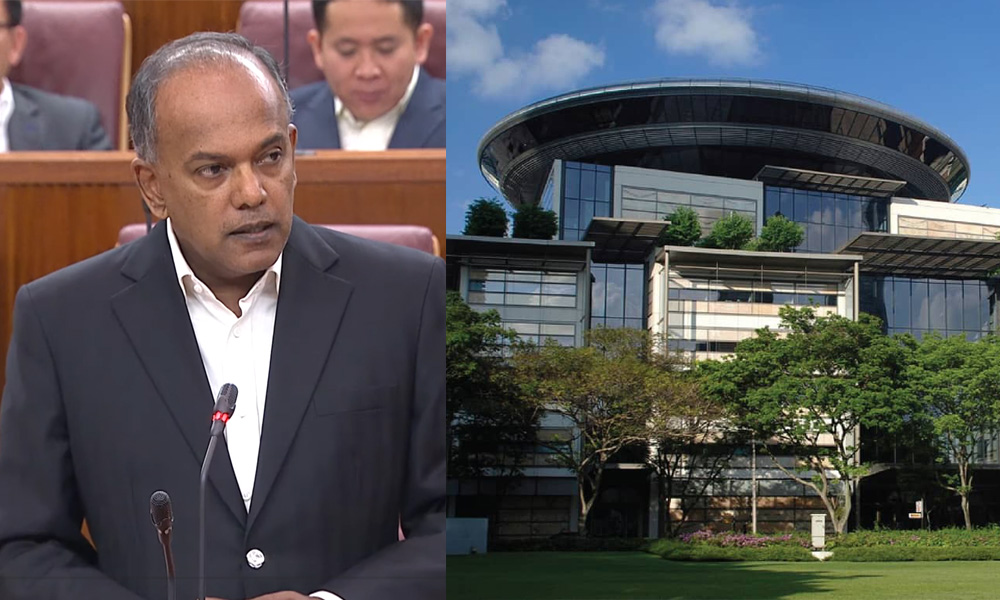

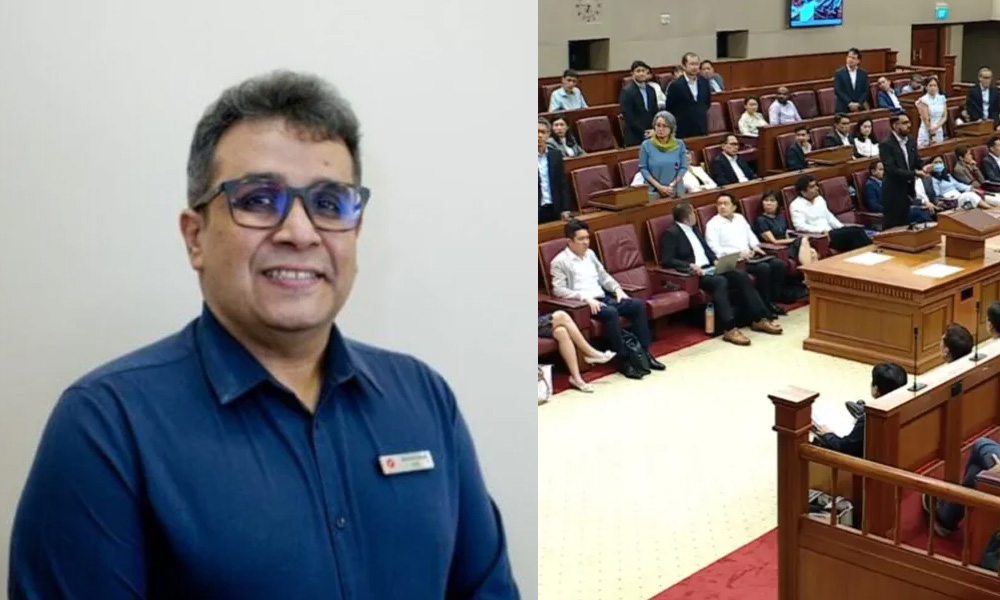
When the Administration of Justice (Protection) Bill was debated in Parliament in August 2016, concerns about its potential to suppress political speech and public commentary were not incidental — they were central to the opposition’s objections.
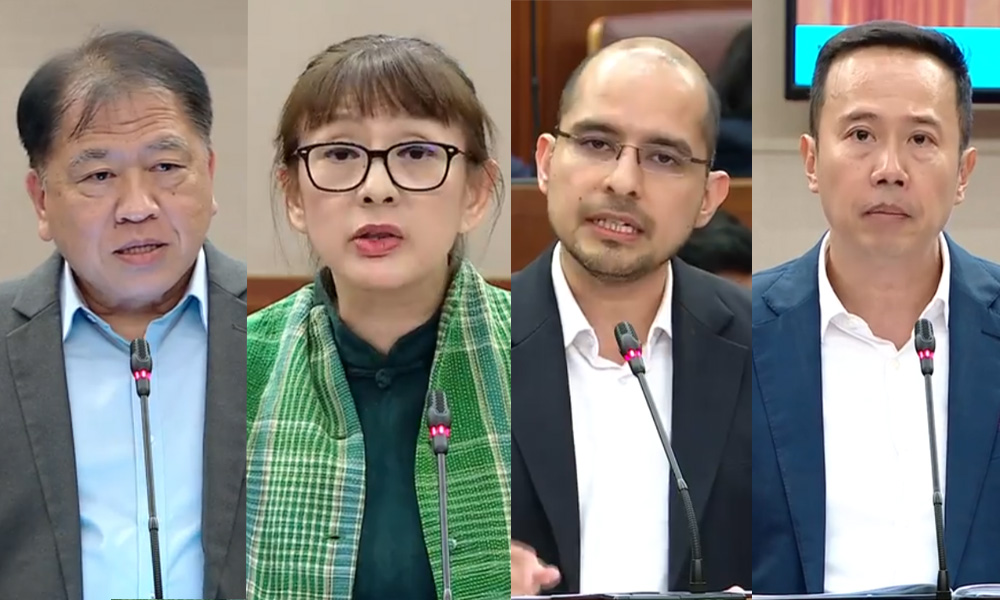
Workers’ Party MPs and Nominated Members of Parliament (NMPs) warned that codifying contempt of court risked fundamentally altering the balance between freedom of expression and the administration of justice.
Sylvia Lim — during the debate — questioned whether the Bill’s broad and indeterminate language would expose individuals to liability even when speaking in good faith on matters of public interest, particularly while cases were ongoing.
Pritam Singh went further, warning that the Bill would “legislate vagueness”, expand executive power at the expense of civil liberties, and hand the Attorney‑General a disproportionate role in policing public discourse.
He cautioned that undefined concepts such as “prejudgment” and the low prima facie threshold for enforcement would inevitably deter speech — not because it was wrongful, but because it was risky.
These were not abstract fears. They were direct challenges to the Government’s claim that the Bill merely codified existing law.
In response, then‑Minister for Law K Shanmugam gave emphatic and repeated assurances that the Bill would not curtail legitimate speech, political commentary, or ordinary discussion of court cases.
He insisted that the law did not expand prosecutorial power, and that the courts — not the executive — remained firmly in control.
“The AG, if he believes that there is contempt committed today, has to apply to charge the person… You go and apply to the Court, and you try and persuade the Court that there is contempt… Who is the boss? The Court is the boss.”
On the threshold for sub judice contempt, Shanmugam was equally categorical. He rejected the idea that mere commentary or political remarks could attract liability, stating plainly:
“You’ve got to show real risk of prejudice or actual prejudice.”
He dismissed concerns that casual or good‑faith discussion could be targeted as unrealistic and alarmist:
“How does ordinary citizens sitting in a coffee shop having a beer and talking about a case pose a real risk of prejudicing any proceedings?... Let us get real.”
Taken together, these assurances were decisive. Parliament was told — unequivocally — that the bar for contempt would remain high, that only serious and prejudicial conduct would be caught, and that responsible discussion of ongoing cases would not be criminalised.
A disconnect between legislative promise and legal reality
Fast forward to 2025, and Pritam Singh’s experience with contempt concerns — arising from a pre-recorded interview aired after his appeal hearing — appears to run directly counter to the assurances given in 2016.
In the CNA: The Assembly interview, Singh was asked how he felt about being called a liar.
He replied: “Politics is about public standing. My political opponents will do whatever it takes to lower my esteem and the esteem of my party in the public eye.” He added: “I believe the court of public opinion can be bigger than any court in the world.”
The remarks, recorded in July and aired on 5 November — one day after his appeal was heard — were framed as political reflections on the Workers’ Party’s performance following his February conviction.
They quickly drew a sharp response from Minister for Law Edwin Tong, who described the comments as “outrageous” and “dangerous”, warning that such statements undermined public trust in Singapore’s judiciary.
Singh responded via Facebook, clarifying that his remarks were made in the context of the party’s electoral performance and were not intended to question the judiciary’s independence.
Yet under the Administration of Justice (Protection) Act, intention is irrelevant. The law does not require proof of bias, actual prejudice, or even a direct attack on the courts. It hinges instead on whether a statement poses a “real risk” of undermining public confidence in the administration of justice — regardless of the speaker’s intent or context.
This threshold is broad and subjective. It is assessed not by what was meant, but by how it might be construed — and crucially, that assessment lies almost entirely within the discretion of the Attorney-General’s Chambers (AGC).
It was reported that, in its 13 December statement, the Ministry of Law said Mr Singh’s comments suggested that the prosecution against him by the AGC — and, by extension, his conviction by the Magistrate’s Court — were politically motivated, thereby impugning the integrity of the court and the legal system.
While the courts technically have the final say, the practical power lies with the AGC. Once it determines that a statement meets the threshold, the burden shifts heavily to the speaker to disprove it — a structurally lopsided contest.
It is within this legal framework that Singh’s subsequent apology must be understood.
On 13 December — the same day Mediacorp issued its apology and removed the interview from CNA platforms following a notification from the AGC that the broadcast amounted to contempt — Singh also released a statement.
In it, he apologised “wholly and unreservedly”, stating that his remarks “may be construed to be in contempt of court, including to impugn the integrity, propriety or impartiality of the court.”
The timing suggests the apology was issued under pressure and in response to the AGC’s interpretation — a move likely made to avert legal proceedings rather than to admit wrongdoing or concede that his remarks were unlawful.
A precedent that shows how easily liability can arise
The practical risk under the Act was already demonstrated in the 2020 contempt case involving civil activist Jolovan Wham and politician John Tan. The Court of Appeal upheld their convictions over a brief Facebook post and comment.
Wham had written:
“Malaysia’s judges are more independent than Singapore’s for cases with political implications. Will be interesting to see what happens to this challenge.”
The AGC argued this implied that Singaporean judges lacked independence in politically sensitive cases — an interpretation the court ultimately accepted, despite the fact that the comment did not directly allege bias, nor was it inflammatory in tone.
The court found the post created a “real risk” of undermining public confidence in the judiciary — a threshold that does not require proof of intent or actual harm. What mattered was how the remark might be construed.
The ruling illustrated how, even when comparative, carefully worded, or qualified, statements can attract liability under the Act.
A structural dilemma: apologise, or risk proceedings
This is the crux of the problem.
Once the AGC signals that a statement may meet the “real risk” threshold, the legal terrain shifts sharply against the speaker. There is no meaningful public interest defence, and challenging such an interpretation would require arguing — in court — how the public might perceive a remark about the judiciary.
As in Singh’s case, once a statement is viewed through the lens of prosecutorial inference, intent becomes legally irrelevant — and an apology may become the only safe recourse.
Even a speaker who genuinely believes their comments were fair, contextual, and lawful is placed in a structurally indefensible position.
That is why Singh’s apology matters. His statement that his remarks “may be construed to be in contempt of court” is not an admission of intent, but a recognition of how the law now operates — where construction outweighs intention, and risk outweighs context.
The choice is stark: apologise, or face proceedings where the bar for liability is low, the discretion wide, and the consequences — legal, political, and institutional — potentially severe.
In light of this, the episode illustrates how far practice has drifted from the 2016 promise that only “egregious” cases would be caught.
What was presented as a narrow safeguard for judicial integrity now operates as a powerful deterrent — capable of compelling retraction and apology even where speech is made in good faith and without malice.
The Pritam Singh episode shows that the law’s safeguards — as promised in Parliament — now function more as instruments of discretion than protection. What was once pitched as a shield for judicial integrity has evolved into a sword of prosecutorial power.